A vascular ring, also known as a vascular ring anomaly, is a congenital heart defect, or a heart defect that a baby is born with, that affects the aorta or its branches. The aorta is the largest artery in the body that arises from the heart’s left ventricle to supply blood to all of the other arteries in the body. As your baby’s blood vessels develop during pregnancy, the aorta or one of the blood vessels that comes out of the aorta may develop abnormally and wrap around the trachea (windpipe) or esophagus, squeezing them and causing pressure.
Symptoms can be different depending on the type of vascular ring and where it is located. The pressure on the trachea and esophagus can make breathing and swallowing difficult.
What are the different types of vascular rings?
While there are many different types, the most common vascular rings include:
- Right aortic arch with aberrant left subclavian artery: A type of vascular ring in which the aorta starts on the right side of the trachea instead of the left and has an abnormal branch that passes behind the esophagus. The abnormal branch changes the position of other arteries. This may result in a complete ring that squeezes the trachea and esophagus.
- Double aortic arch: A type of vascular ring in which the aorta divides into two arches instead of one, wraps around the windpipe and trachea, and then comes back together into one vessel, squeezing and putting pressure on the trachea and esophagus.
- Pulmonary artery sling: A type of vascular ring in which the left pulmonary artery does not branch off in the correct place and instead passes between the trachea and esophagus, causing significant pressure.
- Circumflex aortic arch: A complex vascular ring in which the aorta starts on the right side of the trachea. It rises on one side of the space in the chest and then descends on the other side behind the trachea and the esophagus, wrapping around them and causing pressure on these structures.
At the Children’s Heart Center, we understand that a vascular ring diagnosis can be scary and overwhelming, and we are dedicated to ensuring that children receive the best possible care. We bring together an experienced team of pediatric cardiologists and cardiothoracic surgeons who diagnose, treat and manage vascular rings in infants, children and young adults. Our Aorta and Vascular Program is experienced in treating all conditions of the aorta, from the simplest to the most complex, and we treat more kids with vascular rings than anyone else in Georgia.
What sets Children's apart?
- Aorta and vascular expertise: The physicians, surgeons and advanced practice providers in the Children’s Aorta and Vascular Program are leaders in their field and are active in advancing new treatments for aorta and vascular conditions. We treat complex vascular rings and are dedicated to raising the bar for the treatment.
- Excellent surgical outcomes: We perform hundreds of cardiothoracic surgeries annually, from the simple to the most complex, with excellent surgical outcomes. You can be confident that your child’s vascular ring is being treated by one of the top teams in the country.
- Comprehensive heart services: At Children’s, you have access to specialty heart care as well as a variety of support services to meet your family’s social and emotional needs. Our team will guide you through every stage of treatment, coordinating care to streamline your experience.

Request a second opinion for a vascular ring
At the Children’s Heart Center, we want you to feel confident that you are receiving the best care for your child. We offer second opinions for patients with a vascular ring to help ease your concerns and help you make an informed decision on where to seek care
Request an appointmentIf your child has a vascular ring, symptoms may begin when they are an infant, and can affect their swallowing, breathing or both. In some cases, there may not be any symptoms, but when they do occur, they can include:
- Choking
- Cough
- Difficulty swallowing
- Difficulty eating solid foods
- Respiratory distress
- Respiratory infections
- Vomiting
- Wheezing
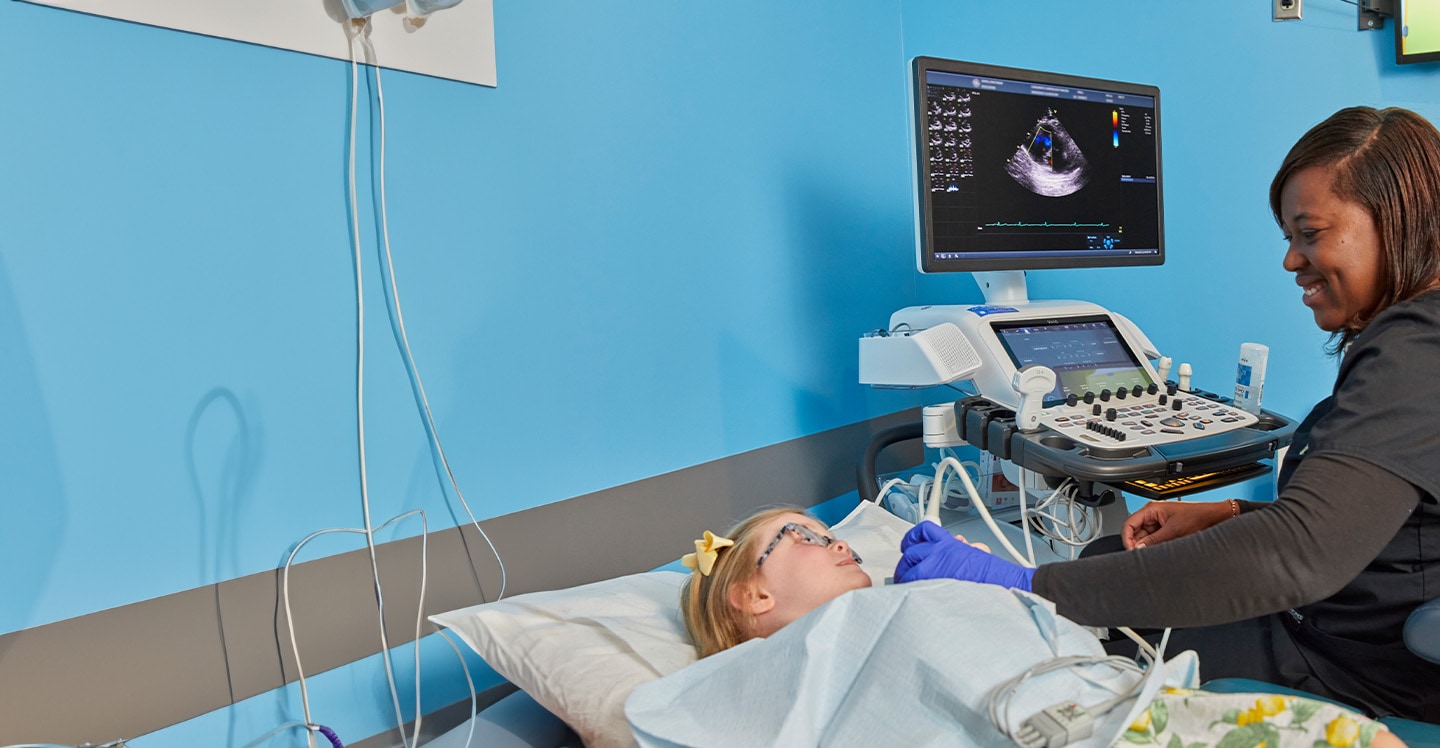
A vascular ring is often diagnosed during pregnancy by an ultrasound, which shows images of a developing fetus. If doctors suspect that your growing baby has a vascular ring, you will be referred to a fetal cardiologist, who specializes in diagnosing fetal heart conditions.
In some cases, a vascular ring may be diagnosed after a baby is born. If your child is showing vascular ring symptoms, they will be seen by a pediatric cardiologist who may use imaging tests to confirm a diagnosis and help plan treatment. These tests may include:
- Chest X-ray: This is a test that uses a small dose of radiation to create images of the heart, aorta, blood vessels and other structures.
- Echocardiogram: An echocardiogram is a test that uses sound waves to create a detailed picture of the heart and its structures.
- CT scan: Also known as a computed topography scan, a CT scan uses X-rays to create detailed, cross-sectional images of your child’s heart, aorta and blood vessels.
- MRI scan: Also known as magnetic resonance imaging, an MRI is an imaging test that uses a large magnet, radio waves and a computer to take high-quality pictures of your child’s heart, aorta and blood vessels.
If your child is having problems breathing or swallowing, they may also have other imaging tests done, which may include:
- Barium swallow: A test that takes an X-ray video of your child as they eat or drink.
- Bronchoscopy: A diagnostic procedure in which a doctor uses a scope to take pictures of your child’s trachea.
- Endoscopy: A diagnostic procedure in which a thin, flexible tube with a camera is used to examine the esophagus and stomach.
Vascular ring treatment is personalized based on each patient’s needs, and typically depends on your child’s symptoms and the severity of their condition.
Medical Monitoring
If your child has a vascular ring but is not experiencing symptoms, your pediatric cardiologist may recommend regular checkups to monitor your child’s health over time. They will look for any changes or worsening symptoms due to the vascular ring.
Cardiothoracic Surgery
If your child is experiencing vascular ring symptoms that are affecting breathing or swallowing, surgery may be recommended. While there are different types of procedures depending on your child’s diagnosis, vascular ring repair typically involves dividing a ligament to release the ring and may involve detaching the abnormal arch and reattaching to relieve pressure on your child’s trachea and esophagus. At the Children’s Heart Center, our cardiothoracic surgeons offer advanced procedures, and are skilled in caring for simple and complex vascular rings.
Vascular Ring Prognosis
The surgery to correct a vascular ring is low-risk, and most symptoms are relieved quickly after surgery, allowing your child to live a normal life without problems breathing or swallowing. Most patients will need to regularly see a pediatric cardiologist to help ensure they have no complications after surgery and to monitor their overall cardiovascular health. The Children’s Aorta and Vascular Program follows children until 21 years of age before helping transition them to an adult provider.

Heart patient outcomes: by the numbers
We monitor and report our overall cardiac surgical outcomes and volumes to provide the most accurate information to patient families. Our mission is to continually improve and help our heart patients live their best lives.
learn more

Support for heart patients
Our team is here to help on your child’s heart journey. We provide support services to help navigate the emotional, financial and spiritual needs of your family.
learn morePediatric Cardiology Providers
Pediatric Cardiothoracic Surgeons
- Paul Chai, MD, Chief, Cardiothoracic Surgery; Co-Chief, Heart Center
- Subhadra Shashidharan, MD, Associate Chief, Cardiothoracic Surgery
- Joshua Rosenblum, MD, PhD
- Mohan John, MD
Pediatric Genetic Counselors
- Erin Demo, MS, CGC
- Linda Knight, MS, CGC
Outpatient Pediatric Cardiology Locations
Children’s Cardiology sees patients at more than 20 outpatient locations throughout Georgia.
Find an Outpatient Cardiology Clinic >
Call 404-246-2593 or Schedule an appointment >
Cardiothoracic Surgery Location
Arthur M. Blank Hospital
2220 North Druid Hills Road NE
Atlanta, GA 30329
Call 404-785-6330 to schedule an appointment.