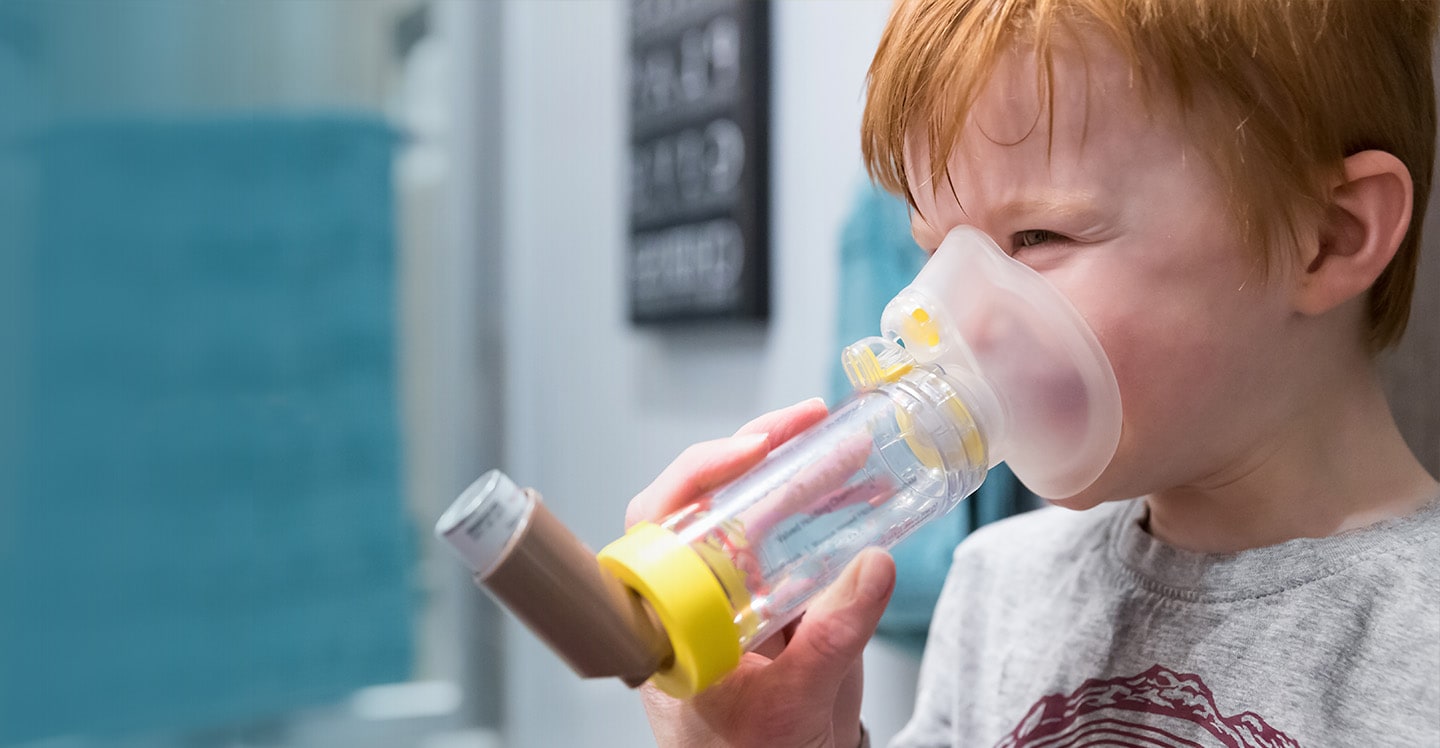
Childhood asthma is a chronic condition in infants, kids and teens that affects tubes in the lungs called airways, that carry air in and out of the lungs. In a child with asthma, the airways react to certain triggers, causing:
- The airways to swell or become inflamed.
- Thick, sticky mucus to fill the airways.
- The muscles that wrap around the airways to squeeze tight.
When the airways in your child’s lungs are bothered by an asthma trigger, it is called an asthma flare-up or an asthma attack. While asthma is a chronic condition, most children can manage their symptoms and live normal lives with the right treatment plan. If left untreated or poorly controlled, it can increase the risk of serious flare-ups, resulting in hospitalization and complications.
What are childhood asthma triggers?
Each child’s asthma triggers are different but can include:
- Pollen
- Seasonal allergies
- Cold viruses
- Flu
- Weather
- Roaches and pests
- Molds
- Air pollution
- Smoke
- Dust mites
- Exercise
- Pets and animals
- Odors
- Exposure to violence
- Strong emotions and stress
What causes childhood asthma?
There is not one single cause of childhood asthma, and a variety of factors can cause a child to develop it, including:
- Genetics: Children are more likely to have asthma if they have family members with asthma.
- Allergies: Children who have seasonal or environmental allergies are more likely to have asthma.
- Eczema: Children who have eczema are more likely to develop asthma.
- Respiratory infections: Some respiratory infections in infants can increase the risk of developing asthma.
- Environmental factors: Irritants like pollution, allergens and secondhand smoke are known to increase the risk of asthma.
Do children outgrow asthma?
Asthma is a long-term condition, and while there is no cure, some children may have fewer breathing problems and asthma symptoms as they get older. For about half of children with asthma, symptoms improve during the teen years. In some cases, asthma symptoms may reappear later in life.
Many asthma attacks start when something begins bothering the airways. Many children experience early warning signs before a severe asthma attack occurs, and symptoms can vary.
Common signs of an asthma attack may include:
- Cough with or without phlegm.
- Shortness of breath that worsens with activity.
- Chest pain, congestion or tightness.
- Tiredness or irritability.
- Wheezing or whistling while exhaling.
Talk with your doctor to create an asthma action plan, which will outline the symptoms to look for and the steps to take when they happen.
Asthma Resources for Parents


At Children’s, we can help you stay in control of your child’s asthma. We bring together an experienced team of pulmonologists, immunologists, allergists, educators and nurses who specialize in the diagnosis, treatment and management of asthma in kids and teens. Our specialists work closely with you and your child’s pediatrician to recommend asthma medications and create a personalized asthma action plan based on your child’s symptoms, triggers and lifestyle.
Long-term asthma medications
Long-term asthma medicine is taken daily to reduce swelling of the airways. Your doctor may prescribe one or two doses per day, seasonally or year-round. This type of medicine should be taken every day your doctor prescribes it, even if your child has no symptoms of asthma that day. These include:
- Inhaled corticosteroids: Controller medicines that reduce and prevent airway inflammation or swelling. Used daily, inhaled corticosteroids help to prevent asthma symptoms from happening. They need to be taken daily to be effective.
- Combination medicines: Medicines with both long-acting bronchodilator and inhaled corticosteroids that prevent and reduce swelling of the airway and relax the muscles around the airway for up to 12 hours.
- Leukotriene modifiers: Medicines that block the effect of leukotrienes, which are molecules in the immune system that can cause asthma symptoms. Leukotriene modifiers can help prevent symptoms for up to 24 hours.
- Injectable medicines: Specialized injectable medications are available for children with moderate to severe asthma that does not respond to standard treatments. Your child's pulmonologist or allergist will carefully discuss your child's options with you.
Quick-relief asthma medications
Quick-relief asthma medicine (also called “rescue” medication) should be taken as soon as possible after the first signs of an asthma attack (flare-up). These medications act within a few minutes to relax the muscles around the airways and allow more air into the lungs. They have an effect lasting a few hours. They should be kept with your child at all times to treat asthma symptoms. These include:
- Short-acting inhaled bronchodilators: Can save your child’s life during an asthma flare-up. They relax the muscles around the airways to open them and help with breathing. They work very quickly but only for a short amount of time (about three to six hours).
- Anticholinergics: Given with short-acting inhaled bronchodilators for severe asthma flare-ups. Anticholinergics also relax the muscles surrounding the airways to open the airways and help with breathing.
- Oral corticosteroids: Used for asthma flare-ups that are not relieved by short-acting inhaled bronchodilators. These medicines work to reduce the swelling in the airway.
If your child is prescribed medication, they may need a pressured inhaler called a meter-dosed inhaler (MDI). MDIs require the use of a spacing device to deliver medication to your child’s lungs. The Children's Asthma team will teach you and your child how to use these correctly.
Learn more about MDIs, spacing devices and how to use them.
Our other childhood asthma services include:
- Allergy testing, evaluation and allergy shots.
- Asthma control tests at every visit.
- Timely communication with primary care physicians and pediatricians to coordinate care for asthma management.
- Access to an after-hours, on-call asthma physician.
- Education for each patient’s family and school staff.
- Partnerships with asthma-related community wellness programs.
- High-Risk Asthma Program for closer monitoring and care for patients who have severe asthma.

5 steps for Managing Your Child’s Asthma
You can help your child maintain a healthy, active lifestyle by learning ways to manage and control their asthma symptoms.
learn moreWe can help you stay in control of your child’s asthma. Our asthma team is specially trained to care for kids and teens who have asthma and breathing problems.
- We help kids manage symptoms so that they can live full, active lives. That means less down time and less time away from school.
- We have a comprehensive team—doctors, nurses and educators—who will design a personalized asthma care plan for your child.
- We have special diagnostic tools to measure a child’s lung capacity and function.
We also offer:
- Allergy testing, evaluation and allergy shots.
- Asthma control tests at every visit.
- Communication with primary care physicians to coordinate care for best asthma management.
- Access to an after-hours, on-call asthma physician.
- Education for each patient’s family and school staff.
- Partnerships with asthma-related community wellness programs.
- A High-Risk Asthma Program to provide closer monitoring and care to patients who have severe asthma.
Pediatric pulmonology
- Ann Marie Brooks, MD
- Rafael Cilloniz-Guerrerro, MD
- Allan Dias, MD
- Kimberly Dickinson, MD
- Mary Ellen Fain, MD
- Yaron Fireizen, MD
- Nicholas Fitzpatrick, MD
- Lokesh Guglani, MD
- Kelly Hady, MD
- Carolyn Henderson, MD
- Ajay Kasi, MD
- Sophia Kim, MD
- LaTresa Lang, MD
- Burton Lesnick, MD
- Rachel Linnemann, MD
- Patricia Martin-Hoyt, MD
- Jonathan Popler, MD
- Eric Price, MD
- Julie Sedor, MD
- Amit Shah, MD
- Samar Shah, MD
- Sheel Shah, MD
- Haitham Shahrour, MD
- Dawn Simon, MD
- Brittany Truitt, MD
- Snehal Vala, MD
- Mackenzie Wyatt, MD
- Michelle Yoo, MD
Advanced practice providers
- Brooke Allman, PA-C
- Sealling Arounnarath, CPNP
- Maria Espinosa, PA-C
- Sharon Golubic, CPNP
- Austin Kwarsick, PA-C
- Erin McCartney, PA-C
- Catherine Mitchell, CPNP
- Kevin Montgomery, PA-C
- Venester Perry, CPNP
- Haley Reynolds, PA-C
- Ansley Rogale, PA-C
- Brian Wingrove, PA-C
Pediatric allergy and immunology
Environmental pediatrics
Center for Advanced Pediatrics
2174 North Druid Hills Road NE
Atlanta, GA 30329
Children's at Mount Vernon
859 Mount Vernon Highway NE, Suite 300
Atlanta, GA 30328
Children’s at Hamilton Creek
2240 Hamilton Creek Parkway, Suite 600
Dacula, GA 30019
Children’s at Town Center
605 Big Shanty Road, NW
Kennesaw, GA 30144
Hughes Spalding Hospital
35 Jesse Hill Jr. Drive SE
Atlanta, GA 30303
Asthma clinic: 404-785-9960