Season 3: Episode 10
Signs of Diabetes in Kids
Type 1 diabetes often shows up without warning, and missed symptoms can put a child at serious risk. Parents, teachers, coaches and caregivers all play a role in noticing early warning signs, such as unusual thirst, fatigue and sudden weight loss.
In this episode of Hope and Will: A Parenting Podcast from Children’s Healthcare of Atlanta, we chat with Pediatric Endocrinologist Dr. Presley Nichols, Diabetes Educator Alison Higgins and parent guest Megan Bowman. They break down what type 1 diabetes is—and what it isn’t—and share practical tips for recognizing symptoms, supporting kids with the condition and creating environments where children can thrive.
You might be raising a child with type 1 diabetes, teaching one, babysitting one or coaching one. Or maybe your child shares a classroom, dugout or birthday party circuit with one. Whether you're deep in this world already, or just want to be a more informed adult in an affected child’s life, this episode will give you the knowledge and confidence to be a champion for kids with type 1 diabetes.
Lynn Smith: Today we're cutting through the confusion around type 1 diabetes. What it is, what it isn't, how it's diagnosed, and the signs every parent, teacher and caregiver should know. We'll talk about why a missed symptom can be dangerous and how small steps toward awareness can lead to big impact on affected families. You don't need a medical degree to understand type 1, but you do need to know enough to protect and support the kids around you. You might be tuning in because you're a parent of a child with type 1 diabetes, teaching one or coaching one. maybe your child shares a classroom, sideline or birthday party circuit with one. Whether you're deep in this world already or just want to be a more informed adult in a child's life, this episode will give you the knowledge and the confidence to do just that.
We're glad you're here, Megan. Let’s start with you. About a year ago, you could have been tuning into this episode as anyone who just wanted to understand type 1 diabetes a little bit better. Maybe you just wanted to be informed of how it could impact your child's classmates or kids that might attend a birthday party you were hosting. But that's no longer the case. Can you share with us how you were thrust into the world of those directly impacted by type 1 diabetes?
Megan Bowman: In our situation, it was the ultimate blind side. We had a happy, healthy, vivacious teenage daughter. She's always been a passionate kid in terms of what she commits herself to and was an adept musician and leader within her high school's marching band. We started to notice a couple of different symptoms that I think, in isolation, any parent would notice. They could easily be attributed to any number of other factors that were not urgent. As they popped up, they didn't seem particularly threatening, but as I look back now, they absolutely were red flags for a patient that is dealing with type 1. Sarah has always been great at hydrating, but over the course of about two months, the increased thirst was incredibly noticeable. She would go through up to a gallon of water a day.
She started to lose weight and always was a tall, thin, very strong teenage girl. She was eating great portions, a healthy quality of food. We attributed that to 12-hour training days within her marching band schedule. She was part of the prop crew and was lifting all of these heavy things. We saw what she was eating and just assumed it was a temporary thing.
Another symptom that presented itself over a series of weeks was that she was waking up in the morning after deep sleep. We noticed elevated heart rates and that just didn't add up to us because she was deep in sleep. It should be a time when the body is at rest. A patient that has type 1 pre-diagnosis, their body never really is able to rest because it's constantly trying to kick sugar and find reserves to keep people alive and energized. As we approached the holidays, she's always been a healthy eater, but she was eating larger quantities of food and didn't feel satiated. I'd see her snacking 10 to 15 minutes after we'd finish a four-course dinner and that was just not at all like her.
The last thing was that she's always had a very regular cycle as a teenage girl. She missed two cycles which was the final straw for us. We marched ourselves into our pediatrician and in less than 10 minutes we're being fast tracked into the Emergency room at Children's. Suffice it to say, everything in our world got thrown onto its axis, and it's been quite an incredible nine months since then.
Lynn Smith: What is the most surprising thing that you found in this experience?
Megan Bowman: We feel truly blessed to have been walking this walk in Atlanta, Between the medical team, the diabetes educators, every hospital staff—from janitorial to RNs--there has been such a strong sense of support. I don't know how we would have made it those first few months without that. There are five words that they seem to always know when to say. It's so well received as a parent and as a patient and that's, “Keep up the great work.”
The biggest surprise is just how unpredictable type 1 can be because you can be the most diligent, disciplined, rule following person, do all the correct ratios and follow all of the perfect protocols, but there's no guarantee your blood sugar is going to react the same day-to-day. That's been a big hurdle for us as a family to climb because Sarah is a type A perfectionist, and she's not afraid of doing the work. No one in this family is afraid of doing the work. You want the reward of feeling like with all the work that you're putting in, your body will respond in a favorable way. You're going to get better lab readings, and your A1C is going to improve. What worked on Sunday hopefully will work on Wednesday. That's just not how it works.
It is an all-encompassing disease. It's a disease that doesn't sleep for the most part. Yes, everybody knows someone who has type 1 diabetes, but not everybody understands everything that goes on behind the scenes on a day-to-day basis. The rose in this situation is this incredible group. They're truly angels in our world of diabetes educators.
On a more negative note, the general lack of understanding and awareness of the population, as a whole (especially teenagers) can be isolating. People think that they know, but they don't really know. In the words of my daughter, “I wish someone would ask me and not give comments like, ‘Oh, that stinks,’ or ‘Boy, I'm glad I'm not you.’”
Lynn Smith: Alison, I want to bring you in here. You're a Diabetes Educator at Children's. Tell us about the role that you play and the path that led you to this career?
Alison Higgins: I have had type 1 diabetes since I was 9. I was diagnosed similarly to Sarah in that all of those classic symptoms—being thirsty, urinating a lot—all of those things led to my diagnosis. I came to Children's for diabetes education and had a wonderful experience. And my parents encouraged me to keep going. They encouraged me to do whatever I wanted to do, knowing that I needed to have a healthy respect for diabetes, but that it shouldn't stop me from doing anything that I wanted to do. As I was going through college and grad school, I realized I wanted to be a light in the lives of some of the people that are being diagnosed with diabetes, to provide empowerment.
Lynn Smith: You had an incredible diagnosis story in the sense that you had gone to the doctor just two weeks before your diagnosis. Tell me about that.
Alison Higgins: When I was diagnosed, I had a lot of the classic symptoms of type 1 diabetes. I was urinating a lot. I was drinking a lot. I was hungry. I was just not acting like myself. I had lots of weight loss and couldn't really figure out what was going on. My mom and dad took me to my pediatrician. Essentially, it was just missed. I had an ear infection.
I was 9 years old, starting to hit adolescence, maybe puberty. We were thinking that maybe some of that weight loss could even be attributed to that, and it wasn't. They sent me home with an antibiotic for my ear infection. I became increasingly more sick. My mom had taken me to the pediatrician again and said, “I think something is wrong. Something just doesn't feel right.” They told her, “Nothing's wrong. Just keep doing what you're doing. She's going to get over it.” I didn't because it wasn't just an ear infection.
I began to do what my mom described as, “Talking out of my head,” which now I know is altered mental status—being confused, not making sense. Overall, I was so tired. I was a super active kid, and I only just wanted to lay down. When I started “talking out of my head,” as mom describes it, she said, “That's it. I'm taking her to the hospital.” She could feel that it was an emergency situation. We drove from my house to the hospital, and by the time we got to the hospital in my hometown, there was a police officer chasing us with the lights on because mom was driving like a maniac. Luckily, we got to the hospital. She did not get a ticket, but that police officer did end up carrying me into the hospital and saying, “Something's obviously wrong with this child if this woman was driving like that.” I was very sick. I was in the ICU for almost a week and went into cardiac arrest, but was revived, thankfully. After being diagnosed, I did my diabetes education through Children's.
Lynn Smith: You hear that kids tend to be diagnosed with diabetes and other conditions, as well. It can happen when there are breaks in routine, like when kids are out of school for a break or they're home for their summer. Maybe parents are less distracted by all the weekly activities that we have, and they pick up on some of these changes. Is that true in some ways?
Alison Higgins: I think so, especially for our type 2 population. You notice some of these symptoms, but they're not incredibly severe. Most of the time when type 1 is diagnosed, that autoimmune response, when it goes and starts to attack the beta cells, it's usually quick. Whether it is during the summertime, over the holiday break, over spring break, whatever that looks like, sometimes that can occur. More often than not, it is a quick trigger. Something's very wrong, and, you know you need to get to the hospital. Knowing those signs and symptoms can be incredibly helpful.
Lynn Smith: I bet it's comforting to have somebody that has experienced it and is experiencing it to guide them through. I want to talk about those signs and symptoms in just a moment. Let's bring in Dr. Nichols Let's start with the basics. What exactly is type 1 diabetes and how common is this?
Dr. Nichols: Type 1 diabetes is an autoimmune condition in which the immune system gets activated against the pancreas that normally produces insulin. Insulin normally functions to let sugar from the blood into the cells to be used for energy. When it can't get into the cells, it just stays high in the blood. Then, it flows out of the kidneys and causes the water to follow it. You lose your calories that way and you lose your water that way. Hence the weight loss and excess of appetite and excessive thirst before you're diagnosed.
Lynn Smith: How is it different than type 2 diabetes?
Dr. Nichols: With Type 2 diabetes, there is a presence of insulin. You're making insulin, but the body has become resistant to insulin. It's seen too much insulin over time and has stopped having the same ability to respond. That ends in the same outcome of having blood sugar that is too high and it not entering the cells as well to be used for energy.
Lynn Smith: When it comes to type 1, how does it develop? Is it something that you can prevent? Is it genetic?
Dr. Nichols: There is a component of heritability, and it's not completely understood. There's a genetic and immune makeup and risk factors, and there's usually an environmental trigger, either a virus or a stressful event, sometimes even puberty, that causes the immune system to turn against a part of itself. In this case, it's the pancreas. The trigger cannot be prevented. The immunologic and genetic background of someone who has the risk factors for developing type 1 diabetes can't be modified. If we know that somebody has their immune system activated against the pancreas, but they don't yet have high blood sugar, there is a new recently FDA-approved medication that can be used to prevent the onset of need for insulin.
Lynn Smith: We talked about genetics being a factor. Is it though something that is a guarantee? If a parent has it, how likely is it that their child will have it? What about siblings and distant relatives?
Dr. Nichols: It's not at all a guarantee. People with a first degree relative have a 5 percent risk of developing type 1 diabetes, which is about 15 times higher than the general population for developing type 1 diabetes. About 90 percent of kids who are diagnosed with type 1 diabetes do not have a first degree relative. There is an increased risk if you have a first degree relative. The risk becomes even higher if you have an identical twin The risk is 30 to 70 percent in someone with a twin with diabetes.
Lynn Smith: A lot of moms might have experienced gestational diabetes. If a mom has it in pregnancy, does it mean the child will be more susceptible?
Dr. Nichols: Not for type 1. There is a known increased risk for obesity and type 2 diabetes in someone who gestated in gestational diabetes. That's thought to be both genetic and when you grow in an environment where there's high sugar, you overproduce insulin yourself and that insulin resistance phenotype starts early.
Lynn Smith: Allison was diagnosed at 9. Is there a typical range of diagnosis? Does that even exist?
Dr. Nichols: Alison was pretty typical, unfortunately. Age 10 to 14 is the most common to get diagnosed with type 1 diabetes.
Megan Bowman: Can I make one quick comment as to the age range? It's interesting because as part of general awareness building, my daughter said, “Mom, I feel like I've lost the sense of invincibility.” She was perfectly healthy child with no family history. She got a bad virus in late October, early November. For whatever reason, everyone seems to think that was what flipped the switch. I urge parents, without being alarmist, to never be complacent.
Lynn Smith: You talk about the virus triggering your daughter and we talked about some other stressful events, environmental factors. Is that a guarantee that it will trigger the diagnosis?
Alison Higgins: There's definitely not for sure. I tell this story often. I was diagnosed at 9. We don't have any real reason that it happened. There was not a significant virus. I didn't have any sort of traumatic event that occurred, but I was diagnosed with diabetes at 9. My brother, who grew up in the same household as I did, we have the same parents, very similar upbringing. He is three years older than me. He wasn't diagnosed until he was 31.
He went through lots of events through high school and college. He is a veteran. He served overseas in his early 20s. That wasn't a trigger for it. We really can't know what those triggers are. We just know that there's something that tells the immune system to attack the pancreas and kill off those beta cells. You do feel safe, and then something happens and there you are. Knowing the symptoms, speaking about it and being very aware of what diabetes can be and what we can look out for, and to Dr. Nichols’ point, if we catch it early, there are ways we can delay the onset of true type 1, where you are taking insulin. At the end of the day, once the trigger is triggered, once it happens, it's there.
Lynn Smith: Dr. Nichols, some of the signs and symptoms that you alluded to help diagnose early are important. When my son was 7, he was having this extreme thirst, like insatiable extreme thirst. That was the first time I heard about the potential for diabetes. We did all the testing and thankfully he was cleared. Is that something that down the road could be triggered and it could be diabetes?
Dr. Nichols: No. If you have excess thirst and it is caused by diabetes, you will have a high blood sugar that will not. It's not hiding from you.
Lynn Smith: That’s important because parents hear some of the signs and symptoms and think their child has experienced that. What are some of those signs and symptoms people should look for then?
Dr. Nichols: Megan did a beautiful job describing all of these things that can seem a little benign, but taken together, they are something. It's thirst, increased urination, and usually that shows up or people notice it the most overnight. Younger kids will wet the bed who were previously potty trained. Older kids will wet the bed. Older kids will wake up three times in the middle of the night to pee. People describe their kids drinking the water in the shower. It's thirst beyond what the average parent is noticing when they think that there's increased thirst, it is highly preventable for it to get to the point that it got for Alison. I do hope that this conversation raises Spidey senses, because when Alison presented the first time and the second time, she had diabetes, and that's why there are risks in missing this.
Lynn Smith: Dr. Nichols, can you lay that out for the listeners? That's important. You might think something is benign, but you need to have it checked out.
Dr. Nichols: it's an easy test. It's a pee test or a finger stick, and you're done. If you really have suspicion of this for your child, take them to the pediatrician. You've taken them for less, I'm sure. I personally have taken my child to the pediatrician for less.
Lynn Smith: All of this sounds terrifying. Alison, your role is educating people, teachers, coaches, school staff. What would you say for those that might interact with kids with type 1 diabetes?
Alison Higgins: They can do it. That is just to the point. They can do it. I think there is somewhat of a fear around type 1 diabetes and what that looks like for children to play sports. Can they be in theater? Can they be in the marching band? Can they march in the Rose Parade? That is somewhere that you are walking a really long way and you're carrying your instrument and managing your blood sugar and managing hydration and food and all those things. Can they do it? And the answer, in short, is yes, absolutely. That is the reason that we are here, to provide that support to these kids, because I've been doing it for 30 years, and there has been a lot of improvement in even the insulins and technology that's out there.
With the experience that we've had, I've helped someone figure out how he was going to be able to march with his marching band in the Rose Parade. We have helped kids figure out how to play sports at a collegiate level. At Children’s, we don't usually go much further than collegiate levels, but we've helped kids manage how they can be in a theater production that's hours long, where they're not getting a break, they're on stage the whole time. I was one of those people that was on stage. We had to figure out how to manage my blood sugar for this period of time without needing a break. We always have that respect to say, “If you need a break, you take your break.” That's incredibly important in type 1 diabetes. It's important to know your limits. My job and my goal is to make those limits a lot bigger and make it feel unlimited so that whomever has type 1 diabetes or even type 2 diabetes is not limited by the disease. We can figure out a pathway, whatever that looks like, for you to accomplish any of those goals.
Coaches, teachers, friends, RAs when you're going to college, new people that you see in the street, they can do it. One of the questions that I used to get growing up and even still get growing up is, “Can you have that? Can you do that?” I think those questions are well intentioned. I don't think anyone really looks at me and says, “She's incapable.” It’s better to say, “I want to help you. Can you do that? Explain to me why you can or can't do that.” Talk with their trusted professional or their mom or a friend with diabetes. One of the wonderful things about the type 1 diabetes community is that it is a community. I don't necessarily want to welcome anyone new, but once you're here, you're in. We want to provide hope and empowerment and education so that you can accomplish anything that you want.
Lynn Smith: You mentioned technology has evolved in the last 30 years since you were diagnosed. How would you say technology has evolved to help type 1 patients?
Alison Higgins: When I was diagnosed 30 years ago, I was not even on the types of insulin that we have now. I was on an NPH and regular insulin. When I was checking my blood sugar, we had to get these huge drops of blood onto a meter, and it would take 30 seconds or a minute to get a blood sugar. We're taking multiple injections a day. The insulin pumps that were out at that time were huge, and they wouldn't do any calculations. As time has evolved, those meters got smaller. The amount of blood needed was a lot less. The insulins changed. We got insulins that had more rapid onset than regular. We had a Humalog. We now even have faster acting insulins than those. From the meter perspective, we have what's called continuous glucose monitors. Those are monitoring your blood sugar constantly and telling you where the blood sugar is going to go. Is it going up? Is it coming down? What that's going to look like in five minutes, and what it looked like 10 minutes ago.
As the monitoring has improved with technology, so have our insulin pumps. And within the last five years, insulin pumps have become automated. They are taking that glucose that the sensor is reading and making insulin decisions. They're increasing your insulin. They're decreasing your insulin. They're really helping you manage that glucose. It's not magic. I wish it was. There are still things that we have to do to monitor. We have to make sure that that insulin pump is connected properly. We're still entering glucose into the insulin pump. We are still managing things, but it can really help on the back end with low blood sugars and high blood sugars. To Megan's point, just being respectful of the disease, knowing that there are things that we have to do, but we have some wonderful safety nets that have come from technology.
Lynn Smith: It can be encouraging to think about the new technology Dr. Nichols, a few technical things. What happens when glucose gets too low or too high?
Dr. Nichols: The fancy word for when glucose gets too low is hypoglycemia. That is the true fuel for the brain. The brain cannot use other types of energy, so the rest of the body can use the breakdown of fat. The brain needs sugar. When blood sugar gets less than 50, 40, God forbid, 30, you can start to see central nervous system effects, which can include passing out, having a seizure. Those would be the big bad scaries. If you notice a blood sugar dropping, if you are someone with diabetes and you notice a blood sugar dropping, the first and best thing to do is give sugar. That usually comes in the form of juice or glucose tabs, whatever your choice. That's something that someone with type 1 diabetes needs to always have on their person or with a trusted adult who is with them. That's something that always needs to be around. The worst-case scenario is that they have to use a rescue medicine called glucagon. That is sort of like the epinephrine or Epipen equivalent for someone with type 1 diabetes. That's an injection medicine that's a reversal of insulin.
Lynn Smith: This has been so informative and powerful. Is there anything, Allison, as a diabetes educator, that you want listeners to remember?
Alison Higgins: I think it goes back to, “You can do it this.” Let us help you do it. Whatever that looks like, you can do it. Be sure you have, like Dr. Nichols said, a healthy respect for the condition. Have your glucose tablets. Have your juice ready if you need it. Be sure you're taking your insulin, but you can do it. My voice, I hope, is one of empowerment and education to be able to accomplish anything that you want to accomplish for someone with type 1.
Lynn Smith: Do you have quick advice for parents in the community, like room moms, team moms, any ways they can be a champion for type one families?
Dr. Nichols: I echo what Megan told us that Sarah said, “I wish people would just ask me.” Don't make assumptions, don't say, “I know someone with type 2 or I've kind of heard of diabetes.” Ask somebody what you can do to support them. Ask, “What do you need to make that happen?”
Megan Bowman: We had a really pleasant surprise along those lines. My daughter is still MDI, which stands for manual daily injections. A lot of doctors understandably, will prefer to wait to introduce a pump. This was our choice as well, until at least six months, if not a year, as the patients are working through their honeymoon phase. A lot of patients, when they're diagnosed, the pancreas might not be completely no- functional. We learned that you do your best to figure out your ratios and to dose accordingly, but the pancreas might wake up at 2 a.m. and decide to squirt a little insulin into your system. All of a sudden, your numbers are crashing.
We got a phone call in the spring from the director of our marching band who has taught hundreds of children, surprisingly none with type 1, who proactively went to our county's cluster nurse who offered him a three-hour training session so that he would be better informed, more aware, more perceptive, and could better communicate with the other parents. It wasn't just me or me and my daughter, or me, my daughter and my husband. She goes on overnight trips with the band. She's in national competitions. That really was phenomenal.
Similarly, when you're in a high school, we had some challenges. My daughter had to go to the clinic to do injections newly after her diagnosis. This was the middle of the winter. Who usually goes to the clinic? Kids when they're sick. The flu or a stomach virus for a type 1 patient can have far more adverse outcomes. I would encourage parents to sit down with your administrators, your extracurricular chaperones, whatever, and create a 504 plan. In doing that, you can work collaboratively to figure out how can we as a community best support this child.
In Sarah’s situation, they were willing to dedicate one of the staff restrooms for her to do her injections so that she wasn't putting herself in increased risk of getting a virus or a stomach flu doing it in the clinic. There are ways that you can work with other adults, with coaches, with nurses, with administrators, but never be afraid to advocate for your child. I think that's made a huge difference in terms of how she's doing mentally and how we're powering through this.
Alison Higgins: That's a great point that you bring up in finding. You were talking about coaches and teachers, but even just finding community in diabetes, that can be key in figuring out what looks best for you, finding other people who have gone through this before you and that know and have been there, have been in your high school, have been in your middle school to find those people and have those conversations.
One additional plug for Children's in the Diabetes Education program. We offer caregiver classes that are completely free and open to the public. If you do know someone with diabetes and you want to learn more, we have a class. You can sign up right through the Children's website to learn more about diabetes, how to manage it, what that looks like, what to do for high and low blood sugar.
Lynn Smith: As we enter cold and flu season, it's like that reminder, keep your kids home if they're sick because as Megan pointed out, they're more vulnerable to these types of viruses. Think about these families in your communities. Dr. Nichols, as we wrap up the episode, for someone that has a thirsty kid who's peeing a lot, what are the key differences that you need to be watching for so that you don't go into panic mode?
Dr. Nichols: Type 1 diabetes only progresses until it gets diagnosed. Keep a close eye on it and trust your parental instincts. When you are truly worried, do not hesitate to contact your pediatrician. That's what they're there for. There is a research consortium called TrialNet that is a national screening for people who are at risk for type 1 diabetes. It's free testing, free screening, free follow up and plugs you into resources if you have a true hereditary risk.
Lynn Smith: That's why we're doing this episode, so that people can learn more. Nicole, how about you?
Nicole Eliason: We talk a lot about people-first language. Like Jennifer said, regardless of the diagnosis, we've been around groups of kids with all different diagnoses and in the beginning, I struggled the same. I didn't know how to refer to all these kids when I was trying to refer to their diagnosis and just kept coming back to the child that uses the wheelchair, the child that uses the device. This is a person that we're talking about. It's not just a diagnosis or a height or a disability that we're looking at. We're looking at a person. And then they might use X, Y or Z to help them along or there might be some other distinguishing factors, but people-first language.
Lynn Smith: This has been such an informative episode. Thank you, Allison and Megan, for sharing your personal journey with us. Dr. Nichols, all of your knowledge was so helpful. Thank you. For more type 1 diabetes resources, head to choa.org podcasts. We're going to link to a bunch of helpful resources and articles about diabetes. I'm Lynn Smith and this has been Hope and Will, a parenting podcast from Children's Healthcare of Atlanta.
This podcast is for general informational and educational purposes only. It is not to be considered medical advice for any particular patient. Clinicians must rely on their own informed clinical judgments when making recommendations for their patients. Patients in need of medical or behavioral advice should consult their family healthcare providers.
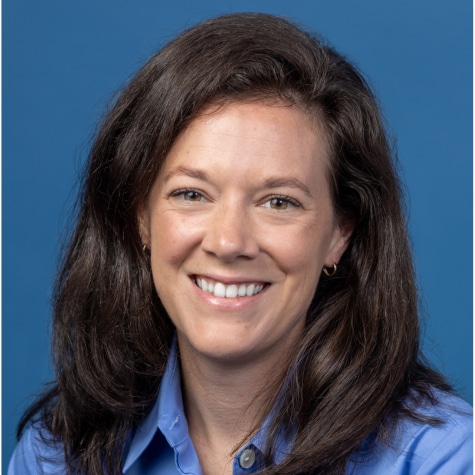
Dr. Presley Helen Nichols, MD, MS
Dr. Nichols is a Pediatric Endocrinologist at Children’s and serves as Assistant Professor at Emory University School of Medicine. Dr. Nichols joined Children’s and Emory after completing her fellowship training at New York-Presbyterian/Columbia University Irving Medical Center. In her free time, Dr. Nichols enjoys baking, running and spending time with her family.
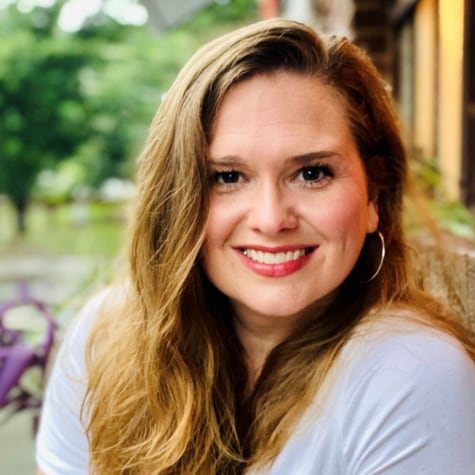
Alison Higgins, Diabetes Educator
Diagnosed with type 1 diabetes at 9 years old, Alison grew up embracing a full and active life—participating in sports, activities and adventures just like her peers. Inspired by her own journey, she pursued dietetics at the University of Georgia and then earned a Master’s Degree in Human Environmental Studies with an emphasis in Nutrition at Southeast Missouri State University. Alison has been a practicing Registered Dietitian since 2013 and became a Certified Diabetes Care and Education Specialist in 2015. Today, she helps others living with diabetes lead healthy, fulfilling lives—the kind she has always strived for herself.

Megan Bowman, Mom to Sarah
In the fall of 2024, Megan noticed visible signs of weight loss in her then-16-year-old daughter, Sarah. At the time, the family saw it as a byproduct of an intense marching band schedule. By Christmas, Sarah had lost 15 pounds in less than three months and was noticeably hungrier and thirstier than usual. In early January, Megan took Sarah to her pediatrician. In the blink of an eye, they’d checked into Children’s at Scottish Rite with a fresh diagnosis of type 1 diabetes. Megan shares her family’s experience of adapting to their new normal, offers hope for families of the newly diagnosed and gives real-world examples of how friends and family can best support kids with type 1 diabetes.

Lynn Smith
Lynn Smith is a veteran journalist, podcast host and mom of two boys. Her experience as the parent of a patient at Children’s inspired her to advocate for spreading awareness of childhood illnesses and injuries.