Season 3: Episode 6
Hope and Will: A Parenting Podcast from Children's Healthcare of Atlanta
Heads Up: Protecting Kids from Concussions
Parents know these panicky moments all too well: a tumble off the couch, a hit on the field, the bonking of heads during a bout of roughhousing. Concussions are more common than many of us realize, and they don’t just happen to athletes.
In this episode, we hear from two parents, Casey and Pete, who each faced scary situations when their kids, a toddler and a teen, experienced head injuries. Their stories kick off a larger conversation with Dr. Andrew Reisner, pediatric neurosurgeon and Medical Director of the Concussion Program at Children’s Healthcare of Atlanta, and Dr. Ashley Brouillette, a pediatric sports medicine physician who treats teen athletes and helps guide their recovery.
The engaging discussion highlights signs to watch for, why vomiting can be a warning sign and what “treatment” looks like for a concussion. From sports risks to recovery tips, and even when to consider pulling a child from contact sports, this episode offers a clear, calm look at what parents need to know and do when head injuries happen.
Lynn Smith: Every year, we hear more and more about concussions and how they can affect memory, concentration, sleep and mental health. It's enough to make any parent want to keep their kid from playing sports. But we also know these types of injuries don't only happen to athletes. Today, we'll hear from two parents whose children recently experienced concussions. We'll also hear from two physicians who've spent years researching and caring for kids who've suffered concussions.
Dr. Andrew Reisner is a Pediatric Neurosurgeon and the Medical Director of the Concussion Program at Children's. Dr. Ashley Brouillette is a Pediatric Sports Medicine Primary Care Physician in the Sports Medicine Program at Children's who focuses on teen athletes and injury prevention. We're going to kick things off by hearing from two families who trusted their instincts when their kids suffered head injuries. One happened at home on a staircase and the other on a soccer field. Their stories do a great job of reminding us that all head injuries should be taken seriously and that they can happen anywhere and to kids of all ages.
Casey, Pete, Dr. Brouillette and Dr. Reisner, thank you for coming on the show. As a mom of two very active boys, I know this is an important discussion. Casey, I want to start with you and what happened to your little one. You were driving home from work, and you heard one of those cries. You could tell in the way your 2 year old was crying that something was very wrong. What happened?
Casey Cormier: I’m on the phone talking to my husband, and I just hear this cry. I know something is wrong. My husband said Walker, our 2 year old, fell down the stairs. Our staircase is about 14 steps, so it's a pretty significant fall for a 2 year old, and he landed on his head. It was just one of those cries that you know something is wrong. He was crying for a good minute or two and then he stopped when I walked through the door. I'm looking at him and something is off.
He's not super accident prone, even for a toddler, so I had him walk and as he was walking, he appeared to be a little disoriented. He wasn't smiling. And this is the type of child that when somebody walks through the door, he's running up to greet you. I picked him up because I wanted to hold him and see how he reacted to that. He had no reaction, just a very flat affect. I'm in my head I was thinking, “I want to take him in.” And then he projectile vomited, which confirmed for me that I was taking him to Children's.
Lynn Smith: What happened once you got to Children's?
Casey Cormier: I had my daughter ride with me and sit in the backseat next to Walker. I told her, “It’s your job is to keep him awake.” We got to the hospital and were seen immediately. As we were checking in, they immediately put us with a triage nurse. She asked us, first and foremost, what had happened. She assessed his vitals. She reassured me because I was, of course, crying – so emotional over the situation and fearful of what could happen.
Lynn Smith: Can you describe what the treatment plan looked like for Walker?
Casey Cormier: They recommended staying in the ED for three hours to monitor him, getting his vitals every so often, having the nurse come in and check on him. And then after a while, when he seemed good, they're said, “Let's get him something to drink. Let's get him a little snack. Let's see how he does.”
Lynn Smith: What happened from there? I understand it was diagnosed as concussion.
Casey Cormier: Yes, they diagnosed it as a minor brain injury. And they said, “The next 24 hours are crucial.”
Lynn Smith: I want to turn to you, Pete. Tell me a little bit about your son, Logan. What happened to him on the soccer field?
Pete LeVan: He made the junior varsity team at his high school this year. This is his first year of high school. He turned 15 a couple days before this actually took place. All the kids were messing around at the beginning of practice, and one took a kick toward the goal. It just flew off his foot kind of at a weird angle and caught Logan behind the right ear.
He kind of stumbled around a little bit, and his friends thought he was joking until he went down hard. When he was on the ground, he lost consciousness. When he came to, his arms were shaking. He didn't know what had happened. He just realized he was on the ground. The player who had kicked the ball and the coach took him to see the trainer, and he grabbed his phone and called for me to come get him. What was unique is that Logan wasn’t in pain. He had a small bit of pain where the ball made contact, but not really anything to his head. Since that was the case, we left practice and went home. He ate a normal dinner that night.
When he went to take a shower, I sat in his room just in case he got lightheaded or something from the hot water. The trainer said to keep him off electronics as much as possible, and that's what we did that evening. When he went to bed, I checked on him every few hours. The next morning, he got up at 6:30, got ready and went to school thinking that everything was going to be okay. After being at school for about an hour he called saying that he had a severe headache and asked if I could come get him.
I made a doctor’s appointment for him. Tuesday evening, the trainer reviewed him and spent 45 minutes going over every aspect of what happened, so we'd have like a baseline to discuss with the doctors at our appointment. Friday morning, we were in with the doctor and they diagnosed him with a stage two, or slightly complicated, concussion.
Lynn Smith: How did they describe to you what a complicated concussion meant?
Pete LeVan: They told us it was concerning that he lost consciousness and that his headaches had come on afterwards. He also was having trouble with auditory sensations, some confusion and visual issues. They had him close his eyes and march in place. He tended to fall to the direction of the side he was hit. Over the next few days, he continued to have headaches, not severe, and some trouble concentrating and sensitivity to light sound.
From that point, we followed the plan that the physician went over with us … that if he felt like it, he could walk around, get some physical activity, but no return to sports activities until he was cleared. Two days ago, he did participate in the JV game. All in all, it took about two weeks for him to return. It was extremely important for him to be able to play in the JV season, and he’ll be able to at least play in these last three games.
Lynn Smith: Just getting back out there must have been important to him. What was your first thought when you learned this was a concussion?
Pete LeVan: The first thought that I had, unfortunately, was why didn't I go and do something immediately when it took place?
Lynn Smith: That's what we do as parents.
Pete LeVan: Unlike when he's had a hurt knee or ankle, I couldn't see what was happening. So, we had to communicate with him a lot more. We told him not to fake that he feels better. You can play through pain, but you can't play through an injury. And just because we can't see this injury, it’s something that you have to make sure that you're being honest with everyone about it as you go through it.
Lynn Smith: I want to turn now to our physicians, Dr. Andrew Reisner and Dr. Ashley Brulette. Dr. Reisner is a neurosurgeon. He serves as Medical Director of the Concussion Program at Children's. And among his many impressive feats as a leader within the Children's Neurosciences team, he helped author a concussion toolkit that helps physicians assess concussions and mild brain injuries. Dr. Brouillette is a Pediatric Sports Medicine Primary Care Physician who is passionate about caring for teen athletes and preventing injuries. Thank you both for being here. Dr. Reisner, I want you to start off, if you can, by helping us understand exactly what is a concussion.
Dr. Reisner: First of all, thank you very much for inviting me to be here. And a quick shout out to Walker and Logan's parents for being so eloquent describing concussion. I know it's been a rough ride for both of you. And both of you are incredibly brave to be here today and maybe relive some of those bad memories. We appreciate you doing that.
Ms. Smith, you asked an easy question. What is the definition of concussion? And it's one of those strange things. Everybody kind of knows what a concussion is, but to define it is incredibly difficult. Basically, a concussion is a traumatically induced injury to the head. There's usually a change in mental status. There can be amnesia, forgetfulness for that event, and there may or may not be a transient loss of consciousness or deficit, in other words, weakness somewhere. And when you think of traumatic brain injury, it's not an on-off switch like you switch on the light. You switch it off. It's a dimmer switch. and there are different degrees from severe to mild. I wish there was another term than mild because there's no such thing as a mild head injury.
Lynn Smith: And what are some of the common causes of concussions?
Dr. Reisner: It really is a little bit age dependent. And it's interesting to me that the young ones, like Walker, under the age of 2, which we would consider extreme of age, have the same ideology or cause as the other extremes of age – the greater than 65s, like grandpas. In between, it's sports accidents or motor vehicle accidents among teenagers.
Lynn Smith: And what about some of the symptoms and reactions you should be looking for to know when to get help?
Dr. Reisner: No two concussions are the same, but they all have somatic problems, headaches, dizziness or sometimes vomiting. They can have just emotional disturbances, vocal deficits, sleep disturbances, visual issues, or balance problems, like Logan.
Lynn Smith: Does it come up immediately, or does it take time to surface?
Dr. Reisner: Usually it's immediate and the degree of severity of the symptoms vary. But here's the good news. There's no correlation between the degree of severity of symptoms and how long they'll last. You can be pretty sick in the first 24 hours, but there's a good chance you'll make a good recovery.
Lynn Smith: We talked about vomiting being a really significant sign. Casey knew that and that's why she sought medical attention so quickly. And we want to note these are not the only signs to look out for, but these are the ones that she really knew about. Why do we watch for vomiting?
Dr. Reisner: One of the key findings I recognize as a neurosurgeon is pressure inside the head, swelling inside the head, blood inside the head. Since the skull is fixed, if you have extra blood, extra swelling, the pressure's going to build up. You'll go into a coma. And if swelling continues, it can be a very severe coma. One of the earliest signs that pressure is building up in the head is vomiting and loss of consciousness. You are absolutely correct in being a little concerned about vomiting. But, parents should remember that there are many, many causes of vomiting. Fortunately, the vast majority of kids who have a mild head injury, concussion, with or without vomiting, make a fabulous recovery.
Lynn Smith: And I want to shift the conversation to you, Dr. Brouillette. So much about what we hear about concussions in the media and TV is related to sports. Tell us more about your day-to- day role in the patients that you see in the sports medicine program.
Dr. Brouillette: I'm a sports specialist, so I take care of kids of all ages who do sports or play around and get hurt. We are responsible for seeing a lot of the concussions, particularly in sports athletes. In our clinic, we'll help diagnose, manage, treat and then eventually clear patients, helping with steps along the way, including with how to get back to school.
Lynn Smith: My kids fall all the time. They bump their heads all the time. And before this conversation, I might have thought that's just what kids do. But even if you have a slight suspicion about a head injury, I know the big takeaway here is to get it checked out. What does the treatment of a concussion entail, Dr. Brouillette?
Dr. Brouillette: A lot of concussion treatment is going to be tailored to symptoms. A lot of it is rest and relative brain rest. We try to minimize things that are going to make people feel bad, such as electronics. We strongly encourage kids to go back to school, even if it's partial days. Research has shown kids do better that way. Getting back in a routine helps. I explain to people that it's like a car. If the gas tank is on zero, it still looks like a car. You pop the hood, it's built like a car, but it's just not going anywhere. And that's the same thing with concussion. That's why imaging is not very helpful for us. A lot of times, it's just going to show us that they have a brain, not how it's working. We have to refuel the gas tank, making sure kids are getting enough sleep. We also recommend making sure kids stay hydrated, making sure that they're getting enough fats, proteins, carbs, and are eating well, because lots of kids will feel nauseous and don't want to eat. Encouraging things that are going to refuel and help fuel the brain is really helpful.
Lynn Smith: If you don't get it diagnosed, if you don't treat this, what are some of the dangers?
Dr. Brouillette: If you're not treating your concussion and you're ignoring it, you're going to prolong your symptoms. I tell kids school is kind of the only thing they're allowed to make themselves feel better for, and other than that, they need to avoid things that make them feel bad. In general, we want to make sure that we're treating them and not allowing them back to any sort of contact sport before they are fully recovered because we don't want to lead to any long-term severe consequences, which is what second impact does. I tell my patients all the time, I can fix a broken leg but not broken brain. So, they need to let us know.
Lynn Smith: That's a great point. What kind of words of assurance do you have for parents that might have brushed off a fall in the past?
Dr. Brouillette: I tell people not every hit to the head is going be a concussion. Kids have clumsy movements. When I trained as a pediatrician, I got the mommy calls all night like, “Hey, they fell down the stairs. Should I be worried? Here's what they look like.” If your kid bonks their head, and they hurt where they got hit, that in isolation is not a concussion. But, if they hit their head and are vomiting, dizzy, not acting like themselves and are having trouble focusing at school or concentrating, those are things that tell us it's not just from an actual hit. If you have anything that's more than what you would expect if they had the equivalent of bumping their knee, that's when you should be more concerned.
Lynn Smith: We heard both from Pete and Casey, different stories. A toddler and a teen. Is what a concussion looks like different based on age or the individual?
Dr. Brouillette: Every concussion is highly individualized. One patient's concussion can be different from their prior concussions. They can be different from one to the other. Concussion can be harder for the little ones because they can't really tell us as much. Like, “my head hurts.” I'll see 6 year olds in my clinic, and they'll tell me it feels like water moving through their brain. And that's how they describe dizziness to me. There also are emotional symptoms. Boys are a little bit more frustrated. Girls are a little bit more emotional. It's highly variable from one patient and one concussion to the next. And part of it is age. It's sometimes harder to tell us. Teenagers don't always want to tell us because they want to go back to sports.
Lynn Smith: Speaking of sports, we hear mostly concussions in reference to football, but this really varies, I would imagine. What are the risks from sport to sport?
Dr. Brouillette: In swimming, people don't count flags and hit their head on the wall, or they slip on the pool deck. You would think that would be low risk, but you can get a concussion in any sport. Concussions in football are obviously the most commonly discussed. We find most female concussions happen in soccer, but even among those positions are going to vary. Goalies are more likely for proximity to feet and goal posts. Things like special teams are a little bit higher because they're building up a full head of steam before they run into each other, which is part of why NFL rules have been changing in terms of kickoffs. But in general, all sorts of things can cause it in any sport. We see them in all.
Lynn Smith: In sports where they're used, are helmets effective, or do there need to be some changes that happen?
Dr. Brouillette: In general, helmets are going to be effective for preventing the more severe brain injuries, as well as skull fractures. They can help kind of tamp down the direct force of the blow, but they will still allow concussions to happen. There's no one thing that we can put on somebody's head to stop them from getting a concussion.
Lynn Smith: There are some things that try and reduce concussions or reduce the impact of them. Specifically, when it comes to the Return to Play act of 2013. Can you tell us a little bit about that?
Dr. Brouillette: In Georgia, there's a Return to Play act of 2013, stating that any athlete with a symptom has to be evaluated by some form of healthcare provider that includes athletic trainers, which we're very lucky to have at a lot of high schools. If they are diagnosed with a concussion, they cannot return until they're cleared by a qualified healthcare provider. A lot of times we evaluate kids on the sideline and say, “Hey, this is not a concussion,” and we let them go back. But if there's any chance that we're concerned that someone has a concussion, then you have to sit them out. You're required to do the “slow return,” so that we're preventing things like second impact and making sure we're taking care of kids’ brains.
Lynn Smith: Should parents consider possibly pulling their kids from contact sports if they've had multiple concussions?
Dr. Brouillette: It’s very individualized. When I have patients who have a lot of concussions, I have individualized conversations with them. Things that tell me the brain is protesting are if they have ADHD and those symptoms become harder to control. If they have a history of seizures, those are harder to control. They're progressively taking longer to get better. Even when they recover from their concussion, they still just kind of notice that it's a little bit harder to focus than it was before. But I've had patients with multiple concussions who all got better within the week, and they're taking all honors A-plus classes.
Sometimes we talk about changing positions. I've had goalies switch to midfielder. I've had kids stop playing on special teams. And we often talk about the risk of multiple contact sports at once and minimizing risk of things like that. Usually, we consult with a lot of different people when we make that decision. People like Dr. Reisner or a neurologist. We'll have a conversation about that because it's a big deal to tell a patient that they can't play sports anymore.
Lynn Smith: There’s nothing that can be 100 percent prevented, but is there something that parents, coaches, players can do to reduce concussions from happening?
Dr. Brouillette: Good tackling form is a huge one. Patients and parents get lectured from me all the time about not dropping their head. Offensive players are guilty of it as much as defensive, but people don't talk about it as much. They all get lectures from me. And then in general, neck strengthening programs can be helpful because that's going to prevent that whiplash or kind of back-and-forth jostling type injury. That's one of the few preventative programs that have really been strongly recommended even by the American Academy of Pediatrics. I found that to be helpful for wrestlers and soccer players for good head control when they're heading balls. And then, good sportsmanship in terms of not shoving your head at somebody has been helpful.
Lynn Smith: There's also an impact evaluation. What is that and how do you know if you should get something like that and where would you get it?
Dr. Brouillette: The impact test is a 20-to-30 minute online computer-based test that helps evaluate how the brain is functioning. Whereas things like the CT scan or the MRI are going to look at structure, the impact looks at function – how the brain is operating. It specifically looks at memory, both more verbal word-based and shape-based visual memory, as well as reaction time and motor speed, all of which are things known to be consistently affected by concussion. The test allows us to have some more objective data of how somebody is looking and how they are improving. It also rates their symptoms. I do this in my clinic when I'm monitoring a concussion. I'll test patients when they come back for follow up, and I'll be able to see in a more objective way how these things are improving and if their symptom scores improve.
Lynn Smith: And Dr. Reisner, for parents like Casey and Pete, whose kids have experienced a concussion, what do you want them to know?
Dr. Reisner: First thing I want you to know is that the brain was built to have concussions. The majority of people who have concussions will make a full complete recovery and not have any problems ever in their life again. The prognosis is excellent. The concern is, as Dr. Brouillette has said, when you have multiple concussions. But for the kids who have concussions, the vast majority are going to make full complete recoveries with no deficits, period.
The second thing, concussions can present in many different ways for different people. The problems can vary. They could have physical problems. They can have pain problems. They can have learning problems. They can have psychological problems. And this is addressed by a multidisciplinary team, such as what we have at Children's. We have a team dedicated to those that are still symptomatic. They can see either a neurosurgeon, neurologist, headache specialist or a sports specialist.
Lynn Smith: What do you hope parents listening to this episode really take away and learn from?
Dr. Reisner: There's hope on the horizon. There's hope right now. One of the new pushes among the medical community is just as Dr. Brouillette alluded to, prevention. And there are excellent scientific papers that are out. It's not just common-sense logic. It has been proven. Physical training beforehand, strengthening exercise beforehand, minor changes in rules, common sense, sportsmanship, parental supervision, all make a huge difference down the road.
Lynn Smith: Dr. Brouillette, I understand you have a designated concussion nurse on your team. How does that work?
Dr. Brouillette: The concussion nurses are fabulous. They help provide initial sets of recommendations to a lot of our patients even before they get in to see me. And I can usually see people quickly. We have a person who is around during business hours. Parents can call 404-785-KIDS and ask to speak to the concussion nurse. and they will help provide guidance if there are any questions, concerns. And they also help make sure that people who are referred into our Concussion Program see the right person.
Lynn Smith: Dr. Reisner, Dr. Brouillette, this is such incredible information. Thank you for taking the time. And to take it back to where the conversation started, Casey and Pete, let's just finish with you. What do you hope listeners learn from your experience? Casey, why don't you start?
Casey Cormier: Trust your gut. You know your child better than anyone else. You know when something is off or when they're not acting right.
Lynn Smith: Pete, how about you?
Pete LeVan: To echo what Casey said is just kind of knowing your child and knowing if there's any changes in behavior. Thank goodness Logan was able to discuss what happened to him. And for us to be able to come up with a plan to treat this like any other injury, not letting him rush back to sports, was key for us in this.
Lynn Smith: Thank you for sharing your stories and such incredible information. Thanks for being on the show.
Remember that all head injuries should be taken seriously. Returning to school or play after a concussion can be a complicated journey. A Children's sports medicine primary care physician can help determine when a child or teen is ready to return to their normal activities.
For more information about what we discussed today, head to choa.org podcasts. I'm Lynn Smith and this has been Hope and Will, a parenting podcast from Children's Healthcare of Atlanta.
This podcast is for general informational and educational purposes only. It is not to be considered medical advice for any particular patient. Clinicians must rely on their own informed clinical judgments when making recommendations for their patients. Patients in need of medical or behavioral advice should consult their family healthcare providers.
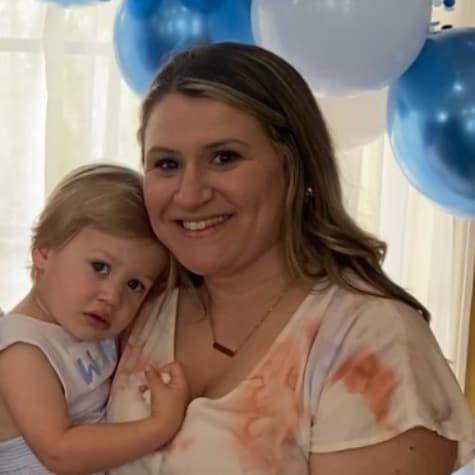
Casey Corbier, Walker’s Mom
While talking to her husband on her drive home from work, Casey heard her youngest son, Walker, wailing in the background. Walker, who was just shy of 2 at the time, had fallen down a set of 14 stairs. She trusted her gut and brought him to Children’s where an evaluation confirmed a mild brain injury.
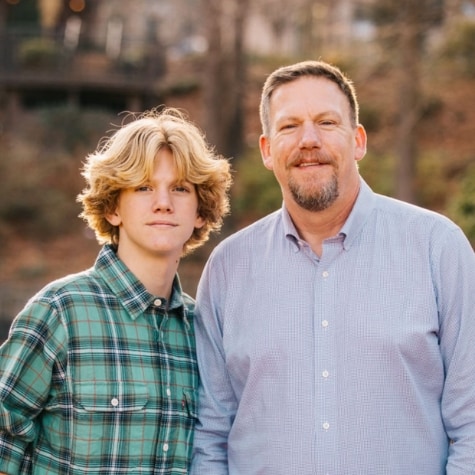
Pete LeVan, Logan’s Dad
Pete’s son, Logan, was at his high school’s JV soccer practice when a kicked ball took an unexpected curve and hit Logan in the back of his head. After briefly losing consciousness on the field, Logan quickly improved and seemed to have returned to normal that evening. While at school the next day, he began experiencing headaches—which then led to the diagnosis of a slightly complicated concussion.

Andrew Reisner, MD, Pediatric Neurosurgeon and Medical Director of the Concussion Program
Dr. Andrew Reisner’s name is often used synonymously with “hero” in the homes of families throughout Georgia. He specializes in pediatric neurosurgery with areas of interest that include brain tumors, concussion, Gamma knife radiosurgery, hydrocephalus and pituitary disorders. At home, he’s the proud father of two grown children.

Ashley Brouillette, MD, Pediatric Sports Medicine Physician
While training as a pediatrician, Dr. Ashley Brouillette developed a passion for caring for teen athletes. As a Pediatric Sports Medicine Primary Care Physician, she specializes in the diagnosis and treatment of sports-related injuries, non-operative musculoskeletal injuries, overuse injuries and concussion management. She is double board-certified in pediatrics and sports medicine, and currently serves as the team physician for Stockbridge High School and Hampton High School.

Lynn Smith
Lynn Smith is a veteran journalist, podcast host and mom of two boys. Her experience as the parent of a patient at Children’s inspired her to advocate for spreading awareness of childhood illnesses and injuries.