5 Tips to Prepare Your Teen Athlete in the Offseason
Parents and coaches should be mindful of how to help a growing athlete safely return to sports after the offseason.
Because your teen athlete’s growing body can change so quickly, it’s always a good idea to prepare for the season ahead so his or her muscles and joints aren’t shocked to return to the stresses and movements of sports. Preparing in the offseason can lower your teen’s risk for a training-related injury when practice starts next season.
“Parents and coaches should be mindful of how to properly help a teen condition his or her body to safely return to sports after taking time off,” says Logan Caplan, MD, Children’s sports medicine primary care physician.
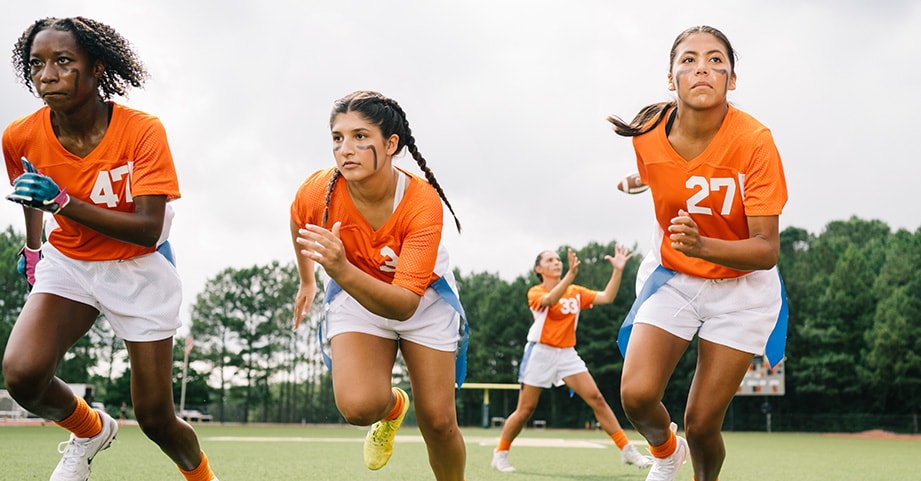
Every sport is unique, but our pediatric sports medicine experts recommend these five tips to up your game.
1. Cross-train for balance
Focusing on a different sport during the offseason gives often-used bones and muscles a break and lets them practice different movement patterns. For example, soccer requires a lot of dynamic running, so your soccer player could try biking, swimming or low-intensity jogging as cross-training. Cross-training is a great way for your teen to participate in multiple sports. Your teen can continue to increase his or her skills and strength while his or her bones are still growing while reducing the risk of overstressing any one area of the body for too long.
2. Do strength and cardiovascular training for performance
Strength exercises engage muscles that athletes use in their sports and make them stronger and more coordinated. A strength training program utilizes body weight exercises, resistance bands, weight machines, and free weights to help strengthen muscle groups specific to an athlete’s performance. Correcting relative muscular weaknesses in the offseason is an important way to help prevent injury, especially of the core and posterior chain (muscles of the backside of the body including the rotator cuff, glutes, and hamstrings). There are even specific programs for ACL injury prevention. Some parents are concerned that strength training and weight-lifting may be detrimental to youth athletes’ development and growth. However, there is great evidence to show that not only is resistance training safe for developing growth plates, but it may actually be beneficial for bone growth as long as loads are progressed properly under adequate supervision.
Cardiovascular exercise, or aerobic exercise, involves any sustained activity that increases heart rate and breathing rate to build stamina and function of the heart and lungs. These exercises, like swimming or jogging, allow an athlete to play his or her sport for longer periods of time before becoming fatigued.
To find an appropriate training program for your teen, look for a sports performance coach or personal trainer who is familiar with your child’s sport of interest and appropriate exercise mechanics.
3. Improve flexibility
Due to rapid growth during childhood and again during adolescence, youth athletes are prone to muscular tightness which can lead to pain and injury. Tightness may increase during the offseason when the athlete is less active. Therefore, the offseason is a great time to improve flexibility by doing regular exercises that help lengthen and loosen the muscles used in his or her sport. An exercise program prescribed by a personal trainer or coach is a great place to start. Yoga and Pilates are two activities that can also help improve flexibility and core stabilization in growing athletes.
4. Eat healthy, hydrate and sleep well
Eating healthy meals, staying hydrated and getting enough sleep are just as important when a teen is taking time off as they are during the sports season. Maintaining proper nutrition in the offseason keeps muscles and bones strong and growing, and hydration can help an athlete avoid heat-related illness during hot training months. Check out these breakfast and lunch ideas to fuel your athlete. Children's Strong4Life recommends 9 to 12 hours of uninterrupted sleep each night for children 6 to 12 years old and 8 to 10 hours of sleep for children ages 13 to 17, with at least 7 hours per night recommended for those 18 years and older. Teens who do not get enough sleep are at a higher risk for obesity, diabetes, injuries, poor mental health, and problems with attention and behavior.
5. Return to sports slowly
If athletes jump back into their sports at full volume and intensity too quickly, they are more likely to experience an overuse injury. In the weeks leading up to the start of a new season, teens should slowly resume training. They should gradually increase the number of days per week and the length of time they practice, as well as the intensity of their practice. For example, one month prior to the start of a season, athletes may increase training volume incrementally by 15 minutes per session (i.e. practice twice in the first week for 45 minutes, three times in the second week for 60 minutes and so on) until they are back to practicing full time and are ready for competition.

We are exclusively dedicated to kids and teen athletes.
The Sports Medicine Program at Children’s is one of the only programs in the country dedicated exclusively to caring for growing athletes. Our team is specially trained to care for teen athletes with sports-related injuries and illnesses.
Learn MoreKeeping Growing Athletes Healthy and Strong








Logan Caplan, MD is a pediatric sports medicine physician who specializes in the diagnosis, treatment and management of sports injuries, musculoskeletal injuries and concussions. A graduate of the Florida International University Herbert Wertheim College of Medicine, she completed her residency in pediatrics at Vanderbilt University Medical Center before completing a fellowship in primary care sports medicine at Children’s Hospital of Philadelphia. She has particular interest in lower extremity injuries, spondylolysis, musculoskeletal ultrasound, ultrasound-guided injections, as well as early sport specialization and injury prevention.
This content is general information and is not specific medical advice. Always consult with a doctor or healthcare provider if you have any questions or concerns about the health of a child. In case of an urgent concern or emergency, call 911 or go to the nearest emergency department right away. Some physicians and affiliated healthcare professionals on the Children’s Healthcare of Atlanta team are independent providers and are not our employees.