Ear Infections in Children
An ear infection is inflammation of the inner, middle or outer ear and is usually caused by bacteria that occurs when fluid builds up behind the eardrum.
Middle Ear Infections
A middle ear infection, also called acute otitis media, is usually caused by bacteria and occurs when infected fluid builds up behind the eardrum. It is quite common in children. Anyone can get a middle ear infection, but most start presenting when a child is between 6 and 24 months old.
“Most children have had a middle ear infection by age 3,” says Nandini Govil, MD, MPH, a pediatric otolaryngologist, or ear, nose and throat (ENT) doctor, at Children’s Healthcare of Atlanta. “Approximately 40% of children have had three or more ear infections by 6 years old.”
What causes middle ear infections in kids?
The younger your child is when they get their first ear infection, the greater the chance they will have repeated ear infections. This is most commonly due to your child’s:
- Immune system: It is just starting to develop.
- Anatomy: The eustachian tube is a natural drainage tube that connects the ear to the back of the throat. In kids, it’s smaller, narrower and more horizontal than in adults. Because of this, it’s easier for pathogens (bacteria) to get stuck in the middle ear and cause an infection.
A child’s middle ear infections may also be caused by:
- Enlarged adenoids (glands that produce white blood cells to help fight infection and are located in the back of the nose, above the soft palate where the nose connects to the throat).
- Seasonal allergies.
- Sinus infections.
- Immunodeficiency.
Other risk factors that may contribute to a child having middle ear infections include:
- Secondhand smoke.
- Drinking bottles or breastfeeding while lying down.
- Day care (one study shows children in childcare centers are more likely to get infections that may lead to an ear infection because they have not yet developed the necessary protective immunities).
What are symptoms of a middle ear infection?
If your child isn’t old enough to say their ear hurts, the most common signs that they may have a middle ear infection include:
- Increased fussiness.
- Loss of appetite.
- Pulling on the ear.
- Fever (a temperature higher than 100.4°F).
- Inability to go to sleep.
- Crying.
- Drainage from the ear (yellow or white fluid, possibly blood-tinged; there may also be a foul odor).
- Trouble hearing.
Do teenagers and young adults get middle ear infections?
Generally, middle ear infections start decreasing as a patient gets older. There are patients, however, who have ear infections and require tubes when they are older; even teens and some adults may require ear tubes. It’s important to see a pediatric ENT who understands how the anatomy of your child’s ear changes as they continue to grow. Thankfully, ear infections are not typically serious and can be treatable with antibiotics if needed. But it’s helpful to have a team like Children’s on hand when your child is experiencing pain and discomfort.
What are treatments for a middle ear infection?
Your child’s pediatrician may prescribe antibiotics to reduce your child’s middle ear infection; however, depending on the frequency of infection, your child may meet the criteria to undergo ear tube surgery.
This procedure is quite common. By age 3, 1 out of every 15 kids has had ear tube surgery. We consider ear tube placement when:
- A child has had at least three ear infections in the past six months.
- A child has had four ear infections in the last year, with one being in the last six months.
- A child has fluid in the ear the day we see them.
What else may cause my child to have ear pain?
If your child doesn’t have a middle ear infection, they might have:
- Swimmer’s ear, which is an outer ear infection of the ear canal.
- Blocked or plugged eustachian tubes as a result of a cold or allergies.
- A sore throat.
- Teething or sore gums.
What are symptoms of a middle ear infection?
If your child isn’t old enough to say his ear hurts, the most common signs that he may have a middle ear infection include:
- Increased fussiness
- Loss of appetite
- Pulling on the ear
- Fever (a temperature higher than 100.4°F)
- Inability to go to sleep
- Crying
- Draining from the ear (yellow or white fluid, possibly blood-tinged; there may also be a foul odor)
- Trouble hearing
Do teenagers and young adults get middle ear infections?
Generally, middle ear infections start decreasing as a patient gets older. There are patients, however, who have ear infections and require tubes when they are older; even teens and some adults may require ear tubes. It’s important to see a pediatric ENT who understands how the anatomy of your child’s ear changes as he continues to grow.
Thankfully, ear infections are not typically serious and can be treatable with antibiotics if needed. But it’s helpful to have a team like Children’s on hand when your child is experiencing pain and discomfort.
What are symptoms of a middle or outer ear infection?
If your child isn’t old enough to say his ear hurts, the most common signs that he may have a middle ear infection include:
- Increased fussiness
- Loss of appetite
- Pulling on the ear
- Fever (a temperature higher than 100.4°F)
- Inability to go to sleep
- Crying
- Draining from the ear (yellow or white fluid, possibly blood-tinged; there may also be a foul odor)
- Trouble hearing
What else may cause my child to have ear pain?
If your child doesn’t have a middle ear infection, he might have:
- Swimmer’s ear, which is an outer ear infection of the ear canal
- Blocked or plugged eustachian tubes as a result of a cold or allergies
- A sore throat
- Teething or sore gums
Why should I take my child to a pediatric ENT?
The benefit taking your child to a pediatric ENT is that the providers like those we have at Children’s, from the otolaryngologists to the audiologists, anesthesiologists and nurses, are all pediatric trained and only work with kids.




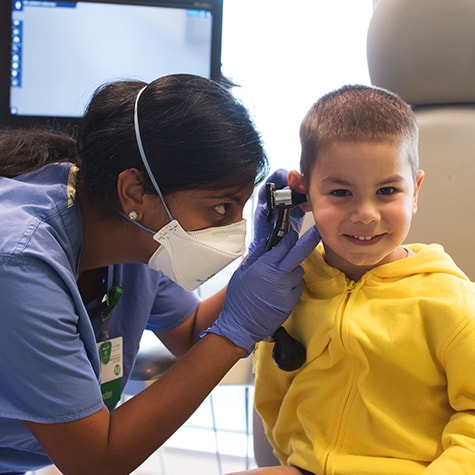
When it comes to your child, where you take them matters.
If your child has ear infections, strep throat or other issues that impact his ears, nose or throat, find a pediatric otolaryngologist or click the link below to schedule an appointment.
Schedule NowNandini Govil, MD, MPH, is an Associate Professor of Otolaryngology-Head and Neck Surgery at Emory University School of Medicine and a pediatric otolaryngologist at Children’s Healthcare of Atlanta. She is double board-certified in otolaryngology-head and neck surgery and complex pediatric otolaryngology. She currently serves as Director of the Hearing Loss Program at Children’s.
Ashwini Tilak, MD, is a Pediatric Otolaryngologist at Children's Healthcare of Atlanta and Assistant Professor at Emory University School of Medicine. Dr. Tilak earned her medical degree from the University of Virginia School of Medicine prior to completing her otolaryngology residency training at the University of Alabama at Birmingham. Following her residency, Dr. Tilak completed a pediatric otolaryngology fellowship at Children's National Medical Center in Washington, DC.
This content is general information and is not specific medical advice. Always consult with a doctor or healthcare provider if you have any questions or concerns about the health of a child. In case of an urgent concern or emergency, call 911 or go to the nearest emergency department right away. Some physicians and affiliated healthcare professionals on the Children’s Healthcare of Atlanta team are independent providers and are not our employees.