Rehabilitation Medicine Fellowship
Train in one of the country’s largest pediatric rehabilitation programs while caring for children with complex neurologic, orthopedic, developmental and medical rehabilitation needs.
Children’s Healthcare of Atlanta, in partnership with the Emory University School of Medicine Department of Rehabilitation Medicine, offers a one- or two-year Pediatric Rehabilitation Medicine Fellowship approved by the Accreditation Council for Graduate Medical Education. The fellowship is designed to prepare physicians for independent practice in pediatric rehabilitation medicine and eligibility for pediatric rehabilitation medicine subspecialty board certification. Children’s has one of the largest pediatric rehabilitation inpatient units in the country. Fellows who are selected for the Rehabilitation Medicine Fellowship are part of a rehabilitation team that provides physiatry care for children with special healthcare needs, making more than 10,000 patient contacts each year.
| Program feature | Details |
|---|---|
| Program | Pediatric Rehabilitation Medicine Fellowship |
| Institutional Partners | Children’s Healthcare of Atlanta and Emory University School of Medicine |
| Program Length | One- or two-year fellowship pathway |
| Accreditation | ACGME-approved |
| Primary Inpatient Site | 28-bed inpatient rehabilitation unit at Children’s Scottish Rite Hospital |
| Outpatient Training Site | Center for Advanced Pediatrics and multidisciplinary specialty clinics |
| Clinical Volume | Approximately 450 inpatient rehabilitation patients per year and more than 10,000 annual patient contacts |
| Core Strengths | Inpatient pediatric rehabilitation, multidisciplinary clinics, procedural training, continuity clinic, complex care, spasticity management and academic mentorship |
Why choose this fellowship?
Our fellowship gives trainees broad, hands-on exposure to pediatric rehabilitation across inpatient, outpatient, multidisciplinary and procedural settings. Fellows work closely with pediatric physiatrists, therapists, psychologists, neuropsychologists, nurses, social workers, orthotists, surgeons and other pediatric subspecialists.
Fellows gain experience caring for children with acute and chronic disabilities, including brain injury, spinal cord injury, cerebral palsy, spina bifida, neuromuscular disease, cancer-related disability, orthopedic conditions, limb differences and other complex rehabilitation needs.
What makes the program distinctive
- Comprehensive pediatric rehabilitation training
- Dedicated inpatient pediatric rehabilitation training
- Robust multidisciplinary clinic exposure
- Hands-on procedural training
- Continuity clinic with longitudinal patient ownership
- Close faculty mentorship
- Opportunities for scholarly activity, quality improvement and academic development
- Training within a major pediatric healthcare system and academic medical center
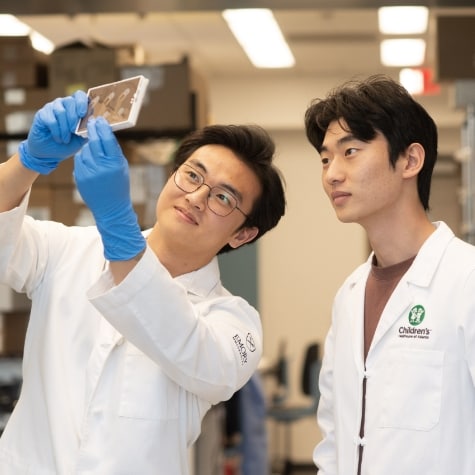
Emory University, Our Primary Research and Academic Partner
Children’s and Emory University School of Medicine partner together on clinical trials, residencies and fellowships. More than 500 physicians hold titles at both institutions. Our research program has ranked in the top five nationally for National Institutes of Health (NIH) funding for a decade.
Learn About Emory
National Honors from U.S. News & World Report
Children’s ranks among the nation’s top pediatric hospitals on the U.S. News & World Report list of “Best Children’s Hospitals.” The report ranks hospitals for excellence in outcomes, program structure and national reputation in 11 pediatric specialty areas.
Our Awards
Why Atlanta?
In addition to our unique neighboring pediatric partners, Atlanta is full of diverse communities, walkable neighborhoods, a thriving arts and culture scene, and plenty of green spaces and sunny weather—it’s pretty easy to fall in love with our charming city.
Make Atlanta Home- Joshua Vova, MD, Program Director
- Archer DeGraaff, DO
- Jeannie Harden, MD
- Udayan Kulkarni, MD
- Enoch Leung, MD, PhD
- Elizabeth A. Poplawski, DO
- Tyler Shirel, MD, Assistant Program Director


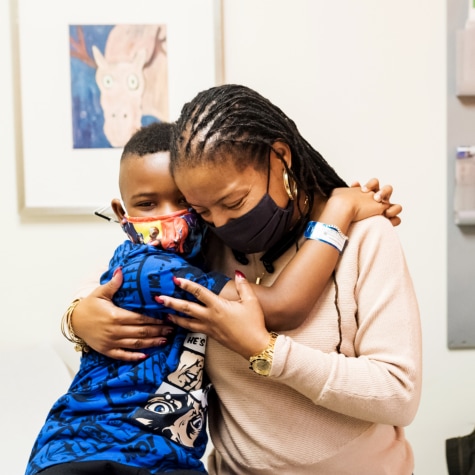
Why Children's?
We manage one million patient visits annually at three hospitals, Marcus Autism Center, the Center for Advanced Pediatrics, Urgent Care Centers and neighborhood locations.
Learn more
Sample rotation schedule
| Month | Rotation Focus | Training Highlights |
|---|---|---|
| Month 1 | Inpatient Pediatric Rehabilitation | Orientation, inpatient team workflow, family meetings, interdisciplinary care planning |
| Month 2 | Inpatient Pediatric Rehabilitation | Brain injury, spinal cord injury, complex medical rehabilitation |
| Month 3 | Outpatient / Multidisciplinary Clinics | Cerebral palsy, spasticity, spina bifida, neuromuscular and specialty clinics |
| Month 4 |
Inpatient Pediatric Rehabilitation | Progressive responsibility in inpatient care and team leadership |
| Month 5 | Inpatient Pediatric Rehabilitation |
Medical complexity, discharge planning, equipment and therapy coordination |
| Month 6 | Procedures / Elective / Scholarly Work | Botulinum toxin, phenol/alcohol injections, cryoneurolysis, ultrasound-guided procedures, research or QI |
| Month 7 | Inpatient Pediatric Rehabilitation | Advanced inpatient rehabilitation management |
| Month 8 | Inpatient Pediatric Rehabilitation |
Interdisciplinary care, family education, transition planning |
| Month 9 | Outpatient / Elective | Continuity clinic, specialty clinics, individualized learning goals |
| Month 10 | Inpatient Pediatric Rehabilitation | Leadership development and independent clinical decision-making |
| Month 11 | Inpatient Pediatric Rehabilitation |
Complex rehabilitation care and board preparation |
| Month 12 | Elective / Research / Transition to Practice |
Scholarly work, career development, advanced specialty exposure |
Actual schedules may vary based on fellow pathway, prior training, program needs and individualized educational goals.
Fellows spend substantial time on the 28-bed inpatient rehabilitation unit at Children’s Scottish Rite Hospital. The unit receives approximately 450 patients per year with a wide range of diagnoses and impairments.
Fellows participate in
- Daily inpatient rehabilitation rounds
- Interdisciplinary team conferences
- Family meetings and goal-setting
- Therapy planning with physical therapy, occupational therapy and speech-language pathology
- Spasticity and tone management planning
- Equipment, orthotic and bracing recommendations
- Discharge planning and school/community reintegration
- Care coordination for children with complex medical needs
The inpatient rehabilitation program offers seven-day-a-week therapy services, including physical therapy, occupational therapy and speech therapy, as well as school reentry support, music therapy, pet therapy, recreational therapy, pediatric psychology and neuropsychology. The inpatient rehabilitation unit is CARF accredited for Pediatric Rehabilitation, Brain Injury, Spinal Cord Injury and Cancer Rehabilitation.
Outpatient and multidisciplinary experiences take place primarily at the Center for Advanced Pediatrics. Fellows participate in a fellow continuity clinic, allowing them to follow their own patients longitudinally under faculty supervision.
| Clinic Area | Fellow Experience |
|---|---|
| Cerebral Palsy Clinic | Tone management, bracing, therapy planning, surgical decision-making support |
| Spasticity Clinic | Botulinum toxin planning, phenol/alcohol injections, cryoneurolysis, intrathecal baclofen and surgical coordination |
| Spina Bifida Clinic | Mobility, bowel/bladder care coordination, equipment, orthotics and lifespan planning |
| Leukodystrophy Clinic | Progressive neurologic disease management and interdisciplinary care |
| Complex Concussion Clinic | Return-to-learn, return-to-activity and symptom management |
| Muscular Dystrophy / Neuromuscular Clinics | Functional assessment, equipment, respiratory and cardiac coordination |
| Stroke Clinic | Hemiparesis, tone, gait, therapy planning and long-term rehabilitation needs |
| Neurospine Clinic | Spine-related neurologic and functional impairments |
| Brain Tumor Clinic | Cancer rehabilitation, fatigue, cognition, mobility and school reintegration |
| Brachial Plexus Clinic | Upper-limb function, therapy, splinting and surgical coordination |
Fellows receive training in pediatric rehabilitation procedures in both sedated/procedural and clinic-based settings. Procedural experience includes:
- Botulinum toxin injections
- Phenol/alcohol injections
- Cryoneurolysis
- Ultrasound-guided procedures
- Electrical stimulation-guided procedures
- Anatomic landmark-guided procedures
- EMG/NCS exposure
- Intrathecal baclofen pump trials
- Intraoperative monitoring for selective dorsal rhizotomy
This procedural training is designed to help fellows develop skill in evaluating tone, selecting appropriate interventions and integrating procedural care into a broader rehabilitation treatment plan.
By the end of fellowship, graduates should be prepared to:
- Care for children with acute and chronic disabilities across inpatient and outpatient settings
- Lead interdisciplinary rehabilitation teams
- Develop individualized rehabilitation plans for children with complex functional needs
- Manage spasticity, dystonia, weakness, mobility limitations and equipment needs
- Perform or participate in pediatric rehabilitation procedures
- Coordinate care with orthopedics, neurosurgery, neurology, oncology, therapy services and community providers
- Counsel families about function, prognosis, safety, school participation and quality of life
- Prepare for pediatric rehabilitation medicine board certification
Fellows are encouraged to participate in scholarly work, quality improvement, education and academic development. Faculty mentorship is available for fellows interested in clinical research, outcomes work, procedural innovation, program development, medical education or advocacy.
Potential areas of academic focus
- Pediatric spasticity and tone management
- Brain injury rehabilitation
- Spinal cord injury rehabilitation
- Cancer rehabilitation
- Cerebral palsy and movement disorders
- Transition planning
- Rehabilitation outcomes
- Quality improvement
- Community participation and adaptive recreation
Emory residency tracks
The Emory University School of Medicine (EUSOM) and Graduate Medical Education (GME) Office recognizes that some residents have the desire to gain knowledge and skills in a specific focus area that is related to healthcare but outside the normal residency program curriculum. To this end, the GME Office has developed 12-24 month residency tracks; these experiences will complement and not replace any aspect of residency training. These areas include ethics; global health; healthcare management; health equity, advocacy, and policy; medical education, medical informatics; medical innovation; simulation and quality improvement and patient safety.
Fellows may participate in community-based outreach and volunteer activities, including camps and programs for children with complex medical conditions such as congenital or acquired heart defects, seizure disorders, spina bifida, limb deficiencies, ventilator dependence, kidney disease and oncologic diagnoses.
These experiences help fellows understand pediatric rehabilitation beyond the hospital and clinic, including family-centered care, community participation, adaptive recreation and long-term quality of life.
Eligibility requirements
Applicants must have completed an ACGME-accredited residency program in either:
- Physical Medicine and Rehabilitation, or
- Combined Pediatrics/Physical Medicine and Rehabilitation
Applicants must be eligible for or certified by the American Board of Physical Medicine and Rehabilitation and must have the credentials needed to obtain a medical license in the state where the fellowship is located. International medical graduates must have an ECFMG certificate.
Application materials
Applications are submitted through ERAS and may include:
- Curriculum vitae
- Personal statement
- Letters of recommendation
- USMLE or COMLEX scores
- Research and scholarly activity
- Professional attributes, honors or awards
Chauntoiya Jones
Program Associate
Emory Physical Medicine and Rehabilitation Residency and Pediatric Rehabilitation Fellowship
Phone: 404-712-5511
Fax: 404-712-5895
E-Fax: 404-712-5895