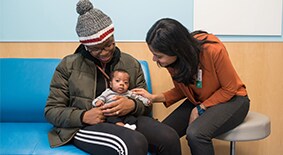
Season 1: Episode 7
Hope and Will: A Parenting Podcast from Children's Healthcare of Atlanta
Why Are Back-to-Back Illnesses Taking Over Your Home?
Is your family getting clobbered by back-to-back illnesses? Dr. Andi Shane, our Division Chief of Pediatric Infectious Diseases, discusses the mechanics behind high volumes of infections in our communities. She’ll share the top places germs love to hide, leaving you with clear tips to try to keep those germs at bay. Should illness make its way into your home, Dr. Preeti Jaggi, our Director of Antimicrobial Stewardship, then talks us through the role antibiotics play—or don’t play—in treating common childhood illnesses. She’ll discuss the recent antibiotic shortage, how clinicians decide when to use antibiotics and why it’s important to finish prescribed dosing even after symptoms have subsided.
Listen to this episode on your preferred podcast platform: Apple Podcasts, Spotify or Amazon Music.




[VOICEOVER INTRO]
You're busy and you want the best for your kids. We're here to help. This is Hope and Will, a parenting podcast from Children's Healthcare of Atlanta.
[Host] Lynn Smith: Let's rewind our mental clocks back to 2020. Remember when any time you touched a surface outside your home, you had an almost instant reflex to seek sanitizer, and we were almost comically careful in trying to not touch our faces, right? Now, those stellar hygiene habits have largely gone by the wayside for a lot of us and contagious illnesses, particularly those that affect our respiratory systems, have roared back in a big way.
Hi, I'm Lynn Smith, the host of Hope and. I'm joined today by two infectious disease experts who are both moms who can shed insight into our COVID-era immune systems and give actionable tips to keep your family healthy in this new normal.
It is my pleasure to welcome Dr. Andi Shane, Children's Division Chief of Pediatric Infectious Diseases to the podcast, and you might recognize her voice. She's been making regular rounds across news stations for the past two years—my old news station included. Dr. Shane, I had you on back in 2018. I had been to Children's because my son had RSV at 7 weeks, and I felt like parents need to know more about this. So, we reached out to your folks, and it was so insightful. I'm really excited to learn more about what you do and how you do it
Dr. Shane: Thank you, Lynn. It's my pleasure to be here.
Lynn Smith: Tell us a little bit more about what your role is as an infectious disease doctor.
Dr. Shane: I'm a pediatrician first, and so that means that I take care children. and then I study and specialize in infections, and that's what we've been seeing a tremendous amount of, and infections usually from viruses and bacteria are the most common infections that most children experience. What I try to do is help to understand which virus or which bacteria may be causing particular symptoms and diagnose infections. Then, once we know what bacterial virus may be causing an infection, then we have options to treat the specific bacterial virus.
Lynn Smith: As you point out, it's happening so often now. Is this because it's post-COVID? Is it because it's a coincidence? What are you seeing? Is this a cyclical nature of illness?
Dr. Shane: Lots of people have been trying to study this, and there probably are multiple reasons why we're seeing so much illness right now. One of them is probably related to the fact that for two years or so, most people did not interact with other people. Schools were closed. People weren't going to work, they were working remotely. People were not traveling, and so there wasn't very much opportunity for people to interact with each other. And one of the things about infections that we know is that it's more likely that people acquire an infection or have an infection when they interact with other people.
Lynn Smith: Is that true for RSV and some of the respiratory illnesses? That's what we've seen, at least in the news. The uptick has been huge in that department.
Dr. Shane: Absolutely. And in addition to the fact that people haven't been, as we say in infectious diseases, mixing with each other, we've lost some of the seasonality of viruses. So, viruses like flu and RSV, we became pretty good at predicting when we were going to have high numbers of those infections. What happened is that once people started interacting and mixing again, there were more people who were susceptible and so more able to acquire those infections. Therefore, what we saw was that the seasonality and the predictability of when we would have infections from these viruses really went away. We had RSV in the summertime, influenza before we normally see it, and so the viruses were just not reading the book, and it didn't follow the patterns that we know so often to be spot on.
Lynn Smith: Can you describe for us in the simplest terms possible, sort of how we, kids in particular, get sick? How are they getting infected?
Dr. Shane: So, it depends a little bit on what the infection is, but in general, bacteria and viruses are everywhere in our environment and they're everywhere in us. They live in our nasal passages. They live in our mouths. They live on our hands, which we come into contact with various surfaces, and so the most common way is just through person to person contact through respiratory droplets, so that's when you sneeze or cough.
Children just love to interact with each other and share their, what we say are secretions. So, that's the way they explore their environment is by touching things. And so that's why we often see more infections in younger children because as a consequence of exploring their environment by touching things, they're also acquiring bacteria viruses that they haven't seen before. And when someone interacts or experiences a bacteria or virus that they haven't seen before, their body recognizes that that is something that is not good, and they don't want. So, it tries to make what we call an immune response. We have a little army of various types of soldiers. They're different types of cells in our body that basically try to fight and get rid of this invader bacteria or invader. And that's when you get sick. You have your symptoms of fever. Your body is trying to have you cough to get it out, to sneeze, to get it out. If it's a virus or bacteria that causes some stomach upset, diarrhea, vomiting, your body is basically trying to rid of this foreign invader.
Our immune systems are smart, so they remember these attacks, and if you experience the same bacterial virus or sometimes a similar bacterial virus, the immune system will say, “I remember this,” and will not have that full-fledged response that results in all those symptoms. So, you may have a little bit of a runny nose, a little bit of a headache, maybe a small fever, but you won't have that full-blown response that you had the first time, and sometimes you won't have any response.
Lynn Smith: And there's a big difference between a viral infection and a bacterial infection, not just in what it is, but how you treat it.
Dr. Shane: Absolutely. We probably have more viral infections in general than we have bacterial infections, but the key difference, as you really pointed out, is that for bacterial infections, we have antibacterials, all commonly known as antibiotics. Once we know what the bacteria is, we can then prescribe an antibiotic that could help the immune system in its response and essentially help rid the body of that.
The challenge is that viruses don't respond to antibiotics, and so if somebody has a viral infection and you're giving them an antibiotic, it's probably not going to have an impact, or it won't have an impact on that viral infection.
Lynn Smith: We’ll talk about antibiotics in a moment, but that was what was so frustrating for me when I experienced seeing my son go through RSV, which is a virus. You can treat the symptoms by getting the phlegm out, but you can’t cure it. It just has to work through your body, and that was something for me that was hard to get my head around. Let's talk about the idea of where these germs are living. So, we're always picking up the hand sanitizer when we maybe pump gas or we're opening a busy door in a public place, but there are a lot of things that we aren't thinking of—nooks and crannies where these germs are living and we're not being as diligent about. Can you share with us what those are?
Dr. Shane: Obviously it's a good idea, those places that you mentioned, but I think the number one thing that we forget about is things that we touch, and we call these high-touch surfaces, the main high-touch surface is one's phone. We touch our phones many, many times a day. The other is computers. We are so used to electronics in our world. Keyboards, that's a place that lots of people are touching, and so thinking about those surfaces as potential places where bacteria and viruses may live when they've been transferred from someone's hands is also very important.
Lynn Smith: I'd like to give you a couple different scenarios where you could get some of those germs. Let's take for example, like drink from a water fountain.
Dr. Shane: So, I think if the child is old enough that they won't put their mouth on the faucet, that is certainly reasonable. What's probably a little bit easier is to have a refillable water bottle and bring that into the vicinity of the water stream so that the bottle's not touching the actual spigot and capture the water that way.
Lynn Smith: What about something like riding in a shopping cart? I wipe off the handle because how many people are grabbing that shopping cart? But I put my son right there in the basket. Is that something we should avoid?
Dr. Shane: Probably a good idea to wipe it down. One, because if there are bacteria or viruses there, there's a chance that they could be removed by the physical act of wiping, but also many of them are impregnated with antibacterial substances. And also it doesn't taste so good, so if you put your mouth on a shopping cart handle once after being cleaned, you're probably not going to do that again. In general, it's probably a good idea, and I think we all do that just to wipe surfaces.
Lynn Smith: Let's take something like an indoor playground, right? Jump houses or you know, trampoline parks, things like that. Those are open and busy now, and there are birthday parties and all those things. Is that something that we can ease back?
Dr. Shane: What I recommend in situations like that is that the child uses hand sanitizer before going into the activity area, and many places actually require that. And then again, if there's any food or eating or drinking activities before eating or drinking. If the child goes to the restroom, washing hands or using hand sanitizer. And then as you're leaving as well. Those sort of safety measures, or what we call them mitigation measures, could prevent transmission. Obviously you can't wipe down an entire activity center, and so really what you want to do is try to focus on the hand hygiene.
Lynn Smith: What about at a restaurant, sitting in a restaurant highchair or sharing a condiment bottle of ketchup with a table that you know that has used the same bottle?
Dr. Shane: I would adopt the same recommendations for those activities and highchairs. It's probably a good idea just to surface wipe it if it hasn't been. Oftentimes you are able to see something, and so trying to rid of anything visible is probably a good idea, in general. And then hand hygiene before eating and then after eating. In terms of shared condiments, really that has not been a major mode of transmission of bacteria and viruses. Once again, if you're using hand hygiene before you eat or drink, that probably is not a source of contamination, specifically the food itself that is within those shared condiment containers.
Lynn Smith: And you've talked so much about hand washing. It's almost been a theme throughout every single scenario. So, is there a right way to wash our hands in a way that's not as effective
Dr. Shane: The best way to do it is to turn on the faucet, put your hands under the faucet and wet it. Then turn off the faucet, put some soap on your hands, and then wash your palms, the back of your hands, and in between every finger up to the wrists, and then turn the water back on. Remove the soap and then use a towel to dry your hands, and you want to make sure that your hands are completely dry and then turning off the faucet with a paper towel. Ideally, when you're turning on and turning off the faucet, those are high touch surfaces, and so if you can, it's better to use an elbow or something, not your hands that you're actually washing.
Now, those steps are complicated and for a young child that can be really challenging. And so in some situations we recommend that a child use alcohol-based hand sanitizer, which is much easier to achieve some of that same eradication of bacteria and viruses, but doesn't require all of those coordinated steps.
Lynn Smith: It is one more effective than the other, hand washing versus hand sanitizing?
Dr. Shane: There's a lot of debate about that, and better also depends on if you don't have running water, then your only option is hand sanitizer. And for some activities outdoors, there may not be running water on a playground, so hand sanitizer would be a good option for certain viruses. We know that in general, hand washing is better, but once again, I think that if I had my choice between ineffective or unavailable hand washing and alcohol-based hand sanitizer, I would go for the alcohol-based hand sanitizer.
Lynn Smith: Speaking of debates, there's been a lot of conversations that overuse of sanitizers can lead to superbus and it's weakening our immune system. What do you have to say about that?
Dr. Shane: I really am a proponent for hand hygiene, and I think that we really need that. That is really the foundation of the prevention of transmission of all bacteria and viruses. There has been a lot of debate and a lot of discussion about antibacterial soaps and whether those are necessary or not, and really, you know, the one thing about hand washing that provides an advantage over hand hygiene is actually the friction that you create when you're rubbing your hands together, and you're rubbing in between each finger. The duration is important because you want to make sure that you cover all surfaces—really focusing on that friction. And so you can achieve the same with hand sanitizing gel, rubbing hands together until basically the gel is completely absorbed.
Lynn Smith: Some of my friends actually change the clothes of their kids into something fresh and new once they get home to get the germs off of them. And actually, one of my friends actually bathes her kids when they get home from school. Is this effective, in contrast to the concern about weakening in our immune systems with antibacterials?
Dr. Shane: You know, I think that one should do what one feels is appropriate. And so I think that in general, it's really, if clothes are soiled visibly, it's probably a good idea to remove them. What the potential gain from removing clothing is, is really debatable. And once again, it depends on the bacteria or the virus that we're concerned about. If I really had to prioritize, and a lot of things that we do without children are battles, right? They just want to run inside and do something. And so my battle that I would fight is to have them wash their hands well with soap and water. And you know, some children want to take off their clothes, some don't. And so I would really focus on the hand hygiene component of when one enters the house.
Lynn Smith: Are there any tips that we can work with the school, where our children are going when they're away from us, to ensure that some of these safety precautions are being handled once they're in class?
Dr. Shane: So, the one thing that we really can do is we can teach children what to do in the classroom. And so sending children with a small bottle of hand sanitizer is really helpful if there isn't hand sanitizer in the classroom, and it's allowed for them to have a small bottle of hand sanitizer. Also showing children what to do and making it a game and trying to make it something that they'll share with their friends because it works twice as well if the friend is also doing it. And so trying to really instill that in a child at home. And you know, children really watch us and watch what we do. And so we have to be good models as well. So if we model the behavior at home and say, “Wait, wait one minute, wash your hands.” And show them how to do it and observe them. It will become part of their natural routine and before you know it, they'll be doing it. And so really trying to emphasize the importance of that.
Lynn Smith: Such important information, especially now. Dr. Andi Shane, thank you so much for being with us.
Dr. Shane: Thank you. My pleasure.
Lynn Smith: I'd now like to welcome Dr. Preeti Jaggi to the show. Dr. Jaggi offers great insight into how antibiotics factor into the treatment of those diseases. So Dr. Jaggi, welcome, and I know just like Dr. Shane, you're an infectious disease physician, so you've also had a passion for what we call antibiotic stewardship. Can you tell us what that means and why you're so passionate about it?
Dr. Jaggi: Over time in infectious disease, we have realized that we need to be very, very careful with antibiotics that are lifesaving drugs in that we should not be overusing them because we know that about 35,000 people die each year from infections that are resistant to antimicrobials. So antibiotic stewardship is just really the science of using antibiotics only when needed, using the right doses, the right drug for the right duration in order to preserve their use over the long term.
Lynn Smith: Sure, because you make a good point. If you don't use it in the right way, what can happen? In simple terms, can you tell us why antibiotics were first developed and how exactly they work?
Dr. Jaggi: So, antibiotics were developed because we've long known that there have been bacteria that have caused illnesses. And you know, Alexander Fleming actually spuriously found that he grew penicillin in his lab, and at the time, there were lots of people dying of particular bacteria, such as Staph aureus, and it was during wartime. A lot of people were getting infections, so they used some of these agents and were able to really help people.
If you look at the history of medicine textbooks in the 1930s, really for most infections, all we could do was bedrest and good nursing care. Once we started having antibiotics, we really could affect their actual illness.
Lynn Smith: Childhood illnesses like pink eye, sore throat, bronchitis, diarrhea, pneumonia, meningitis, all can be viral or bacterial in nature. And we know antibiotics are prescribed when we know the illness is caused by bacteria, not a virus. But some infections can be caused by both. So how do doctors know when an illness will respond well to an antibiotic?
Dr. Jaggi: That's a great question. So, this is a big effort in pediatrics—to develop the clinical idea of what is caused by a virus versus a bacteria. So, a couple of things that we look for, for instance, are when we think somebody may have a virus, we don't find any specific localizing area of the body that seems to be affected. For instance, we will look for the duration of symptoms. We will look at how sick the patient looks. So one of the things we always are looking for, how playful is a child. We put the whole picture together in order to think about if this could be a virus or a bacteria.
Lynn Smith: And can you explain the relationship between a primary and a secondary infection? For example, a viral cold might be a primary infection, and that leads to a bacterial infection, like an ear infection, for example.
Dr. Jaggi: So viruses oftentimes will disrupt the upper respiratory tract, right? They'll cause a lot of inflammation in the cells that line your nose and your throat and inner ear. And that inflammation can lead to the bacteria that normally live in your nose and throat to kind of set up shop and replicate and cause an infection. So, because of that mucosal irritation from the virus, sometimes some patients will have other diseases that will occur after that. So, that could be an ear infection. It could be a sinusitis—those kinds of infections.
Lynn Smith: What are some of the other common childhood illnesses where parents can expect this is going to be realistic? That you're going to need an antibiotic for this to be effective.
Dr. Jaggi: Oftentimes you're going to need to have some kind of conversation with your clinician, and oftentimes a visit with your clinician, to kind of really sort through it. The most common things we treat with antibiotics for would be otitis media, so acute ear infections. We will treat for strep throat. That's really primarily over the age of 3 because we know treating strep throat in general over the age of 3 will decrease the likelihood that people will get rheumatic fever. We will treat for urinary infections when we think that that is the cause of the illness after getting a urine test. So those would be some of the really common things. And then sinusitis would be another one. So all of these things are things that you're going to need to have a clinician assessing, because again, we spend a lot of time learning about what is a typical viral syndrome versus a bacterial.
After doing a physical exam, looking at the ears, looking at the throat, thinking about if it's group A strep to do a test to confirm. We would get a urine test to look for if there's white blood cells in the urine and a urine culture before we generally will treat. So, all of these things will be something that you're going to want to have a clinician assessing.
Lynn Smith: I know we've talked a lot about how it's important not to over-prescribe antibiotics, but my son, for example, he had 10 ear infections in his first year. I really struggled with whether or not to allow 10 antibiotics within that one year. But I'm told, “Listen, the infection's there. It's diagnosed.” What are you supposed to do as a parent? And he ended up getting two sets of tubes, but this is after a whole year.
Dr. Jaggi: Again, this is all risk versus benefit with primary ear infection. Especially when your clinician deems them, not a severe ear infection, there is an option to watch and wait because there are viruses that can cause inflammation in the inner ear, and we don't know for sure if it's a virus versus a bacteria, because we are not, you know, getting a sample of the inner ear. Some clinicians will actually do even delayed prescribing where they give you the antibiotic, but they tell you not to fill it until a certain date after giving that watch and wait period. That's an option. And you know, everything is risk and benefit. We're going to try to limit any factors that can increase like cigarette smoking, if any family has a cigarette smoker, you know, we're going to make sure we're counseling patients about that. But then when you do need the antibiotic, we do need to use it.
It's all risk and benefit because the times when we really don't want to be giving antibiotics is when we really don't know what clinical diagnosis would warrant that antibiotic. So if your clinician is telling you that, I would really, really listen.
Lynn Smith: I think we're all guilty of this at some point, you know, just a few days to using something like amoxicillin, symptoms might feel like they're completely gone and we might forget a dose or two, or we're just going to stop early altogether. Can you explain what happens when we don't finish the prescribed course and why it's so important to?
Dr. Jaggi: When we treat for an infection, we want to make sure that all the bacteria that are responsible for the illness are killed. We do a lot of studies to determine the optimal duration of treatment, and some of those studies are actually ongoing where we're looking at shorter and shorter courses of an antibiotic for a specific indication, and we do a lot of work in that, in this antibiotic stewardship field. You don't want to go so low that you would be not treating enough.
The other thing that we need to make sure is that if you're not using all of that antibiotic, you will have some leftover. And what do you do with that leftover? You may throw it in the trash or put it in the sink, and that can also get into the environment and cause antibiotic resistance. We also know that some parents will take that antibiotic, save it, and then use it later on their own. We definitely don't want to do that. We don't want small amounts of exposure to that antibiotic intermittently, especially when you don't need it. So it's really, really important to just finish the course as prescribed. And if you have any leftover, you can actually take it back to your pharmacy for them to properly dispose of it, but not to use it in the future or not to give it to anybody.
Lynn Smith: Recently, antibiotics were all over the headlines—parents having trouble getting common prescriptions filled, and in some cases, you know, you had families that were driving to more than a dozen pharmacies or even hundreds of miles away for something like amoxicillin. So what's causing the shortage?
Dr. Jaggi: Yes, it's very, very difficult situation right now with antibiotic shortages. Likely, some of the issues affecting worldwide production in general are also affecting antibiotics. We know sometimes it can be weather related. When we have extreme weather occurring in a certain area where they're manufacturing antibiotics is not able to do that. I know a few years ago we had a problem with some inpatient medications after the hurricane in Puerto Rico, and then also we know that demand is high, right? We have a lot of children that are having a lot of respiratory illnesses, and they may be getting some of those secondary or bacterial infections, so the demand is also high. So, all of those things are probably occurring, although I would have to tell you that I don't know all of the reasons. It's a little bit of an opaque process when they're manufacturing these antibiotics. So, it's really day-to-day, even for us in the hospital setting to know what is available.
Lynn Smith: So, what is the one thing you want every parent listening to remember?
Dr. Jaggi: I would like every parent to think carefully about asking clinicians for antibiotics when your clinician is telling you not to give them. We want to make sure that we're not giving these antibiotics inappropriately. We know that especially when we give some of the broader antibiotics for kids with upper respiratory infections if we ask parents to do a quality of life indicator as to how their child is doing. When we're giving these broad antibiotics, they actually have a worse quality of life. They have more diarrhea. They have more rash. They have more other symptoms, and so we always want to take both the risk and the benefit into account when we're giving the antibiotic. We should never think that antibiotics are all benefit and no harm.
Lynn Smith: Such good information for a lot of parents that right now are really concerned. Dr. Jaggi, thanks so much for being with us.
Dr. Jaggi: You are welcome.
Lynn Smith: I want to thank doctors Shane and Jaggi for joining me today and giving incredible information to stay in the know. When we have new episodes that become available, be sure to subscribe. You can just search for Hope and will Parenting in your preferred streaming platform. And then just click follow or subscribe for more about this episode and related content you could visit choa.org/podcasts.
I'm Lynn Smith, and this has been Hope and Will, a parenting podcast from Children's Healthcare of Atlanta.
[VOICEOVER OUTRO]
This podcast is for general informational and educational purposes only. It is not to be considered medical advice for any particular patient. Clinicians must rely on their own informed clinical judgments when making recommendations for their patients. Patients in need of medical or behavioral advice should consult their family healthcare providers.

Dr. Andi Shane, Children’s Division Chief of Pediatric Infectious Diseases
Dr. Shane specializes in prevention and management of infectious diseases, as well as bedside care for children with highly infectious special pathogens. Her wealth of clinical expertise, balanced by a practical approach honed while raising her 11-year-old son, has rendered her a sought-after media guest in the COVID era.

Dr. Preeti Jaggi, Children’s Director of Antimicrobial Stewardship
Dr. Jaggi, a pediatrician who specializes in infectious diseases, is passionate about raising awareness of the dangers of antibiotic resistance and “superbugs” brought about by misuse and overuse of antibiotics. At home, she’s the proud mom of two teenagers.

Lynn Smith
Lynn Smith is a veteran journalist, podcast host and mom of two boys. Her experience as the parent of a patient at Children’s inspired her to advocate for spreading awareness of childhood illnesses and injuries.

Why, when and how to wash your kids’ hands
Washing your hands throughout the day, and encouraging your kids to do the same, can help stop the spread of germs and prevent illnesses and infections, like colds, the flu and COVID-19.
learn more