Season 2: Episode 5
Hope and Will: A Parenting Podcast from Children's Healthcare of Atlanta
What Parents Don't Know They Need to Know
If there’s one thing parents know well it’s that parenting is full of surprises. Some of those surprises, though, are not at all surprising to those who work in pediatric healthcare. As a parent, unless someone in your inner circle experiences one of these “rites of childhood passage,” the warning signs may stay off your radar until you’re in the throes of experiencing it personally.
With today’s episode, we’re on a mission to raise awareness of some relatively common but rarely discussed diagnoses that affect kids. Topics include febrile seizures, nursemaid’s elbow, toxic synovitis, pneumonia and impetigo.
Our hope is that by making you aware of these conditions—and talking through their relatively common prevalence and often mild treatment course—we’ll reduce some of the panic should one impact a child in your care. This conversation won’t address all of the items on your “why didn’t anyone tell me that before?” list, but we hope to put a good dent in some of the ones related to kids’ health.
The episode opens with the story of a Georgia mom whose toddler son recently experienced a febrile seizure at home. We then hear from Dr. Jim Fortenberry, our beloved Chief Medical Officer, who will help us better understand these conditions’ typical symptoms and courses of treatment.
Listen to this episode on your preferred podcast platform: Apple Podcasts, Spotify or Amazon Music.




[VOICEOVER INTRO]
You're busy and you want the best for your kids. We're here to help. This is Hope and Will, a parenting podcast from Children's Healthcare of Atlanta.
[Host] Lynn Smith: If there's one thing parents know well, it's that parenting is full of surprises. Some of those surprises, though, are not at all surprising to those who work in pediatric healthcare. As a parent, unless someone in your inner circle experiences one of these “Rights of Childhood” passage, the warning signs may stay off your radar until you're in the throes of experiencing it personally.
With today's episode, we're on a mission to raise awareness of some relatively common but rarely discussed diagnoses that affect kids. Topics include febrile seizures, Nursemaid’s Elbow, toxic synovitis, pneumonia and impetigo. Our hope is that by making you aware of these conditions and talking through their relatively common prevalence and often mild treatment course, we'll reduce some of the panic should one impact a child in your care.
This conversation won't address all of the items on your “Why did anyone tell me that before?” list, but we hope to put a good dent in some of the ones related to kids’ health. Today, we open with a Georgia mom whose son recently experienced a febrile seizure at home. Then, we'll hear from Dr. Jim Fortenberry, [former] Chief Medical Officer at Children's Healthcare of Atlanta, who will help us better understand these conditions, typical symptoms and courses of treatment.
Meghan, I'm so happy to have you on the show. And before we dive into what actually happened, can you help us get to know your family a little bit better? Tell us about them.
Meghan Dozier: Yes, my name is Meghan. I live with my husband, Graham, and our two young children, Wells and Elsie. Wells just turned 2 in August and then Elsie will be 1 next month. They definitely keep us busy, but we're pretty lucky they've been relatively healthy up until the instance that we're going to talk about today. We had two visits to Children's, but both for minor things, nothing serious, and both were with Wells. He's the one causing the drama in our house.
Lynn Smith: I've got two boys. I know that. Let's talk about the incident at hand. Wells was 22 months old. You went from never hearing about a febrile seizure, which I hadn't either, to experiencing it firsthand. Tell me exactly what happened.
Meghan Dozier: We went up to Virginia for a week to visit my parents. We came home on a Friday morning and by the time we got home, it was between noon and 1 p.m. Wells seemed pretty tired. He was a little bit warm, but I honestly didn't think much of it. I was very hot and tired myself after a day of traveling with two kids under 2. He went upstairs for his nap and when we got him up from his nap, he definitely was warm, and I could tell he seemed feverish. We took his temperature, and it was 101, so nothing super alarming.
We came back downstairs and just were snuggling on the couch, watching TV. Elsie was on her play mat right next to us in the room and we were all settled down. My husband left to run a quick errand and less than 10 minutes later, Elsie started getting a little bit fussy. I went over to help her and next thing I know, I heard a noise. I look back over at the couch and Wells was lying face down and his whole body was convulsing. My first thought was, “Is he trying to be funny?” I went over and rolled him over. His eyes had rolled back in his head, and he was just having this seizure like activity. I had a brief moment of panic, because I didn't know where my phone was, but was able to find that in the next room. Called 911, and I vividly remember saying, “I think my son's having a seizure, but I don't actually know what a seizure looks like.” The operator was able to instruct me to put him on his side, and it continued for five-ish minutes, and it was scary.
He stopped seizing, and then he was just super lethargic, basically just asleep on my shoulder. While on the phone with the operator, I had texted my husband. He rushed home, and then the firefighters and ambulance arrived at the same time. The 911 operator had dispatched the emergency services. Everyone arrived. They came in, and I wish I could recall the main firefighter's name. He really took charge. He was so confident and calm. And I remember him asking, “Has Wells been sick? Does he have a fever?” And I think hearing that just made me realize, “Okay, there's a cause. This isn't completely random. He must know something that we don't.”
While they were there, Wells started screaming and I've never been so happy to hear that noise. They were checking his vital signs and all that. Then we rode in the ambulance. I went with him in the ambulance. My husband stayed with our daughter. We headed to Scottish Rite. While in the ambulance, he had what the EMS team thought was probably a second smaller seizure. It was probably a minute long. I think she was trying to give him some Tylenol, and he just all of a sudden had this blank stare and some jerky movements.
Lynn Smith: I want to go to those five minutes when you're on with 911, and he is full on seizing. What are you saying to the operator? What are they saying to you? What's going through your mind?
Meghan Dozier: I remember her saying, “Make sure he's on his side.” At one point there was some blood coming from his mouth and because he had bitten his tongue. I was in a full state of panic. I know in those five minutes I definitely had worst case scenario thoughts come to my head. I wish I had known at the time what was happening.
Lynn Smith: Once you got to the hospital, you had some of the comfort of this can happen, but what was Wells like, and how did things go once he was in the hospital?
Meghan Dozier: Once we got there, he was still pretty out of it. We were immediately wheeled back to the ER. We were greeted by a really welcoming and caring team of nurses, had a few different doctors come in. They ran a bunch of different tests. I remember nasal swabs for viruses, some blood work, an EKG scan. As he was being poked and prodded, he started to respond a little bit more.
I definitely remember him saying, “Mama.” I was like, “Okay, he knows who I am.” Every minute, every hour, I was feeling more and more optimistic, but also still so scared about what we were dealing with.
Lynn Smith: What did they eventually explain to you happened? And what did that mean for Wells? Is he now perfectly okay?
Meghan Dozier: Yes, yes, perfectly okay. We were in the ER for a while and then we eventually were admitted to the Neurology floor. He was back to normal by the next morning, and we spoke to several different doctors. I was also on my phone Googling, so I had plenty of questions about what they had told me was a febrile seizure. What I learned is that a febrile seizure isn't typically caused by a super high number on the thermometer, but more so by quick rise in body temperature.
Lynn Smith: What I learned is that a febrile seizure isn't typically caused by a super high number on the thermometer, but more so by quick rise in body temperature. It can cause this seizure like activity the long-term effects of it, which we're going to be talking to our Children's Healthcare of Atlanta doctor specifically about it, but for you, I'm sure you needed to hear from them that the long-term effects for Wells were not going to be super impactful.
Meghan Dozier: Yes, that was the question I asked time and time again and they reassured me that he would be okay. Looking back, he had a fever of 101. All of those signs that you would expect that something really bad is coming weren’t really there. We've all been there as parents, right? I've been on the couch and I've got my snuggly baby and you're not that concerned. He had definitely had higher temperatures, higher fevers before that day. So yes, I, there were no signs that was going to happen. I had no idea.
Lynn Smith: What about for other parents that are listening to this? What do you want them to know about your experience and more importantly, learn from your experience?
Meghan Dozier: One thing that was reassuring for me to hear after this occurred for us was just that it's relatively common. I read somewhere that up to 5% of children below the age 6 can have at least one febrile seizure. My mind translated that to one kid in every kindergarten class. That's pretty common.
We shared our experience and heard from some friends and people we know who they themselves had had one as a child or one of their children has had a febrile seizure. I wish I had known in the moment, like really tactical things, was put them on a side. That's what you're supposed to do. That's the right position.
Also, time the seizure. That was a question that was asked by every medical professional we came in contact with, was just how long was this exact episode. In the moment, you're not really thinking about that, but I think ultimately the biggest thing I'd want a parent to know and what I will tell myself if this does happen to us again, it's just that if your child has a febrile seizure, he or she is going to be okay. My brain went to that worst case scenario in the moment. I hope that by sharing the story, I can help at least just one other parent not experience that same fear.
Lynn Smith: You had the action oriented mindset of calling 911. Get the help that you need. Get him to hospital to figure out exactly what it is. A lot of times I think parents are panicked that they may be in that moment. Five minutes can feel like five hours when you're looking at your child seizing.
Meghan Dozier: It was a blur. A very emotional experience and just hoping for the best, praying for the best. I'm so grateful for the nurses that we came into contact with that day. I was asking questions like, “How am I ever supposed to sleep again without having him in the room with me?” These nurses, many of them who were moms, and the doctor on the Neurology floor, she was fully empathetic. That went a long way and was providing a sense of comfort.
Lynn Smith: So glad Megan and most importantly, I'm so glad Wells is doing well and is healthy and a busy 2 year old. Thanks for being with us.
Meghan Dozier: Yes, me, too. Thank you so much.
Lynn Smith: I'm a lucky mom who hasn't experienced a febrile seizure firsthand. And thankfully, not before I'd heard your story, Meghan, and had a chance to better understand what might be happening. So, Meghan, thank you so much for joining us and sharing your experience in hopes of helping other parents down the road, be it days, months or years from now. I know I'll never forget what you just shared.
We're now going to switch gears and welcome Dr. Jim Fortenberry, the Children's Healthcare of Atlanta Chief Medical Officer to the show. Dr. Fortenberry is going to help us better understand the mechanics behind febrile seizures and other childhood conditions some of you might be learning about for the first time today. Dr. Fortenberry, welcome to the show. It's so good to have you. I really enjoyed reading about your long history at Children's. You started in 1992 as an attending physician in the Pediatric Intensive Care Unit. Then, you went on to hold several physician leadership positions before becoming Chief Medical Officer in 2020. What a time to take on that role. You're also a proud husband, dad and grandfather. To kick things off and help us get to know you a little bit better. Can you tell us more about what makes you so passionate about your job.
Dr. Fortenberry: Thank you, Lynn. I was born here in Atlanta and went away and did my training in Critical Care, Pediatric Intensive Care in Texas. I came back in 1992, and we've been here in Atlanta ever since. That’s for a really good reason. I have so loved being a part of Children's Healthcare of Atlanta. I believe in our Mission to make kids better today and healthier tomorrow. As an ICU doctor, I'm really focused on the better today part, but it is such a big part of our efforts around Atlanta and around the state to take care of that healthier tomorrow and do everything we can to educate families, to provide wellness opportunities so that we can bring those kids into adulthood in the best possible way.
Lynn Smith: We just heard Megan describe her terrifying experience with febrile seizures. I personally hadn't heard of them before today, so can you help us understand what they are and what causes them?
Dr. Fortenberry: Febrile seizures are seizures that seem to be triggered in some way by the development of fever. What's interesting about them is that a child, most typically, when they have a febrile seizure, you'll check their temperature and it will be elevated. But sometimes they actually don't have a fever. What is probably happening is that their temperature in their body is coming up. Most of the time, they're going to have a fever that's associated with that seizure activity.
Febrile seizures are fairly common—25 percent of the population of kids over their early years, they are typically jerking movements back and forth, movements of the arms and legs, and they would be unconscious or not very conscious during the event. Typically, febrile seizures last under five to 15 minutes.
Obviously, they're very scary to a family, but the good news with febrile seizures is that almost always they resolve on their own and almost always they are not associated with any long-term problems. But, the first time a child would have one of those seizures, a mom or dad or family member wouldn't know that. So, it's very important that during that episode the family still calls for help, calls for support, goes to an Emergency room or Urgent Care to be taken care of and to be evaluated to make sure there are not any other more serious causes of this febrile seizure.
Lynn Smith: Are there certain ages that they're more impacted by this type of seizure, the younger they are or something like that?
Dr. Fortenberry: Febrile seizures are known for being in children as young as about 6 months of age up to about 6 years of age. We don't know exactly what makes them happen. There probably is something that's triggered by the fever or by the rise in temperature. It's hard to say. We don't know who is more likely to have them, but there is some information that if you have a family history of those febrile seizures. If you had them, your child might be slightly more likely to have them, as well. It's about one in three children who have a febrile seizure will have another one.
The good news is that if have one of them, when you get seen by your doctor or at the Emergency room, the work up is fine. In that situation, we just tell folks to be aware and to watch for fever, all those things. One out of three children may have another one. If you're going to have another one, the majority of those happen within the first year. About 90% of children, if they're going to have a recurrence, they'll have it by two years after the first event. Then, it’s not highly likely to happen again.
Lynn Smith: A lot of parents don't really know what to do if they're suspecting that it could be one of these types of seizures. And it's really important, you note, you should not try and treat this at home.
Dr. Fortenberry: Correct. If you see these again, the first time something like this happens, it's very important to make sure that it's not anything else that would be any more concerning or would need to be treated differently. Certain infections, certain illnesses, it's important for the Emergency room doctor or the pediatrician to rule out that it's one of those things to be more concerned about. Again, the great majority of the time, it's just a simple febrile seizure.
Lynn Smith: After a child experiences a febrile seizure, the parents sometimes worry, “Is this going to lead to epilepsy or neurological damage?” Can you help us understand whether or not that's warranted?
Dr. Fortenberry: The good news is that these simple febrile seizures are very unlikely to have any associated long-term issues or complications. They are almost a little bit of a rite of passage for some kids. After about 6 years of age, you wouldn't expect to have any kind of issues with a recurrence from those simple seizures. But again, that's why it's very important for a family to see their pediatrician or in the acute event to go to the Emergency room or Urgent Care Center and be evaluated and make sure there's nothing else.
Lynn Smith: I want to switch topics because it's another term that I had not heard while I was preparing for this episode. It's called Nursemaid's Elbow. What is that?
Dr. Fortenberry: Nursemaid's Elbow is a very interesting name. The term itself came from back in the day when a family might have a nursemaid helping in the tending of their small children. They would be holding their hand, and they would lift them up to get them out of danger or just to pick them up quickly to move them somewhere and would create this issue.
Nursemaid's Elbow is a transient condition that involves one of the bones in the elbow sort of slipping with the tissue that's surrounding those bones. Transient conditions only last for a short period of time and are not permanent. What it will do is shift it out of position temporarily. It is a function of children's anatomy and the laxity of their bones and their ligaments. It temporarily walks up the elbow. It doesn't have to be a nursemaid, it can be mom, dad, anybody lifting them up quickly to get them out of danger or you're bringing your child in off the street or just playing with them. They're like swinging around. We do swing our kids and grandkids around, and they love it, right? Occasionally, you can have this situation where it sort of flips. You may not even notice it quite at first, but then over the course of an hour or so, you notice that your child is holding their elbow or their arm a little funny, or complaining of their arm hurting.
The bones have popped out of place just a little bit. It is a transient condition. At the same time, the importance again is to make sure that it's not anything else—not any other kind of injury that you might not be aware of. Maybe your child had fallen and there is something else going on—getting seen, getting evaluated, and then that pediatrician or Emergency physician can do this simple maneuver to make sure it just pops back into place.
Lynn Smith: I know you say that this is a relatively easy fix, but you should not do it at home. This should be a trained medical professional. Also, kids under the age of 4 are usually a little bit more susceptible to this. Next up, another topic of toxic synovitis. What is this and how do parents typically learn about it?
Dr. Fortenberry: Toxic synovitis is another term that sounds a little scary in and of itself, but it's a fairly common condition that involves inflammation of the hip joint and the synovium or the lining of that hip joint. That inflammation can cause discomfort. It can also sometimes cause a low-grade temperature. Your child might be totally fine one day and then the next day they wake up and they're either limping or they are not bearing weight on their hip, on their leg.
That's obviously concerning, a little scary. This is a condition that may be caused by a virus. That would probably be the most common reason. Again, you want to be seen by your pediatrician or emergency medicine pediatric physician, to make sure that it is not another condition. There are infections, true bacterial infections, of the hip. Those can happen in children, but much more commonly, it is this condition called toxic synovitis that would be treated with anti-inflammatory medications, Motrin-type medications, versus antibiotics. For toxic synovitis, you don't need antibiotics, but it's important to help make sure that you've determined the difference.
Lynn Smith: What are some of the symptoms and how do you diagnose something like this? It doesn't seem like it's easy to determine that this is directly related.
Dr. Fortenberry: Yes, and sometimes it feels very sudden. They wake up and the child is limping, or they're uncomfortable, or they're complaining of the leg hurting. They might not say my hip hurts. A little one might just seem to be complaining about their leg. If they're 3 to 8, somewhere in there, they might not be able to really explain very well what they're feeling. They can be crying. They can be irritable, just not themselves. Sometimes it's more of a general symptom, but not walking, not putting weight on their hip is one of the biggest ones to make you think about going in to be evaluated.
Lynn Smith: Both of my boys have complained on and off about leg pain, which can sometimes be related to growing pain or a taxing week of physical play. While toxic synovitis isn't something parents should immediately suspect at the first complaint of leg pain, this is a great reminder for all of us to be aware of this as a potential cause.
I want to move on now to pneumonia. We were affected by this when my oldest son was 8 months old. I thought I was just being a paranoid first-time mom. Actually, my sister told me I was. She kept saying, “He's fine,” but my gut was telling me something was off, this was different. I decided to call the Children's Nurse Advice Line late one night, and they encouraged me to take off his shirt, lay him on the bed and see whether or not his skin was pulling at his ribs when he was breathing and sure enough it was. They told me that was the sign I needed to go to the ER and fast. Now unfortunately we were out of town in the Northeast, so we couldn't just head to our trusted Children's Healthcare of Atlanta where we have been multiple times, but can you help us understand how otherwise healthy kids can get this?
Dr. Fortenberry: This is one of those very common conditions in children. People hear pneumonia, and they do sometimes think some of these worst cases or maybe they remember a grandma that had a bacterial pneumonia and all that.
Pneumonia or pneumonitis is an inflammation of the lungs, and it can be caused by a whole variety of conditions in children. The most common cause of pneumonia in children is from a virus. We've probably all heard over the last year with the “tripledemic.” RSV is a very common one. Flu or influenza can cause it. A whole variety of viruses can cause it—it’s much less likely to be caused by bacteria. That's important because infections that cause pneumonias that are viral, we don't treat with antibiotics. If they have a suggestion that the pediatrician or the emergency doctor says, “Hey, this looks like a bacterial condition,” then they would give the antibody. So, it is a very variable presentation, too.
I think, as you mentioned, with your child, I remember when we had our third child. She was about 8 and had RSV pneumonia. I'm an ICU doctor, watching at home, and it's different when it's your child. Watching that was a little scary, but she got through it just fine and without antibiotics.
Again, being seen by your doctor is so important there. Typically, a doctor will look at a chest x-ray because that's how you diagnose a pneumonia. Oftentimes, they’ll do some blood work too, to look and see if there's any signs of a bacterial infection. In kids, small children in particular, we may do a nasal swab that tells us a lot of different viruses that could be causing it as well.
Lynn Smith: You even point out a lot of parents get this pneumonia diagnosis, and they might panic. You had that moment of fear. What do you want them to know?
Dr. Fortenberry: I think the most important message, and this has been a recurrent theme in the different conditions we've talked about, is depend on your pediatrician or your Emergency medicine or Urgent Care physician to help guide you. Know that there are resources. We have great connections with community pediatricians who are great resources for families—really depend on your pediatric team to help you.
Lynn Smith: Last topic, impetigo. It's a topic I actually came to know very well because we got an email from my son's preschool that there was an outbreak of impetigo. And I was like, “What is this?” I started Googling it, which I know we shouldn't do. We should talk to our pediatrician. Tell us about how a child might get this and help us understand what it is.
Dr. Fortenberry: Impetigo, it's a fascinating name, but it really refers to an infection of the skin. It's most typically caused by bacteria. If we swab our skin, we would have strep and staph bacteria on our skin. It's just the nature of who we are. What may happen is a child might have a cut or other scratches or things, and that becomes a way for that bacteria to get under the skin. Typically, impetigo is starting with some redness and then some bubbling, almost like little bubbles that pop up. They oftentimes crust over, and the classic presentation is a little messy. It's honey-crusted lesions. It can be common around the mouth. It can be on the hands and feet. In fact, one of our grandsons about three weeks ago developed that around the cuticles of his fingers. My daughter was sending me text messages and pictures. I told her to go see their pediatrician. They looked at it. They cleaned it up, and they prescribed some cream. With some impetigo cases, you also will take antibiotics by mouth to help clear it up.
Lynn Smith: Is it broken skin, like maybe a small cut, even an insect bite, that might make children more susceptible, and are there ways that we can prevent them from getting it?
Dr. Fortenberry: Yes, insect bites are a very common source because if you poked into the skin and those small cuts, sometimes there's actually no clear-cut reason why, but that's not unusual either. It tends to be very contagious. You may see it, as you mentioned, in school. It can get passed around pretty easily. Those are a variety of different ways that it can show up.
Lynn Smith: In closing, I just want to get an idea from you, as Chief Medical Officer of Children's Healthcare of Atlanta, what advice do you have for parents out there who might receive one of these diagnoses?
Dr. Fortenberry: As a father and grandfather myself, and having been here a long time, I trust the mom, the dad, the grandparent to know their child best. If anything doesn't feel right, that mommy gut instinct is one of the best tests that we have. I would really encourage any of you, if you have questions, if you're just not certain about something going on, please call, connect. We want to help in any way we can to make conditions that we talked about here less scary and to make sure that you feel that you're doing the best thing for your child.
It's been great to talk about some of these conditions, these issues that happen that are very scary in the moment to you as a parent. They've been scary to me as a parent through the years, too. The good news is that with working with your pediatrician or with Children's physicians, you can get through them just fine and you don't have to worry. We'll get through them together.
Lynn Smith: And there's no one better at it. I can attest to that. Dr. Fortenberry, thank you so much for your time and your important work at Children's Healthcare of Atlanta.
If you're enjoying our podcast and know someone who might benefit from the stories and insight shared herein, please help us spread the word. For more information about this episode, visit choa.org/podcasts where we're going to link to more content about the topics discussed today.
And to hear more impactful stories from the people who walk children's halls, be sure to subscribe or follow Hope and Will wherever you stream your podcasts. I'm Lynn Smith and this has been Hope and Will, a parenting podcast from Children's Healthcare of Atlanta.
[VOICEOVER OUTRO]
This podcast is for general informational and educational purposes only. It is not to be considered medical advice for any particular patient. Clinicians must rely on their own informed clinical judgments when making recommendations for their patients. Patients in need of medical or behavioral advice should consult their family healthcare providers.
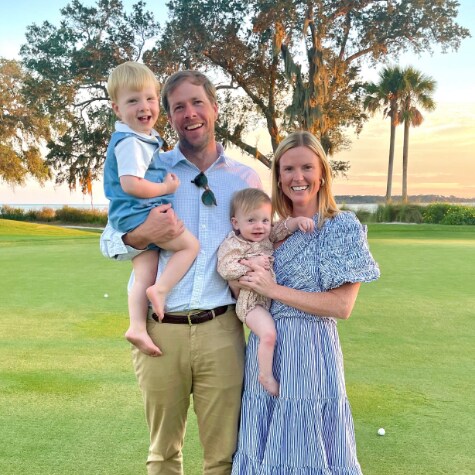
Meghan Dozier, Mom to Wells and Elsie
The Dozier family had just returned from a week-long vacation when their toddler son felt a little warm. While resting on the couch, he suddenly began convulsing. His parents would later learn he was experiencing the first of two febrile seizures. Meghan shares her family’s story to help other parents become more aware of these fever-induced seizures and how relatively common they can be for kids.

Dr. Jim Fortenberry, Chief Medical Officer
Dr. Fortenberry is an Atlanta native who first joined Children’s as an attending physician in the Pediatric Intensive Care Unit in 1992. Throughout his career, Dr. Fortenberry has contributed to Children’s mission as a clinical intensivist, researcher, leader and educator. He and his wife, Janet, have three children and six grandchildren. He enjoys reading, hiking, playing with his grandchildren and, as a University of North Carolina Chapel Hill alumnus, all things Carolina.

Lynn Smith
Lynn Smith is a veteran journalist, podcast host and mom of two boys. Her experience as the parent of a patient at Children’s inspired her to advocate for spreading awareness of childhood illnesses and injuries.
