Season 2: Episode 6
Hope and Will: A Parenting Podcast from Children's Healthcare of Atlanta
Autism: How a New Tool Supports Earlier Diagnosis
For this episode, we have the honor of being joined by two leaders from Marcus Autism Center who are internationally recognized for their thought leadership in the world of autism: Dr. Ami Klin and Dr. Warren Jones. They recently published groundbreaking research that stands to change how and when kids are diagnosed with autism by measuring a child's looking behavior. They'll help us understand what this new technology means for families, as well as why early diagnosis is so important for kids with autism. To kick things off, we hear from Renee Britt, a mom whose son was diagnosed at age 3.
By the end of this episode, you'll have a better understanding of what autism is, behaviors parents should watch for if they suspect their child might have autism, and why early diagnosis is so important. If you suspect a child you know might be on the spectrum, this insightful conversation is not to be missed.
Listen to this episode on your preferred podcast platform: Apple Podcasts, Spotify or Amazon Music.




Lynn Smith: On today's episode, we're going to cover a topic we haven't yet explored on this podcast, autism spectrum disorder. I have the honor of being joined by special guests who very recently published groundbreaking news, the culmination of more than 20 years’ worth of research that stands to transform how and when autism is diagnosed in many kids.
Doctors Ami Klin and Warren Jones, two leaders from Marcus Autism Center, who are internationally recognized for their thought leadership in the world of autism, developed and tested a social eye tracking technology right here in Georgia that helps clinicians diagnose autism by measuring a child's looking behavior. They'll help us understand what this new technology means for families. As well as why early diagnosis is so important for kids with autism.
To kick things off, we'll hear from Renee Britt, a mom whose son participated in the research and was diagnosed with autism at age 3. By the end of this episode, you'll have a better understanding of what autism is, the types of behaviors parents should watch for if they suspect their child might have autism and how this newly published research and related diagnostic tool recently cleared by the FDA helps diagnose more kids at a younger age and ultimately lead to better outcomes for children with autism.
It is my pleasure to welcome Dr. Ami Klin and Dr. Warren Jones, along with Renee Britt to the show. Renee, I want to start with you because there's no better way to set the stage for how transformational this newly published research is than to hear from somebody who walked the path of seeking a diagnosis with their own child. You got to know the team at Marcus Autism Center after “momtuition” told you something just wasn't right with your son. Tell us about that.
Renee Britt: I'm a mom of multiple kiddos. We have our oldest, she's 16 now, and then we have awesome Dawson. He is 12, and we have a 2 year old. At the time, I'd already had a daughter, and I knew what to expect. And when we hit 2 with Dawson, things just changed. He lost all of his words. We went to the pediatrician and asked, “Hey, we're just seeing some things. When we call his name, he will run and hide. Doesn't come.” And she was like, “Oh, that's cute.” I'm like, “Yeah, but he does it every time.” She said she’d keep an eye on that. And I'm like, “Okay, we lost words. We're not talking, and that has me concerned.” I kept hearing, “Let's just keep an eye on it,” or, my favorite was, “He's a boy. It's different with boys.”
That “momtuition” crept up, and when he was around 2 and a half, a sweet friend told us about Babies Can't Wait. We signed up for that. He aged out in three months from that program, but what a blessing because we were able to retain the same speech therapist. She's the one who said, “You know what, there may be more than just some delays. You may want to do more.” That was the stepping-stone for us to decide what to do next and find someone who can help us. That led us to Marcus Autism Center. We had no idea they even existed. We lived in a suburb in Atlanta, and we were just unaware. At that point, autism really hadn't touched our lives.
A friend saw something about Marcus Autism Center on social media and asked if we’d heard about it. At that point, we'd already contacted several specialists. We'd heard not heard back from one and others had a six-month waitlist. Another didn’t accept our insurance. It was no after no; closed door after closed door. So, we decided to try Marcus Autism Center. Lo and behold, we got a call back. They had an opening. It was with a study. The sweet voice on the phone told me it was at the beginning stages, where he would watch a video and they were going to track his eyes. The study would tell them a little bit more about him and other kids like him that might be struggling.
Lynn Smith: One of those things that you just pointed it out, you didn't even know that this center existed. That's why we do this podcast. We want people to understand what resources are out there, and it's this eye tracking research that you're referring to that Dawson participated in. Tell me what it was like. What did he actually do?
Renee Britt: His was the beginning stages of [the study]. So, he sat in a seat and watched a video on a large monitor of kids playing and the sounds you heard were what you would hear at a park. They tracked where his eyes were looking. They showed us what his eyes were looking at, and it was very sporadic compared to a typical child. They did their assessment of Dawson, and that took about two hours. They told us he does have autism. They were able to show us how he looked at the world compared to a typical kid. I have no idea how he sees the world, but that gave me a glimpse into his world.
Lynn Smith: As a mom, all you want to know is what they're feeling. All you want is to be able to help them navigate the world, right? How did it feel once you finally had that information? We called it a diagnosis, but this is really the information that helped you to help Dawson.
Renee Britt: I always say that the white notebook the Marques Autism Center gave me filled with papers and resources was the best and the heaviest and the most relieving notebook I've ever held. In so many ways, it was like a roadmap, like a starting point. I just needed a starting point, and it finally gave me that. I wanted to help my baby but didn't know how.
We have funny sayings in our house. One of the things we talk about is we have tools in the toolbelt of life. At that point I had a lot of tools. I'm creative. I can love you through anything, but I didn't know how to help him. I didn't know more than loving him while I didn't know beyond that. Having this was a starting point. I can do all the things that they're saying, and we're going to do them well. We're going to get him what he needs. Until I had that diagnosis, that paperwork that said, “Here's what we got to do,” I had no idea where to go from there. Getting that starting point was the most important thing in our journey.
Lynn Smith: With that, I now want to hear from you, Dr. Klin and Dr. Jones. In preparation for this conversation, I enjoyed learning more about both of you, your backgrounds and your passion for kids and families affected by autism. First, Dr. Klin, you're a Clinical Psychologist and Director of Marcus Autism Center. Dr. Jones, you're also a Clinical Psychologist and the Director of Research at Marcus Autism Center. Together, you're a formidable duo and internationally celebrated for your work on the social mind and brain and the disruptions caused by autism from infancy through adulthood.
Dr. Klin, in our listening audience, we have some parents whose families are directly affected by autism and others who are listening because they want to know more about it, maybe even because they suspect one of their kids may be affected by it. Before we talk more about the research that Renee just described, can you help us understand what autism is?
Dr. Klin: Autism is defined by the fact that children are born with a vulnerability in the way that they both interact with others, understand others and are able to reciprocally engage others in their daily lives. It is a genetic trait. Whether or not that trait becomes a disability—and it can become a devastating disability—depends on the experiences that children have in the first three years of life. It is a spectrum. There are those who are very challenged and will have cognitive and language disabilities, and there are those who do not. Those differences are important for us at a clinical level because the kinds of interventions that we need to provide to those children need to address an individual child's needs, while also building on the child's assets.
Our goal is to ensure that child will fulfill their promise. In order for us to do that, however, we need to identify early, and we need to intervene early.
Lynn Smith: You are changing the world for so many of these children and their parents. Dr. Klin, I want to understand a little bit better what this study was that Renee and Dawson experienced. How does it work that you're able to see precisely how Dawson sees the world so differently?
Dr. Klin: Renee got it quite right. Our role is to try and see the world through the eyes of our children, and in this way, have measurements of the way that they understand the world, or the challenges that they have in navigating the demands of everyday social life. What Renee described is a very universal experience by parents all over the country. She called it a journey. We call it an odyssey, and what we want to achieve is that the parents should not go to bed at night with the kinds of thoughts that Renee had going unanswered. We know that we can intervene early, and this can change outcomes for children for the rest of their lives. We cannot miss that opportunity.
Mrs. Britt spoke exactly to the need and to the point of all this work, which is getting parents answers when they need them. Trying to make early diagnosis as accessible as possible to all families so that when a mom or a dad is worried, when they have questions about development, they can get answers and they can get the help for the next steps.
Lynn Smith: Renee, as you mentioned, it's that white notebook that they handed you that was like this roadmap that you've been searching for. Can you tell me what's in that notebook? How it's changed your and Dawson’s life?
Renee Britt: That notebook is really just a visual of the diagnosis, some resources and next steps that might really help you. Each child is different. What Dawson may experience may not be what the kiddo next to him in class is experiencing, so you have to figure out what works best. Dawson went to ABA-based therapy for three years. Two years, it was an ABA-based school, and that helped him tremendously. We were able to then go into the public school system and utilize all of those resources.
That was the biggest takeaway we got from Marcus Autism Center, from the doctor that we worked with, Dr. Richardson—her big thing. It was just to work on the very next thing. We took that to heart, and the next step for us was to find a school that could really help us. The school that we found was kind enough to let me come and learn what they were doing in class. I was able to replicate the same work to the best of my ability at home, but it was life at the same time. Try and make everything fun. We're going to go to the bathtub and use a water bottle and knock down these little duckies because we got to work on hand strength. He doesn't know that I'm making it fun because they do that at school.
It's been nine years, and we're still just doing that very next step. A lot of typically-developing peers would just see what another friend is doing and copy that or interact with that. Dawson doesn't have that same ability. He has to be shown how to interact with a peer. That ABA therapy really just instructed him how to do that. That was a big helping platform and start for us with him at that time. He really had no idea how to interact with his sister very well, his family. He just wanted to do what he wanted to do, and that was it. This ABA therapy-based school helped him to be side by side with someone and play and not be overwhelmed. It was an amazing start to his journey.
Lynn Smith: You have steps to follow, and that's what's so beautiful about what the doctors here have enabled many parents to be able to do. Dr. Jones, I'm curious for a lot of parents that might be listening, they might have that same mom tuition that Renee described. You point out how important it is to diagnose this as early as possible. What are some things parents should be looking for and when do you know that it's the right time to go somewhere like Marcus Autism Center?
Dr. Jones: Children with autism can thrive at any age, and there are things that can be done to support the learning and development and unique learning styles of children with autism at any age. We talk about the importance of early intervention because the brain is more plastic at early ages. It's more able to learn. It's a little bit like learning a foreign language. You can learn a foreign language at any age, but it is a little bit easier if we start early. So, too, if you put in place some of those supports early, it makes most challenging behaviors less likely to arise because a lot of those challenging behaviors arise in autism. If a child has struggles to communicate, if they can't communicate their needs and wants, then there can be a lot of challenging behaviors. Those are the reasons why we've tried to focus on early intervention, early identification to put those supports in place clinically.
Then we really want to follow exactly the model that Renee talked about. It's extraordinary support that she was able to deliver in creating those contacts. As far as a parent's experience when they have those first concerns, pediatricians are a good place to start. There's information on our website and on the CDC website about Learn the Signs, Act Early. If you just search in Google for “Learn the Signs, Act Early,” the CDC website comes up with a lot of good information. about early signs that can be concerning for emergence of autism or other developmental delays or disabilities that might give apparent concerns to seek out some additional help at Marcus Autism Center or another community provider.
We also run both the studies that Renee talked about, as well as clinical referrals. Another important concern that some families may not know as much about is if there is a child in the family already diagnosed with autism or relative diagnosed with autism, that can cause some increased family likelihood for another child to also have autism. Sometimes, pediatricians and family members may not be aware of that. If one child in the family is diagnosed or if there's a niece or nephew who has autism, that can be another reason to be keeping a close eye on early development and seeking out some of those resources.
Lynn Smith: I want to learn more about Marcus Autism Center. We know that it is associated with Children's Healthcare of Atlanta. It's well respected for its work with kids with autism, but can you tell us more about the way that you contribute to the research piece of this?
Dr. Klin: Marcus Autism Center is one of the largest centers of clinical care for kids with autism and their families in the country and in the world. Warren mentioned the fact that we accompany younger siblings of children with autism. One to two in every five of those younger siblings may also have autism. We prioritize the study of those children. We also have a large program of clinical trials. When things don't go so well, and the children with autism have intellectual disabilities, they may also show severe behavior challenges. That can keep families in a state of siege, and they isolate the children from their peers. We have the largest program of research in this area.
A lot of children with autism have feeding concerns. When a child has an eating problem, it paralyzes the family. We also have very likely the largest program of research and clinical care in this domain.
We also work very closely with our community partners. With autism, we have very stark healthcare disparities, and our goal is to be able to state that the children that we don't see are as important as the children that we do see. We work very closely with the community to build capacity and workforce training to enable the partners that we have out there in the community to serve families when they need them and where they are.
Lynn Smith: It's amazing because Renee spoke about how challenging it was just to get an appointment or even to be able to afford it because insurance wasn't going to cover it. The name Marcus, let's talk about that. I know it very well having spent so much time in Atlanta for so long. What relationship does Bernie Marcus have with the Marcus Autism Center?
Dr. Klin: In many different ways, the achievements that we are talking about today are truly Bernie's vision. Bernie built the center back in 1991. For all of those years, he has made tremendous investments in increasing our capacity to see families and also science-based solutions at levels of millions and millions of dollars over the course of those 30 years.
Bernie was very much involved in this vision of leveraging our very best science to create a tool that would address the needs, not only in our community, but all over the world. Bernie has been at the forefront of our mission and in many different ways is the embodiment of that accomplishment.
Lynn Smith: Dr. Jones, we're also here because of some very important and truly transformational research that's been published. So, you had two articles published in JAMA, that's the Journal of American Medical Association and the JAMA Network Open. Can you help us understand what went into the research and what the process looked like from the early stages to the later stages?
Dr. Jones: Absolutely. These two papers that were just published are really the culmination of more than 20 years’ worth of research that started first working with adults with autism and then continued downward and downward to develop the kind of technology that Renee described at the beginning to be used for early identification. The two papers span three studies—more than 1,500 children who were tested. These are works that have now been vetted for peer review, but also resulted in an FDA-cleared technology.
If you can get to expert clinicians, like Renee did through her hard work, you can get a great diagnostic service. For families who don't manage to get to that, we want to make that same quality of care and that same quality of clinical information available. That meant testing many hundreds and thousands of children to develop the technology—to evaluate how well these eye tracking-based measures predict the diagnosis a clinician would give? And how well these measures actually proxy the results of hours-long developmental assessments to measure each child's level of social disability, as well as the child's verbal and nonverbal cognitive skills. The goal is not to replace expert clinicians, but rather to make the process of giving parents answers far more efficient, far more streamlined, and actually to give clinicians highly quantitative, objective measurements that can help guide them as well.
Right now, the assessments can take multiple hours. Renee with Dawson went through that process. That's not an easy process for a lot of children. It's very hard to endure. Those tests can take multiple days actually to get that information back to a family.
Lynn Smith: And it doesn't require them to actually be at Marcus Autism Center. That's what was so key. You wanted this to be available nationally and internationally, and it culminated into this tool. It's called Early Point Evaluation, and it's also referred to as the Marcus test. It recently received FDA clearance for the second generation of the device. Dr. Klin, can you tell us more about the actual tool and how it's being used?
Dr. Klin: Imagine that this is a tablet. A child comes into the room and sits in a little chair or sometimes in the caregiver's lap and watches videos for about six to 12 minutes. As Renee described, videos of children playing and interacting, same age. That is the procedure. Then, between 10 and 20 minutes later, there is a clinical report that is issued to the clinician's portal. That provides the clinician with this science-based quantitative information about where the child is in the spectrum of autism, the level of social disability, as well as the child's language skills and the child's nonverbal learning skills.
The fact that this tablet can be operated even remotely, it means that we now can have the solution anywhere there is internet connectivity. It is hard to get services in other places, but in rural areas, the challenges are even greater. Our goal was to create a solution that will proxy high quality diagnosis executed by expert clinicians and make that available to all children.
The way the typically developing children watch those videotapes of their peers playing and interacting is they focus moment by moment on the most important things in those scenes. In order to understand others, we spend a lot of time looking at people's eyes, looking at people's facial gestures, looking at the nonverbal gestures that they use to communicate their feelings, their wishes. In this way, they are able to understand what the intentions of the children are, why they are doing what they are doing. The signs for that are in the face. They are in our gestures, and they are in the way that we act towards other people. That's what typically developing children do. In our research, we've been able to show that when typically developing children are watching those videotapes of other children interacting they spend about 80% of the time looking at the same place, at the same time, because this is where the action is going on. This is what they need to attend to in order to learn the meaning of the behavior of others.
Lynn Smith: Dr. Jones, this is a second generation device. What changed from the first generation?
Dr. Jones: The big transformation from the first generation that was tested at sites across the country to show effectiveness and then submitted to FDA for clearance, was largely from the first experiences that Renee had—where we were filling a whole room and Dawson sat in a chair and there are computers behind a wall and other screens. The first generation was in a refrigerator-sized box. It was mobile, but it weighed about 300 to 400 pounds. It wasn't mobile enough. Then on to a tablet-based version, as Ami was just describing. We were trying to make it smaller, easier to use, more accessible, able to be more places so that it could reach more children. So the major shift is really making it smaller and easier to use so that we can deliver this technology to more places and more parents that may be in need.
Lynn Smith: Renee, for those listening who may not have a child with autism but share a community or a classroom with a child with autism, how can we best support parents like you and kids like Dawson?
Renee Britt: When Dawson was like 5, we were working on social skills. We would go to Target. That was one of the suggestions we got was working on social skills in places that we could give him an immediate reward. We'd go to Target, and there'd be days where he would melt down, and people would stare and point. It was hard because I'm trying to teach my kiddo how to be in social situations, and there are people who don't understand. I had one lady who was like, “Do you want me to push your cart for you?” In that moment I was like, “Yes, thank you.” That's all it took. She didn't know what to do to help, but she knew that I needed help.
I loved when, I think it was in kindergarten, Dawson made a friend. It was a typical peer who always asked if he could sit next to Dawson. The teacher would say, “Yes,” because then that was a friendship that they made. Was it a typical friendship? No, I assume it wasn't. But, what an awesome way to show grace and kindness to someone who really struggles.
The biggest piece of advice I would give, if you don't have anybody in your life with a special need, and you really don't know what to do … just how a little bit of kindness, push the carts or just try. That seems so simple, but there are so many people that would rather stay far away than to try. Let me tell you, being down in the bunkers, loving on Dawson, it’s the biggest joy and blessing of our lives as a family.
Lynn Smith: I think we can all take that advice in life in general. And finally, how is Dawson? How's he doing now nine years into this journey?
Renee Britt: We call him the mayor of everywhere we go. He really is now that we're nine years in, and we've done a lot of therapy, a lot of work. Now, we're able to do things like go to festivals. He may not be able to last the whole time. His sister was being announced on her high school team. The music was on, and he was dancing. After a little bit of time, it got too much for him, but now he's able to advocate for himself and say, “It's too loud. Can we walk?” That's life changing for us now. Before, there would have been a complete meltdown, and now he's able to advocate in those ways. “Hey, this is too much for me. I'm not having fun anymore, and it's really loud.” Okay, we'll walk around.
We went to a restaurant last night for our family birthdays. He sat for an hour. He ordered his own food. It's been amazing. The transformation for our family, for him. He's so happy. He's thriving at school. He just got an honor for being so well mannered.
If you had asked me nine years ago, I'd have been like, “I'm hopeful.” Now, we're seeing them come to fruition with all of that work. But again, every time that first step, I needed the map. I needed the road map. I needed the diagnosis. I needed Marcus Autism Center.
Lynn Smith: And the doctors that we have had the honor of speaking to, I know both of you are smiling ear to ear. I'm sure this is the exact reason of why you do this work.
Dr. Klin: I must say that Renee's thoughts and worries and concerns, and those of many mothers like her have given us the impetus to persevere. There are many thousands of mothers who are going through this experience as we speak. Every year in the United States, there are 95,000 children who are born who will have autism and their journey and their parents’ journey can now be different.
Lynn Smith: Dr. Klin and Dr. Jones, thank you for the important, wonderful work you're doing. And Renee, for just being a great mama to awesome Dawson. Thanks for being with us.
If you're enjoying our podcast and know someone who might benefit from our stories and insights, please help us spread the word. For more information about this episode, visit choa.org/podcasts where we're going to link to more information about the groundbreaking research discussed today, early warning signs of autism, current opportunities to participate in research and more about Marcus Autism Center.
To hear more impactful stories from the people who walk children's halls, be sure to subscribe or follow Hope Will wherever you stream your podcasts. I'm Lynn Smith and this has been Hope and Will, a parenting podcast from Children's Healthcare of Atlanta.
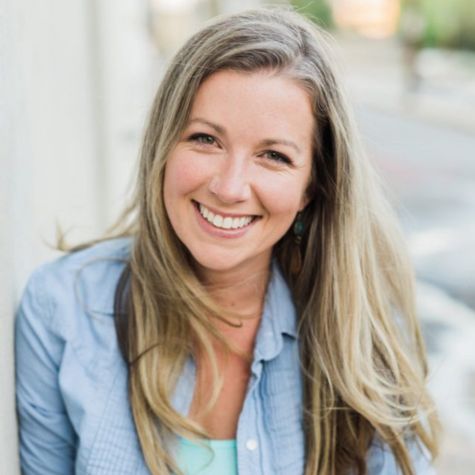
Renee Britt, Mom to Shae, Dawson and Radler
Renee knew something was different about her son, Dawson, when he was a toddler. She followed her intuition to Marcus Autism Center, where Dawson became an early participant in eye-tracking research that ultimately diagnosed him with autism. Renee is passionate about helping other families who have children with autism and wrote a book about Dawson’s strong bond with his big sister.

Dr. Ami Klin, Director of Marcus Autism Center
Ami Klin, PhD, is a Georgia Research Alliance Eminent Scholar Professor, as well as the Division Chief of Autism and Neurodevelopment at Emory University School of Medicine. Dr. Klin’s primary research activities focus on the social mind and brain and the developmental aspects of autism spectrum disorder from infancy through adulthood. He and his wife have two sons and a daughter. He enjoys scuba diving, music (his eldest son is a professional musician), traveling to wineries, visiting extended family in Brazil and Israel.

Dr. Warren Jones, Director of Research at Marcus Autism Center
Warren Jones, PhD, is the Director of Research at Marcus Autism Center. Dr. Jones is also the Norman Nien Distinguished Chair in Autism and an Associate Professor in the Department of Pediatrics at Emory University School of Medicine. His research focuses on understanding the origins and development of autism so that he can help develop tools for objective early diagnosis and prediction of outcome for individuals with autism.
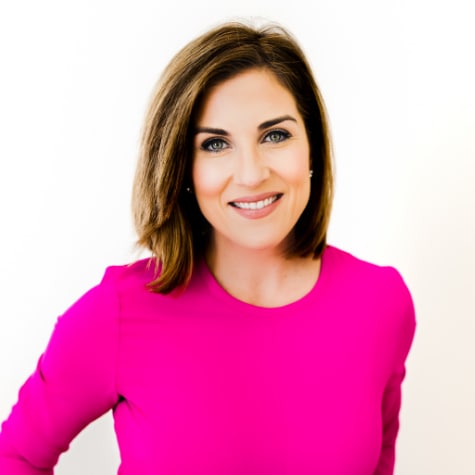
Lynn Smith
Lynn Smith is a veteran journalist, podcast host and mom of two boys. Her experience as the parent of a patient at Children’s inspired her to advocate for spreading awareness of childhood illnesses and injuries.