Season 1: Episode 9
Hope and Will: A Parenting Podcast from Children's Healthcare of Atlanta
My Son Almost Took His Own Life: The Phone Call That Changed Everything
Harry Miller seemed to have it all: a 4.0 GPA, a full athletic scholarship to Ohio State University and a promising career as a football star. Beneath the picture-perfect surface, the former Buford High School valedictorian couldn’t shake the urge to take his own life. In 2022, he turned in his jersey, took his story public and became an overnight advocate for mental health. In this emotional episode, Harry and his mom, Kristina, share how they teamed up to work through the most challenging days of their lives and why they’re so passionate about Harry’s “don’t make it weird” mantra. Following the Millers’ testimony, Jody Baumstein, a licensed mental health therapist from our Strong4Life team, joins us for a powerful discussion about depression, suicide and how to support the mental health of all kids—including those who might appear to be thriving.
Listen to this episode on your preferred podcast platform: Apple Podcasts, Spotify or Amazon Music.




[VOICEOVER INTRO]
You're busy and you want the best for your kids. We're here to help. This is Hope and Will, a parenting podcast from Children's Healthcare of Atlanta.
[Host] Lynn Smith: Harry Miller had it all—a 4.0 GPA, a full athletic scholarship to a Big 10 school and a promising career as a football star. Beneath the picture-perfect surface, the Beaufort High School valedictorian couldn't shake the urge to take his own life. In early 2022, at the peak of his success on the field, he decided to turn in his jersey and take his story public. In doing so, he became an overnight advocate for mental health. Through it all, Harry had a secret weapon—his mom, Kristina. And together they join us now to share how they teamed up to work through the most challenging days, weeks and months of their lives.
And then later in the show, Jody Baumstein, a licensed mental health therapist from the Children's Strong4Life team, joins us for a powerful discussion about depression, suicide and how to support the mental health of all kids.
It is just my pleasure to have Harry and Kristina Miller on the show today. I want to thank both of you for joining me. You know, I know it's difficult, but you're sharing your family's mental health journey. So often we know people endure these types of journeys in silence. But you're here because you're hoping to change that. So, thank you for taking the time. Kristina, I want to start with you. Tell us a little bit about Harry. I mean, you watched this man grow from a little boy to a titan on the football field, a top student all the way through college. Can you tell me about that?
Kristina: Started out as a single mom with Harry and I. Then I got married when Harry was about 4 or 5, and my husband became Harry's adoptive father. And in very every sense of the word, he is his father. Harry's always been a hard worker, conscientious, caring and a perfectionist, and loves to read, has always loved to read, and just a great kid. Never had any issues with him. Just, just a really, a good person.
Lynn Smith: Harry, you're sharing a bit about your struggles starting at a young age. It was about 8 years old when you shared with your mom that you had some feelings. You were feeling sad or blue. Do you remember what triggered those types of feelings?
Harry: Um, I don't know anything in particular. I was sort of thinking about like when I was a kid, I was reflecting about that and I remember I was on an airplane one time and I was getting off and there was this little boy and he was really upset about something and he came off the plane and he was, he asked his mom, “What is making me feel this way? Like, what is making me cry?” And I think that's just sort of like the thing for, for kids and even as a grown person or as much as I can think of myself as a grown person at 21 years old, I think feelings are just really big things that, especially for kids, they can elicit physical responses and you feel them very intensely. And I remember saying, “You know, I don't want to feel this way anymore, man.” I just think even as an adult, even as a grown person, that sentiment is still a true thing. Where feelings are just very, these very big things that almost feel too big for me as a person to deal. And I think that's just something I was experiencing as well as a an 8 year old.
Lynn Smith: And you talk about it being challenging at 21 to deal with that. At 8 years old, to be able to understand what those feelings mean, let alone what to do about them. What kind of support did you get from your family or those around you?
Harry: I got a lot of support from my family. Started making use of mental health resources and seeing, you know, psychiatry professionals. So it helped greatly to interact with people like that, but I think that's just sort of the important thing is a lot of people feel unequipped to deal with the feelings they have to deal with. And, you know, the best method I had and learning how to deal with those things is, is talking to people who, you know, have made a life's work out of helping people deal with those things. That was my experience and I was fortunate enough as a young person to be able to, to have access to that.
Lynn Smith: Kristina, you know, we know as mothers, you're only as happy as your most unhappy child. Even just seeing your face when he's describing those hard feelings. What's it like as a mom?
Kristina: It's very difficult. The only thing you want for your child is for them to be happy and healthy. And of course, you know, none of us can be happy all the time, but when it reaches the depths of despair, like depression and anxiety, cause a whole other level. And having worked at Children's Healthcare of Atlanta for 20 years and in healthcare for 30, I'm used to being given a problem and being able to fix it logically. And this was not the case with this mental illness, and that's hard to grasp. It's hard to be so helpless in watching your child suffer. And the only thing we could do was to seek professional help.
We did that, and he was prescribed medicine. I put it the counter, the cabinet, and I put it away for a while because at 8 years old, to me it was very scary to think of starting my child on antidepressants at 8. Where was this going to lead? So, I put them away, and we kept going to therapy. We kept utilizing the tools, and he's learning cognitive behavior therapy along with everything.
I distinctly remember going to a wrestling match, on an early Saturday morning. And we drove an hour to get there, and Harry was 8, and he didn't want to get out of the car. And I was furious. He was upset. He said, “Please don't make me go in there.” And I was like, “Harry, we just drove an hour to get here. What, what do you mean not go in there?” I called my husband, I said, “You know, what should I do?” And he said, “Just come home.” So we did, and within three minutes of turning around, Harry got very emotional and he thanked me for not making him go in there and telling me that he was tired of feeling this way. He asked if he could please try the medicine that the doctor prescribed, if it could help him feel better. And I said at that very moment, I said, “Yes, as soon as we get home. Yes, we will start.” So it's been a learning curve for me. As a parent, you just kind of just go through it and see what works, but you keep working at it.
Lynn Smith: I have a 7 year old, and he has very big feelings and very big reactions and gets very emotional. And Kristina, just hearing you describe that, really speaks to me when you're talking to a mom like me who has a child that gets that emotional, as you did getting out of the car. Your mom talked about how it can be so frustrating, but how important it's to listen to your child in that way. What would you say to a parent like me?
Harry: It’s sort of funny because like even I've had an experience, visceral experience with mental health myself. And even if I saw somebody acting the way I acted with, you know, say it's a panic attack or extreme anxiety or extreme depression, I'm a person who's had that experience and even like in an instant, I think like, “Just suck it up. Stop worrying about it. Just do it.” And of all people who should know better, I should know better, but I just think that's depression and anxiety and any illness feels like such a departure from what is normal. Like somebody gets diagnosed with cancer and that's a real interruption I had to explain to my mom when I reached out the past couple years. Where I sit like, this depression is not a detour. It's been the way for a really long time. So, I think when I thought about it like that as this isn't a departure, this isn't an interruption that a child is reaching out to me and saying these things. This isn't some spur of the moment thing that some kid with an undeveloped frontal lobe telling me because he doesn't know better.
I imagine this has probably been happening for a long time and it's just sort of revealing itself now. I think very rarely if people end up committing suicide on the very same day they think to do it for the first time. I think there's a lot of meditation on it, and I think there's a lot of thinking on it. So when a kid, as a parent, if a child says that one, thankfully, they're confident enough in you and they trust in you enough to be able to share that with you. I'm fortunate enough to have those relationships. But two, I imagine they've been thinking about that a long time, and they didn't know how to deal with it.
Lynn Smith: We're so grateful that you're sharing this story, and I know it is hard. It's not something that everybody knows would be happening to you. You were a valedictorian of your high school. You were star of the football team, a standout volunteer at home and abroad. And there are times, can you describe after maybe a big win or if something really was successful in school, were you able to overcome some of those negative thoughts and enjoy maybe some of your successes? Was that possible for you?
Harry: Yeah. Success. It's very easy to feel celebratory during success, but I just remember, I would hang out with my friends often. I would feel really crappy for lack of a better term. You know, I would think, if things sucked, it would make sense for me to feel this bad, but things don't suck. I was just hanging out with my friends, and I still feel this way. So, if this is the best it's going to be, if this is the best life has to offer and this is still how I feel, what's the point? What am I looking forward to? And you know, that was difficult because it would've made sense had I not had any of those accomplishments. It would've made sense to be really sad. It would've made sense to be really depressed, but I didn't, which made it seem to make less sense. And therefore it made, you know, depression, thoughts of suicide, more convincing because I had all of those things, and yet they were ineffectual.
We'd have a victory meal after winning a game, and so many times I just wouldn't stick around because I just felt so awful. I would just go eat by myself because I just didn't want to be around it because it just felt so strange to have, you know, the rockets shaking of everybody else celebrating around me while I was just sitting there feeling like nothing, feeling, you know, empty. So, the successes were nice, but really, if anything, a lot of times it just reinforced how awful I felt in comparison, which was a pretty uncomfortable feeling for the most part.
So, there would be small moments that would sneak up on me, where I would be, you know, very genuinely grateful to be here. And, you know, it was never after winning a big game. It was never after getting an A on a test. It was always very, very little things. I don't know, like a green light when I wasn't expecting a green light or nice weather when I was expecting bad weather.
Lynn Smith: And Kristina, for you, hearing Harry describe that, how did you help him?
Kristina: The best we could by listening, by being available, by making sure he was getting the help he needed. You know, something that I wanted to mention why this is so important and has now become, a passion of mine. Of course, I've always been passionate about helping people, particularly the pediatric population. Working at Children's has always been a gift, and now doing this is, but I went to an event. It was actually a funeral service for a colleague. While there, I ran into a lot of people who I hadn't seen in a while, and one of them was a physician who pulled me aside and thanked me for Harry, sharing his story and for me, and they proceeded to tell me about their own child's suffering and how they kind of pushed it off and, and brushed it off and didn't take it seriously until they heard Harry speak. When they recognized the same thing’s happening with their child and realizing that maybe I should really be paying attention. They thanked me and said, “You know, had it not been for Harry sharing his story, I might not have had this conversation with my child.” And so it's hugely important that we talk about this and keep this communication going and hearing how much he struggled.
Obviously, we were very unaware of how difficult things were for him. You know, we had this incident when he was young. We learned how to manage it. We did fine through middle and high school, so we thought. He went off to college, and we were still riding the train and thinking, “Okay, you know, everything is fine.” Until he called that night and said, “I can't do this anymore.” And everything changed. So now I feel like he's in a very good place. And I'm not going to say I don't worry because I do, but I know he's doing better now than he was back when I got a phone call 18 months ago.
Lynn Smith: Before I talk about that phone call, Harry, I just want to check in on you and ask you how you're doing and what feelings are coming up as we're talking this about this?
Harry: I feel good, I guess naturally talking. I was going to say, talking about sad things makes you sad, but I don't think that's true. I think after enough time passes, talking about sad things makes you proud or grateful or even happy in some way, some shade of happy. So, I’ve just become really grateful whenever because I've had several people just, you know, thank me, and I've met people who've had similar, difficult experiences and because of their difficult experience, it's helped others. So, I'm in a good spot.
Lynn Smith: So, that's what I want to get to is what helped you get to this place that you are now, where you're able to be an inspiration for others. In many cases, that's going to mean saving a life as it did for you. Take me back to that day, 18 months ago, when you called your mom and what you told her and what got you through it.
Harry: I talked to my mom because there was nothing else to do. I was either going to be dead or talk to somebody. That was a really big decision. It made sense to call somebody, and so I did. On the day-to-day, there's no easy fix. There's no band-aid. There's no inspirational daily quote that'll save your life. I was able to talk with people and work through things, which made chances easier to come by until eventually, you know, you feel like you're in a healthy head space. I just took it day by day. I'd walked out of the forest, the metaphor metaphorical forest as it was, in which case you see chances all around you, and you're very much grateful that you kept walking.
Lynn Smith: The more you asked for help and got help, you're able to now see how life is something to be grateful for, and Kristina, a lot of that comes from being a mom that your child can come to. I think that that's a big piece of it. Had he not been able to feel comfortable enough to call you, you know, parents don't have a fever or runny nose to look at when their child is suffering when it comes to mental health. How did you become this parent that he can turn to? What is it that you did that helped him feel like you were there to pick up the phone because the other option would've been for him to take his own life?
Kristina: I honestly don't know because you're not really given a book on how to parent, especially when you're a single parent to begin with, and I use that term very loosely because my husband has been in our lives so long that it doesn't feel that way anymore. Harry and I were always super close, very close, always had a honest, open conversations. I think I tried to make it clear that you can come to me with anything, and I'll try not to lose it and try to help you through it. Obviously, that message got through and hopefully it got through to Harry's younger brother as well.
But you know, there there's no real guidance on this. I started a support group because I had so many parents reaching out to me in just in the Buford area alone asking for help for their child is going through something similar. I said, “Well, maybe we should meet and talk about this.” The reality, unfortunately, with mental health is if our children, and, and I'm speaking of the people in my new mental health moms’ group that we started. If they had cancer, people would be busting down our doors with meals and with resources and with information and places to go for treatment and organizations that help pick up the pieces if you're falling in between the cracks. Well, that doesn't exist for mental health. In fact, most people are afraid to even share their diagnosis because of the stigma attached to it because being embarrassed or ashamed and, and it shouldn't be that way. And that's what we need to break.
Harry's message of, “Don't make it weird,” is going around. We want to make sure that kids, particularly not just student athletes, not just young kids, middle kids, college kids, we're talking, you know, even CPAs and lawyers have reached out to Harry because we have to stop making this a stigma. We have to keep this conversation and get more resources available, which is why I'm so thrilled that Children's is taking this on and, and working towards that.
So really what did I do? I try to always have open, honest communication with Harry and with his brother. And, at the end of the day, I think we have a really good system of communication and. And we all know the four of us in our unit, that we are there for each other and we are Team Miller first, always.
Lynn Smith: That clearly was something that he felt, and that really was life changing for him. Harry, you know, after high school, we know you were a five-star recruit for OSU in 2019. You, despite those challenges that you talk about feeling like, you know, other people perceived you differently than the way you perceived yourself. You performed so well. You were exceeding on the football field leading NFL agents to project you someday as an early round draft pick. I mean, was the mounting pressure and the expectation adding to the impact on your mental health?
Harry: For sure, whenever I would feel overwhelmed with class, I would think, you know, thank God I play football because if I sucked at school, I could at least do that. And then whenever I had a bad practice, I would think, you know, thank God I'm studying engineering. So, if I sucked at football, at least I could do that. Those are two high stress environments. I'm an Ohio State football player. If I can't play football, then why am wasting people's time here? So, my logic was just get out of the way. Like you're in the way, you're wasting resources. You're a distraction.
And so it was a lot of pressure and especially when you know agents were talking about, “Can't wait when this happens and you're going to have a great season and you're going to do this. We're going to have all this money together. How great does that sound?” Yeah, I'm going into my season and I'm just thinking, that's not what I want. But now everybody has, I have all these stockholders who have pieces of me. Am I [even myself anymore? Do I just belong to all of these people?
So it felt like I was being, you know, having my toes hanging over a cliff with people nudging me in the back. And, uh, I'm like, where do I go from here? I've been cornered into being this football player. I've been cornered into being this person that if I continue to be, it's going to result in me not being anything anymore. Naturally, it just seemed like if you can't do this, you've got to leave this place. You can't live this. You can't stick around if you can't do this.
Everybody, Coach Day recruited you. These agents recruited you. Everybody's recruited you to be this, and if you can't beat anymore then, then why are you going to be anything? And that was really so, that was lonely. That was a terrifying feeling. That was a lot of pressure. I think a lot of kids will feel that way.
Similarly, as we make sports and academics more and more competitive at an earlier, an earlier age, you get a, a kid who gets a college application that that doesn't come back the way they want it. And they're thinking my entire life has been catered and crafted to have this one thing happen. And, if this doesn't happen, then what am I supposed to do? And I think that's a really common sentiment among young people. I think it's a common sentiment as my, you know, my mom said amongst adults who spend their entire lives and they get to this point and they think, how could I possibly pivot from this? Like, I've dug myself into this hole. I've beat this path before me. There is no other way to go. The exit plan is suicide at that point. And so that's sort of, you know, what I hope with my experience is that there are so many other exit plans and what's astonishing is, you know how many, there are so many routes that don't involve killing yourself, that are realities.
You'd be surprised by how many people don't stick around. People you think you would, but there's so many unlikely people that would have your back no matter what. It just makes me so sad because I think of, I think in particular, of other student athletes who've committed suicide. They know if they had mentioned it to somebody, somebody would've had their back, but they didn't feel that way. They died feeling that way. And that's a really crappy way to go.
I just really hope that, you know, people considering that just at least give it a, I mean, at that point, just as I felt at that point, there's no harm in telling somebody. There's no harm in asking for help that you might as well see what's up. So, no, I don't even remember the question, but I would say just communicating that with other people is, unfortunately the thing you least want to do during those moments, but it is oftentimes the only thing that'll save you and get you out of your own head. So it's imperative. It's imperative to do.
Lynn Smith: You did speak up in the weeks leading up to the 2021 season. You reached out to your coach, your teammates, and then you made an announcement on March 10, 2022 that you're going to retire from football. It was a powerful message on social media. What was it like for you to go public at that moment and what was the response like?
Harry: I was happy. I was happy to say something that was real that spring and that winter. I was meeting with sports psychology, and every week there would be a new story of a student athlete committing suicide. And it almost, it felt like there was some big inside joke going on where I would just look at them and then I, I would just wonder, am I crazy? And it just felt really good to, uh, say something that was honest, to say, something that I felt was pertinent and was happening.
I was astonished that this just can't keep happening. Somebody's saying, “You know, this is at the least pretty odd. At the most, this is horrifying and we should do something about this. I think it would be 10 times more terrifying if, I don't know, five people experience these things every day, but it's not the case. Millions of people do, in which case, nobody's alone. You talk to a stranger in the chances are they, they are experiencing it or know somebody experiencing. In which case any conversation is fruitful and can save somebody, and can save yourself if that's an experience you're having.
Lynn Smith: Kristina, at the beginning of this, I asked you what it was like and to go through the pain of watching your child suffer, and now to sit here and listen to him on the other side, not just surviving and thriving, but helping others. In the way that he is being a mental health advocate, what does that feel like?
Kristina: Oh, super proud. I mean, here you have a young man who has always said, made comments that are, years ago, I mean, he's always been years ahead of his time, but you know, that he wanted to be able to relate to anybody who he ever came in contact. We're super proud. And you know, honestly, when he made his announcement in March, there was an earlier draft that I said, “No, we can't. You can't do this.” And then this, even with this cleaned up draft, I was terrified that because how vulnerable he was that it wouldn't be received well. And that he would be subject to more negativity and nasty messages. That had unfortunately become a part of being a student athlete. I was terrified that it would just add more pressure and more hurt, but 65,000 likes later and shares and talking on the Today Show … and me sitting back saying, “What is happening here? How, why is this being received this way?” So, I mean, we're grateful, too. We're grateful that Harry's willing to do it, and we're always very cautious to make sure that he's able to do it.
Lynn Smith: And Harry, I appreciate you taking the energy to talk about this in the mindset of knowing how many people that you're going to help. And I asked your mom this question early on, and I want to wrap up with this for you because I think this is the big takeaway for us parents is what is it that your mom did that 18 months ago? The other option would've been taking your life, but you picked up the phone, and you called your mom, and you told her that you were having these thoughts and you needed help. What is it that she did that made that phone call instead of the alternate choice?
Harry: I think when you know suicide is on the table, especially a person in that setting just wants to know that there is a person there who is an alternative. And I was at this place, and there was nowhere else to go. Whereas if I think if somebody in that place knows that they have one person that they can go to, well then suicide isn't the only alternative, and there's reason to stick around. I think if a parent just communicates that, you know, no matter what, I've got your back. You can come here. There is a place to go. So I think if a parent can just create that understanding and communicate that to their child, you've immediately, you've delegitimized the concept of suicide. I think that is the most helpful thing a parent can do, proactively. If it's happening right now, it's the best thing you can do right now as well. So, I'll just say communicate. Communicate with the people you love, that you love them, and that you have a place for them. And that no matter what, there's a spot for you. Because I think that's just the scary part is thinking that unconditional love has a lot of conditions and terms and conditions, but when you don't feel that way, then you have a place to go from there.
Kristina: So, if I can add to that, you know, sometimes it's not always a parent that a child feels they can go to. We've met young people in different various stages of their lives and with family situations. It could be your coach. It could be a best friend's parent. It could be your best friend. It could be anybody. Reach out to somebody who you trust and who has your back and will help you get help. That is the most important message. Reach out for help. Don't make it weird talk about mental health.
Harry: I agree because I've had several student athletes reach out to me, and the very first question I ask is, “Do you have somebody in the building that you trust and talk to that person?” And you know, I realize I've talked to a lot of people who have home lives that don't lend towards that experience. And so I think, you know what my mom said is super accurate. There is somebody. And if you don't think there is, I think you'd be vastly surprised about how many people care about you.
Lynn Smith: Harry, it's so wonderful to hear that you had that place to go. And for everyone listening, either be that place for someone or find that place because it can be what saves your life. Harry and Kristina, thank you so much for taking the time to talk with us today. I know it wasn't easy. Harry, Kristina, thank you for being here.
Well, it's not easy to follow Harry and Kristina, but I know our next guest is humbled and grateful for this opportunity to do so. It is an honor to welcome Jody Baumstein back to the show. Jody is a licensed mental health therapist from our Strong4Liife team who's dedicated her career to helping kids, adults, and families dealing with depression, anxiety, suicidal thoughts, trauma and other mental health concerns. Jody, thanks for being here, and I know you heard that emotionally and powerful story from Harry and his mom, and we know Harry, sadly is not alone. You see many children like him. What are some of the overall trends you're seeing when it comes to kids in mental health?
Jody: Well, we're seeing that these things are happening earlier and earlier, so I think we used to hold this belief that you didn't have to worry about some of this until kids were getting more into those middle school years, pre-teen teenage years, experiencing a lot of peer pressure and other things like that. But now we're seeing that that's not the case, actually. And Harry's example is a good one, and that it started young. He talked about this starting very early for him. What we're also noticing is that it's happening with so many different kids, not the ones we would always expect. I think we want to believe that it looks a certain way and that only certain kids are struggling, and that's just not the case.
We're seeing that even the kids by that, by all accounts, are doing well and even excelling by our standards are struggling silently. So the kid who is the star athlete, the perfect grade student who might be up until two in the morning, because they're so scared of failure. They're struggling.
Lynn Smith: And Harry was exactly that. He was a perfect athlete, perfect student. And do you think that's part of the problem? Because my next question is why are you seeing so much more of this in so many different kids? Does perfectionism play a role?
Jody: Yeah. I think there are many things at play here, right? I think that idea of perfectionism is obviously problematic because if a child holds a belief that they can be perfect, they're never going to feel like enough. That goalpost will always keep moving because the expectations they have are so unrealistic and unattainable, and they will always feel like failure.
The other thing that's happening is that a lot of kids feel that their identity is completely defined by one thing. So, in that case, I'm an athlete, that's what I am. I am a star student. And the problem is, what's really dangerous here, is that if all of a sudden that thing isn't happening—whether it's because they're not doing great at it, or they don't want to do it anymore, then what? They feel completely lost because their brain has determined that this is defining you. This is your worth, and therefore that's your connection to other people. So, if now I'm saying I don't want to do this, or I'm not good at it, or I'm struggling, the brain feels this extreme threat, and it feels like you're nothing without this. And then they feel alone. They feel hopeless. Really dangerous.
Lynn Smith: Yeah. And you see how dangerous that can be when you hear Harry's story, and it got to that point where he was ready to take his own life. What does depression look like because you see Harry probably on the football field and you're not thinking that this is someone suffering from depression?
Jody: That's exactly what makes this so tricky is it doesn't look like any one thing. And I think we love to believe that it does because it provides a sense of comfort, but really it's a false sense of comfort because we see this time and time again. We see it with actors, celebrities, people who, again, by all accounts, are doing really well by our standards, and we want to believe that if these things exist and this is what your life looks like, then surely you're not unhappy. You can't be. The problem is with that narrative, it's stopping us from checking in on people that should be fine. It's stopping those people from getting the help that they need. It's really scary.
So, what we need to recognize is it can happen to anyone. Anybody can experience depression. It doesn't discriminate based on age or gender or socioeconomic status or where you live in the country. And so I think we actually have to accept that and instead really focus on paying attention to warnings and know that kids in particular don't have the language to tell us. You know, it was amazing that Harry was able to, but a lot of kids aren't. So, we have to pay attention to those big shifts in their mood or behavior. So, of course, we all have ups and downs, but we're talking about excessive sadness, excessive hopelessness. More days than not. Irritability, edginess. They're extremely lit, lethargic, low energy. All of a sudden they're not engaging in activities they used to love.
And then finally, any mention of suicide should always be taken seriously. And knowing that they might not outright say it, it might come out in other ways. They might be talking about not having hope for the future, not really wanting to wake up, not having a desire to live anymore. Or they might not say any of those things, but all of a sudden be engaging in really reckless behavior, which is showing they're not really trying to live. So, we just really need to pay attention and take all of that very seriously.
Lynn Smith: Those warning signs are really important to point out the hopelessness, the things they say or may not be saying. Starting to be disengaged with friends or activities. If you do see those warning signs, as a parent, what is your advice? What do you do when you think that this might be something your child's going through?
Jody: You have to address it. You know, we sometimes hold this belief. We shouldn't bring it up because we're worried that we're going to put ideas into a child's head, right? It's just not true. And what we know is that we've got to take it seriously because they're screaming out. Even if it's nonverbal, they're screaming out for attention. And if we sit back and we don't do anything, what we're teaching them is that their feelings probably aren't real or aren't valid, or that we don't care. So, we want to get ahead of it. We want to have a conversation.
And now I want to acknowledge that this is really scary. So, if you're feeling overwhelmed and you want to avoid the conversation, doesn't mean there's something wrong with you. That's a normal response. It means you care because you see how important this is. It can be scary and confusing. And we need to just be aware of our own feelings. Be very aware of them because what we don't want to happen is for them to seep into the convers. And what this can look like is we're so uncomfortable that we don't really want there to be silence. We want to fill the silence, and we do that in inappropriate ways, unintentionally. So, we might use leading questions, and I'll give you a couple examples.
You're not depressed, right? But you've never thought about killing yourself. The problem with these questions is, as you can imagine, if a child is feeling that way, now they feel ashamed. And also, if they haven't felt that way, or maybe they're thinking about it, they're certainly not going to feel safe to say it. So instead, we want to sit back, check in, ask very direct questions, and then sit. And this is the really hard part, because you're going to feel uncomfortable and you're going to want to start talking. Don't fill the space. Let it linger because we're doing a couple of things with that. We're giving them a chance to tell us what their experience is, and also if you notice, okay, they're getting fidgety, they're tearful, they're not saying something. We don't want to make assumptions. We want them to see that we can handle it.
If we start filling in the gaps and filling the space, what we're teaching them is, we're too uncomfortable with this. It's too big and it's too scary. On the flip side, when we're quiet and we sit there, and we just make eye contact, and we're in it with them, says to them, you're not alone. I can handle this. And that's what kids need. Harry talked about that a lot. Those big, big feelings. It's terrifying for a kid or anybody of any age to feel that. And so, the best thing we can do is, with our verbal and our non-verbal communication, I can hold this with you.
Lynn Smith: And we heard Harry talk about how the fact that he felt like he could talk to his mother was what saved his life. And the message from mom of you have to find that person that's going to give you that hope and be that support. I want to get your take on two different situations and how we should respond as parents. The first situation being, if a child is saying that they want to harm themselves or having thoughts of suicide and whether or not, you know, there might be some people out there, they're saying that this might be something that kids are saying because they want attention and they, they, you know, would never go through with it, but what would you say to that?
Jody: I'd say that that is an incredibly dangerous narrative, and there's no truth to it. I would say that regardless of how old you are, if you're 3, you're 12, you're 21, you're 50. Nobody wants to feel that way. That is a scary, huge feeling. Nobody wants that, you know, and when we minimize it and say they're just doing it for attention—just creating a narrative that stops people from getting the proper assessment and treatment that they need.
Lynn Smith: And instead they say that they are thinking about harming themselves. How do you answer that statement as a parent?
Jody: You take it seriously every single time. We don't ever want to underestimate what somebody will do in deep pain or a state of hopeless. Just because you might look at something and say, “That's not a big deal. And I wouldn't respond that way.” It doesn't mean somebody else wouldn't. And so, every single time you're taking it seriously. You're getting them an assessment. You're letting a mental health professional help you.
You know, part of the challenge is we are scared, and we don't really know what to do and we don't want to know the answer because we're not sure what we'll do if we hear. But again, that's stopping us from getting help that these kids need, so, talk to a licensed mental health professional. Help them, or sorry, use them to help you. Tease it out because you don't need to be in it alone. That's not your job. Your job is to be there. Listen, pay attention and get connected to the support. It's not to provide all the support and have all the answers.
Lynn Smith: And then the other scenario, if a child is saying nothing but exhibiting some of those warning signs, how do you approach that?
Jody: Well, a couple of things here is we want to always be checking in regularly because we just don't know. And yeah, sometimes they might be fine and that's great and other times they might appear fine on the surface, but be struggling. And this is why we want to make sure, regardless of how your child is acting on the outside, you are having regular open conversations. When we hold things only for moments of crisis, what we're teaching kids is that it's only the big stuff that gets attention or it needs to escalate to the point of a crisis to get attention.
And it's also an unfair ask that when a child is really struggling, they're going to come to us when we haven't made it a safe place to do that every single day leading up to that. So what does that mean? It means having conversations all the time, and it doesn't mean everything is a sit down at the table, formal conversation, but I mean at dinner, in the car, in your day to day, talking to kids, making it so safe and so normal and routine that they don't think twice about coming to you when something's hard. But again, if we haven't created that when something's hard, they're going to go away from us. If we've given them the indirect or direct message that we can't handle it, or certain things are off limits, they are going to go away. They're going to isolate and withdraw, which is really the opposite of what we want.
Lynn Smith: Yeah. Is there anything else you think that parents should do, not just with children who may be struggling, anything to support children and to create that safe space where they feel like that open relationship, that that connection is there?
Jody: When I think about Harry's story in particular, I think about his close connection with his mom, and this started really young. There was what it seems like this ability to talk about anything, that everything was fair game. And I think, you know, even in his story where he talks about reaching out to his mom and reaching out to his coach, what that says to me is he felt that they weren't going to respond with judgment or shame or punishment, but that they were going to respond with curiosity and compassion and support.
And what that also told us was that in that deep moment of pain and hopelessness, they gave him an out. That's a reminder for all of us that suicide can be prevented. It literally was, in this case, it was from the power of relationship. They took it seriously. I heard his mom speak of this a little bit, but there is no textbook to follow. I’m parenting, and there's no perfect magic answer. But that's what we have to realize. We don't need perfect answers. We don't need perfect words. It's about showing up and not just in the physical sense of I'm here, but it's what do we do. What kind of energy are we giving? What kind of non-verbals are we just checking in once and then saying, you're good?
Do we think of it just like we would physical health, you know, even long after someone let's say is in remission from cancer. What is happening? We're still checking in. You still get scans. You still have follow-ups. The same is true with mental health. We don't have a one and done conversation and then say, “You're good.” Right? No, we, we keep showing up. We keep asking.
And again, it's also built in these everyday moments. So, it's not just in the moments of crisis. It's in the moments of connection every day. I'm asking how you're doing and I really want to know. I've put my phone down. I'm making eye contact. I'm asking you about your hobbies and your interests and things I know nothing about to show you that I'm here. I am here, and I care. I’m in your corner.
Lynn Smith: Yep. You know, what else would you want to say to parents?
Jody: I think we have to realize that regardless of where your child is today, there are certain things that all kids need. So, if you're listening to this and you're thinking, “Wow, this is really scary, but that doesn't really apply to my child. My child's not in crisis, so this isn't relevant.” What I want people to be thinking about is that we are born with a full range of emotions but not born with any skills for how to regulate. And so, this is telling us that we have to start much earlier.
You know, with mental health in general, it's been a pretty reactive system. I think we can all agree. We don't get support until somebody is in crisis, and what we want to do is think about starting from birth. How do we equip all kids with the skills they need to become resilient? And recognizing that we cannot shield and protect them from everything. It's not possible, it's also not helpful.
And if we want them to be resilient, we have to accept their ups and downs, but we have to teach them how to work through those ups and downs and not around them. And so, there are lots of strategies we can teach them, but we also have to model them ourselves and show that this is an ongoing thing. We're never done. We don't get to a point and say, “Okay. I'm perfect. I'm resilient. I can handle anything.” It's ongoing.
One of the best things we can teach kids from a very young age is to learn how to tune in and notice what they are holding in their body. And I love to think of it like a balloon. I like this visual because if you think about our feelings and stress every day we are blowing air into the balloon. The balloon keeps getting bigger, and bigger, and bigger. If we don't release any of the air, eventually there's nowhere for it to go, and it will explode. And what does that look like with humans? It might be an angry outburst. It might be self-harm. It might be contemplating or attempting suicide. So, what we want to do is help kids let out a little bit of air all the time, every single day, releasing a little bit of stress. What's not happening is we're not getting to a point where there's no air in the balloon, and it's completely deflated. That's not realistic. If we're alive, we're feeling if we're alive. There's air in the balloon.
I want to go back to an example that Harry's mom brought up, which I think is a really relatable story—the wrestling match. She talks about how you drive an hour there. You've spent money, time, and your child doesn't want to do something, and it feels personal. Yes, it feels like they are giving me a hard time. And I just want to recognize the fact that you are allowed to be frustrated. If you are feeling frustrated, it's not because you're a bad mom, you're a bad parent, you're doing something wrong. That's a normal response. Your child is also allowed to have their feelings. So, what we need to do is kind of reframe a little bit in these moments, “Okay, my child's not giving me a hard time. They're having a hard time. Yes, and I know I really want them to just push through and suck it up because I spent this time and this money, and they're just frustrating me.” But we have to think about the long term rather than a short term. Yes, we could push them in this moment. Say “You're getting out of the car, you're doing it. I don't care.” But if we want to raise kids who know how to trust their instincts, who are confident to listen to themselves and speak up when something isn't right, which will keep them safe in the world, then that means we have to teach them when they're young.
It is unfair and unrealistic to expect them to do it when they're older. If when they're young, we're continually telling them, “Your feelings are wrong. They're not valid, and you need to override them. Get it together and suck it up.” So, I think helping kids understand that their feelings are real and you believe them is critical, and that does not mean we never push them and we never encourage them, but we have to start there. That is the starting point. That is our connection, too. When they feel seen and they feel heard, they are going to feel safer to explore in the world. When they know, “Okay, you're with me in this.” They feel safe.
Lynn Smith: I think that's really, really helpful, Jody. Thank you.
Jody: Thank you.
Lynn Smith: I want to thank Harry, Kristina and Jody for joining me today. Please seek help if you're experiencing, or you suspect that loved ones are experiencing thoughts of suicide, self-harm or any mental health crisis. All thoughts of suicide should be taken seriously. You can call or text 988, the Suicide and Crisis Lifeline to connect with a mental health professional 24/7.
To access raising resilience resources from our Strong4Life behavioral and mental health specialists, including tips to help kids identify and express their feelings to prevent suicide and to understand anxiety and depression in kids, visit choa.org/podcasts.
I'm Lynn Smith, and this has been Hope and Will, a parenting podcast from Children's Healthcare of Atlanta.
[VOICEOVER OUTRO]
This podcast is for general informational and educational purposes only. It is not to be considered medical advice for any particular patient. Clinicians must rely on their own informed clinical judgments when making recommendations for their patients. Patients in need of medical or behavioral advice should consult their family healthcare providers.
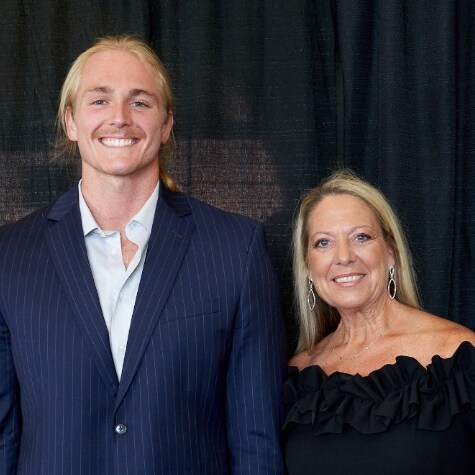
Harry and Kristina Miller
As an offensive lineman for Ohio State University, academic and athletic superstar Harry Miller was being courted by countless agents. When he called his mom late on a Tuesday and said he “couldn’t do this anymore,” she drove all night from Georgia to Ohio—where she stayed by his side for six weeks.

Jody Baumstein, Licensed Mental Health Therapist
Jody is a licensed mental health therapist from our Strong4Life team. In her clinical practice, Jody specializes in helping individuals with depression, anxiety and other mental health concerns.

Lynn Smith
Lynn Smith is a veteran journalist, podcast host and mom of two boys. Her experience as the parent of a patient at Children’s inspired her to advocate for spreading awareness of childhood illnesses and injuries.
What does suicide mean, and how do you talk about it?
From educating ourselves and equipping them with tools and resources, to watching for signs in the kids we know and care about, there are things we can all do to help protect and support the ones we love.
learn more