Season 3, Episode 11
Hope and Will: A Parenting Podcast from Children's Healthcare of Atlanta
More than their Disability: Helping Kids Feel Seen
In this episode of Hope and Will: A Parenting Podcast from Children’s Healthcare of Atlanta, we’re joined by three incredible guests who are raising children with special needs. Together, they help us better understand what life is like for their families and provide insight to help parents harness kids’ natural curiosity and turn it into something positive. They share examples of big and little gestures that go a long way to help their kids feel loved and accepted.
Jenn is Mom to Wyatt, who has dwarfism. Nicole is Mom to Ruby, who has Down syndrome. And Neil is Dad to Jack, who is on the autism spectrum and communicates through a tablet.
You’ll hear what helps their kids feel supported in everyday settings like schools and sports, and what well-meaning people sometimes get wrong. They share advice for families starting their own special needs journeys, as well as support that makes a real difference for them as parents.
Before the panel discussion, you’ll also hear from Dale Spivey, a school social worker, double amputee and former Children’s patient, who reflects on her own childhood and the message her parents taught her early on: When life knocks you down, you turn your foot around and get back up.
This heartfelt conversation is an honest look at parenting and the small gestures that help every child feel like they belong.
Lynn Smith: You're out running errands with your family when you notice your child watching someone across the room. You recognize the person has special needs and can tell that your child is brimming with questions. Maybe you tense—you're anticipating your child, no matter how innocently, blurting out a question or comment. Or maybe this setting is more intimate. Perhaps your child shares a classroom with a child who uses a wheelchair or communication device. They don't ask about it at school, but at home they've got lots of questions for you.
Even in a more private setting, you might second guess yourself as you try and provide guidance on how your child can be a good friend to their classmates. Today, we are joined by three incredible guests who are raising children with special needs. Together, they're going to help us better understand what life is like for their families and provide insight to help other parents harness their kids’ natural curiosity and turn it into positive actions. They'll share examples of big and little gestures that go a long way to help their kids feel loved and accepted. We'll hear from Jenn, whose 10-year-old son Wyatt has dwarfism, and Nicole, whose 12-year-old daughter Ruby has Down syndrome. We're also going to hear from Neil, whose 8-year-old son Jack has autism and communicates through a communication device. By the end of this episode, we hope you'll feel empowered to initiate more meaningful interactions with people with different abilities and for you to be armed with insights that help your kids do the same. This conversation is a powerful reminder of the good that happens when people feel seen and not ignored.
Before we dive into that conversation, we're kicking things off with a special message from someone familiar with what we'll hear today.
Dale Spivey: Hello, I am Dale Spivey, and I remember what life was like to grow up in a world where I stood out in a crowd. I was born with a genetic disability in both my legs. I was missing bones. It was passed through my father's side of the family, so I'm a double amputee. I was 1 and 2 when mu amputations occurred. My parents, no matter where we lived, always drove me back to Children’s so that I could have that support.
Jen, Nicole and Neil are much like my parents were, in being intentional advocates for their children. I love to advocate for children as well. I share stories about my own childhood that taught me lessons. And the story I’ll share with you today is my ice-skating story which happened when I was 8 years old. There was a mall with an ice-skating rink. And I loved to ice skate. My ankles never got tired. I could go all day. On this one day, this little girl came out in a pink tutu into the middle of the ring and spins around. I'm like, “Oh, I can do that. I can so do that.” When she leaves the middle of the ring, I go out there, and I'm yelling, “Hey mom, watch this!” I say it over and over again, until I have my parents’ eyes on me.
I push as hard as I can with my right foot. I spun around, but my leg did not. My left leg was stuck in that ice very good. I happened to be wearing blue jeans. I don't believe people that were witnessing this realized that my legs were not real, and my foot was now on backwards. You could have heard a pin drop. The owner of the ring looks over at me. My mom starts yelling, “Just turn her foot around and stand her back up.” Not once but three or four times.
I love to share this story because I felt like in this moment, my parents were being so wonderful. The message they gave me was all you got to do when you fall down is turn your foot around and stand back up. Keep going, don't stop. As a child with a disability, it was a great message to have because there were a lot of hard times and there were a lot of falls. But knowing all I needed to do was turn my foot around and get back up and I could keep going and reach for my dreams was an awesome thing that my parents taught me.
Today, I have been married for 31 years. I'm a school social worker and I love to advocate for children. I have two adult children now of my own. I am hoping to be a walking, talking testament to the good that comes when a community comes together to help every one of its members feel supported, accepted and a part of the pack.
Lynn Smith: I am now honored to welcome Jenn. Nicole and Neil to the show. Before we dive into our conversation, I want to acknowledge that if we had unlimited time, we would have dozens of parents on this panel. While the dialogue aims to offer helpful insight, we know that every situation, every diagnosis, and every family is different. Nothing is one size fits all. Though we do hope you walk away with insights you can apply in a way that makes sense for you.
Let’s start off by learning a little bit more about each and their family. Jen, tell us about your family and your son Wyatt.
Jenn Keeton: My son Wyatt is 10 years old. We found out about his diagnosis when I was pregnant. My husband and I tried for years and years to get pregnant and had to go through lots of IVF before we finally got pregnant with Wyatt. It was towards the beginning of the pregnancy that he was measuring very small. Through testing, we found out that he had a form of skeletal dysplasia called spondyloepiphyseal dysplasia. He was just very small; so an uneventful pregnancy after that.
When he was born, we spent about a week in the hospital. He has done well. He has many different challenges. His vision is limited, so he wears glasses. He got his first pair of glasses at 4 months old. He had some neck issues. He wore a neck brace until he was finally fused at 4 years old. He has some hearing issues, so he wears bilateral hearing aids. He has some issues with his back, so he wears a scoliosis back brace at night to sleep. Right now, we're also starting to have some mobility issues. He drives a scooter around the school and places where he has long distances to go, like the Atlanta Airport or the Zoo. His scooter is our newest way to get attention. He's in fourth grade and is very, very smart and loved and doing very well.
Lynn Smith: We can't wait to hear more about him. Nicole, how about Ruby?
Nicole Eliason: Ruby has two older siblings that are in college. She came along when they were both in elementary school. I had an uneventful pregnancy. We found out hours after her birth that she had three copies of the 21st chromosome, which means she has Down syndrome. We did not expect that, and we didn't know anything about it. We've been learning along with her as she's grown. She's now 12 years old and in middle school. Her life has definitely been filled with some things that were different than her siblings. We've done speech therapy, physical therapy and occupational therapy. She's worn glasses for most of her life. We've had foot braces, regular braces on her teeth…a little bit of everything here and there. She's been a great tour guide for us as we've navigated it.
Lynn Smith: And Neil, how about Jack?
Neil Brogan: My son Jack is 8. He has ASD, Autism Spectrum Disorder level 3. When he was young, he wasn't hitting the same milestones as other kids. We started to go down the road with therapists and we were in a program called Babies Can't Wait. We got a diagnosis through Marcus Autism center when he was just two.
Early diagnosis and intervention is helpful with any special needs kid. That was our path. That was our journey. When we heard that news, it was difficult. You always want your kid just to be happy and have an easy life. As the years have gone by, it's been our journey and it's our normal. He wasn't crawling when he was younger. He had a walker. For folks on the spectrum, a lot of times it's hard for their brain to take in all these other outside things. It just took him a little bit longer.
He has an augmented talker, a device that looks like an iPad, because he’s non-speaking. He's smart. His receptive language is great. He knows everything that's going on, even when he doesn't look like he's talking, he’s totally focused. He's still with everybody in the room.
He's a really happy kid. He's just joyful. A lot of people could learn from him. He loves fruit. He loves to eat. He's not a picky eater. He loves books. He loves live music. We're a music family, so he's always had, even when he was in a crib. He likes that a lot. He's a great kid and the joy of our life.
Lynn Smith: That's beautiful. So many listeners right now are hearing this, and they want to do a better job of making life maybe brighter, easier for families like all of you. I'd love for you each to share an experience that you've had with somebody in your community that really left a positive mark on your child and also you. So that we can know how we can make things brighter for you.
Nicole Eliason: Ruby's been in a typical classroom throughout her entire elementary school years, which can be kind of scary. As a parent with a child with special needs, you don't know how that's going to work. We've been very fortunate to have found some great peers along the way that have become friends that really look out for Ruby in all areas at school. We've had these girls come over to her house to hang out with her. We've gone to elementary school dances together, and it's really made a difference. And the difference I see between those kids and maybe the kids that kind of avoid her is that they just approach her like she's one of them, because she is. At the end of the day, she might look a little different. She definitely talks different. They realize she’s a kid just like them, and they find that common ground. That's really made a big difference for us.
Lynn Smith: How about you, Neil?
Neil Brogan: We were lucky to have a preschool and daycare with an inclusive program. He was around a lot of typical kids, especially pre-K. There were 20 to 30 kids in there. It was nice to see a lot of those kids that would help him, but he'd also have support there. We were zoned for a public school, but they just didn't have the support. So now we're considering a private school. We kind of miss having him in that typical setting like Ruby. Maybe when he gets to middle school, he might be ready for that. That was helpful for us as new parents.
Lynn Smith: Jenn, how about you with Wyatt?
Jenn Keeton: We started him at a private school. He's been there since kindergarten with this group of kids, and they've all just taken care of him like he's just like everybody else. It doesn't even seem like extra effort when they carry his backpack for him or get something that he can't reach in the lunchroom or just lifting heavy things. They all just take care of him like he's one of them. It doesn't seem like people even think about it when they help him, which I love, which makes my heart happy, which gives me peace—sending him to school, knowing that he's just thought of like everybody else, just one of the family.
Lynn Smith: We know every interaction's not positive. I'd like to get an idea of some of the things that people do, or maybe it's something that they don't do, and they don't have the outcome or impact they think that they're having. Nicole, has there been an instance you can point to?
Nicole Eliason: We've been very fortunate and not had too many negative experiences, so far. I think part of that is because Ruby's not visually as different. She doesn't have any specific devices right now. Maybe when she was younger, probably in early elementary age. I was with a group of moms, and they were asking some appropriate questions about Ruby and her diagnosis. But when the time came for this particular woman, she did ask me, “How old were you when you had her?” When I disclosed that I was 35, she was just kind of like, “Oh, well, you know, that tracks.” That was just hard. I understand that she didn't mean anything by it, and I understand the stats, but it wasn't helpful.
Jenn Keeton: Wyatt gets a lot of stares right now. The older that he gets, the more noticeable his height is. That's one of the things that happens to us. We go out to restaurants. People ask him if he wants a booster seat or a highchair. People talk to him using a baby voice because they think he's so much younger. Our biggest frustration right now is that he's much older than his height. He looks mature in the face, and he's very smart. When people speak to him like he's a young child, that's one of our biggest struggles.
Lynn Smith: What are some of the best ways that children can initiate friendships with your kids and make them feel seen?
Neil Brogan: We're very lucky in our community and with our friends. When he meets a stranger, he has that talker device, which becomes a way to break the ice. He can talk with them using that, and they're interested. It opens the door for us to explain that his brain works just a little bit differently than a typical kid. A lot of parents and schools teach a little bit more about inclusion, at least you hope. Kids tend to be a little bit more open. They're not as closed off as adults when they ask questions or they're curious. It’s a good thing. It gives you the opportunity to have a conversation and then maybe become friends. Right.
Lynn Smith: Will you tell us how Jack benefits from the soccer buddy program?
Neil Brogan: In our community, there's a thing called Top Soccer where players get paired with a buddy. It's a pretty big league in metro Atlanta. All the kids have some sort of special need. My son is not really coordinated. It's hard for him to do the fine motor stuff, but he loves to get out there. He likes to run. Week to week, some of the same kids come that are buddies with him. One kid is really great. He's a junior and a varsity soccer athlete. His brother's on the spectrum, too, and he's in college right now and super bright. There are some younger kids, too, that have just really taken a liking to him. It's great to see that these kids are so open to helping Jack and making sure he has a good time.
Lynn Smith: Nicole, you have a tradition that your family started where you read a book to Ruby's class each year. Can you tell us a little bit about that?
Nicole Eliason: When she was in first grade, we decided to celebrate one of our holidays throughout the year with her class. Ruby has Down syndrome, and that's the triplet of the 21st chromosome. So, 3/21, March 21, is when we celebrate World Down Syndrome Day. Starting in first grade, we would bring mismatched socks, which is another whole story for her whole class. My husband and I would read a book to the class, usually about Down syndrome specifically, but it covered special needs in general. We found it was a really great way to talk about the things that the kids have probably been thinking and depending on their level of filter, may or may not have felt comfortable asking Ruby or the teacher or anybody else for that matter. Things like the special shoes that she had to wear or the glasses she had to wear. The way she talks sometimes. The way she runs. The fact that she couldn't tie her shoes at the same time as other kids. Just tackling some of the obstacles that she faces in a day and why that makes her sometimes look, sound and act differently than her peers. We've really enjoyed that because it allowed the kids to ask questions. Sometimes the questions are off topic, but a lot of times we get some really heartfelt questions.
Lynn Smith: I want to better understand the day-to-day life, what it's like for families navigating special needs. So can you tell us, Neil, some of the things that have been most surprising for you on this journey.
Jenn Keeton: When he first started kindergarten, I don't think anybody had any experience with a child with dwarfism. Wyatt read a book to his class about understanding dwarfism. His school did a great job, recorded that and showed it to every single class in the lower school. Every child was able to learn about Wyatt even before they saw him or met him, so it wasn't as much of a shock. Dwarfism awareness day is Oct. 25, and we made shirts that read, “Choose Kindness.” Green is the color for dwarfism awareness, and everyone wore T-shirts for his day.
Lynn Smith: I want to better understand the day-to-day life, what it's like for families navigating special needs. So can you tell us some of the things that have been most surprising for you on this journey.
Neil Brogan: Parenting is hard no matter what. Surprisingly to me, it's our new normal. We love this kid. This is how we have to work and juggle everything with therapy and school. We don't need extra sympathy. As a parent with a kid with special needs, we just want to maybe be validated that we're all in this together. And parenting is a tough road and it's a challenge, but it's also one of the most joyous things that life can offer.
Lynn Smith: Nicole, I bet that there are some things that have come up that have surprised you on this journey.
Nicole Eliason: I did not realize how many therapies or doctor's appointments would be involved with Ruby. Instead of sports or music classes my other kids did, we've done more therapies. The same amount of money and time is going out there for sure, but just in a different area. I think one of the biggest surprises is how typical or normal our schedule is. Even when we had the big kids still in the house, it still felt just like it was when they were younger and Ruby was younger. We were still doing the same types of things. We were still going to school. We were still playing outside with friends. Some of the resources are allocated a little bit differently. Some of the time spent with our kids is intentional in different ways because of the things we've learned from therapies.
My kids used to joke that Ruby never got any downtime, but I always made games out of it. Our speech games and our physical therapy games were intentional. But at the end of the day, parenting is hard no matter where you are. What's been the most surprising is that it's more normal than I thought.
Lynn Smith: What advice do you have for parents embarking on their own journey of raising a child with special needs?
Jenn Keeton: For us, it was really helpful early on to find community support and reach out to other parents of little people, or other adult little people, to figure out the best ways to advocate for him; to know what to ask for, to know things that are appropriate, to ask for what kind of therapies we needed. There's a Little People of America network, which is national, and they have gatherings throughout the year. That was helpful for us to just learn more about life with dwarfism. One other piece of advice is don't be afraid to advocate for your child. Don't be afraid to ask for multiple opinions on medical things. Don't be afraid to ask for different therapists. You have to be your child's biggest advocate, especially as they're younger. We are now advocating for Wyatt getting to take his scooter into certain places where we've been denied. We're trying to teach Wyatt how to advocate for himself and how to speak up for himself. That's a process we've had to learn over these last 10 years. Finding your community and learning to speak up for your child is the advice I have for new families.
Lynn Smith: Nicole, can you tell us about the story, Welcome to Holland, that impacted you?
Nicole Eliason: If you're somebody who's in the special needs community, you've likely heard of the essay Welcome to Holland before. Tt describes being pregnant as preparing for a trip to Italy. Your whole life, you've wanted to go to Italy. You've been excited about it, and now is the time. You learn the language and make reservations to see all the sights—the Michelangelo, the Coliseum, all of the fun stuff. The big day arrives. You get on the plane. A couple hours later, you land, and they say, “Welcome to Holland.” You rush up, letting them know they a mistake. “This is not what I planned for. I'm going to Italy.” And they say, “No, we're in Holland now, and this is where we're going to stay.” You get off the plane. You walk around. You're confused. Your clothes are all wrong. You don't have any reservations set up yet. But over the next couple of weeks or a couple of days, depending on how you look at it, you learn there's a lot of cool stuff here. You pick up some new guidebooks and learn some new things. Holland's cool. They have windmills and tulips. It's gorgeous. The big takeaway is if you spent your whole trip mourning that you weren't in Italy, you would never see the beauty of Holland. For all of us that planned on Italy, and all of a sudden we're rerouted to Holland, it's just been a great reminder that there's a lot of great stuff about where we are. We just have to remember to take it all in.
Every diagnosis is different, but I know for ours, it have given gifts to our family and friends. I wouldn't have it any other way.
Lynn Smith: It's really a beautiful way to reframe the initial reaction to what it is that you're experiencing. Neil, so much of this conversation has focused on how people can better help your kids, but how can we support you as parents, friends and extended family?
Neil Brogan: I think it’s a lot tougher when you first find out your child has special needs. As you get to move on and learn what it's like to have a kid with special needs, it becomes a lot easier. When we first started at this daycare, one of the parents came up to me and asked me some questions, including, “What are you going to do when he's older?” That's a big fear that kind of triggered me. I went home and talked to my wife. I realized I needed to think about this a different way. He was one of the few parents that was curious and wanted to know. You don't see kids like Wyatt or Ruby all the time. And for us, we never knew a kid that was non-speaking and had an AAC device. It's a new world for us, let alone other parents. For families with special needs or even folks that are curious, talk to one another. Learn about each other. It really turned a page for me as a dad. He was one of the few people that really was interested.
Lynn Smith: Jenn, people might think that they are making you feel better by looking the other way so that they don't feel like they're staring. I imagine that's so very painful. Instead, how should people handle their first meeting with Wyatt?
Jenn Keeton: I think trying to intentionally avoid him because you're worried about offending somebody or you're worried you're looking too long is the wrong way to go about it. Wyatt's just like everybody else. You could probably learn a lot from Wyatt if you just gave him a few minutes. Including him, like you would any other child in any kind of activity, would go a long way to help families feel supported, to help Wyatt feel included. He's just like every other kid. He's just a little smaller.
Lynn Smith: Nicole, do you prefer people ask about Ruby's therapies and progress, or do you just prefer that people focus on the “normal” aspects of life
Nicole Eliason: I'm an open book, so I love it when someone asks about her therapy. I do my best to not drone on and on about it. Everybody has something going on in their life, whether it's a diagnosis or an illness, same thing. Check in with me, but we don't have to talk about that all the time
Lynn Smith: If my two little boys are walking down the street and see Jack using his device to talk, they may ask what's wrong with him? They are not coming from a bad place. They just might see something for the first time and try and process it. How do you teach them after that? What language to use to make that a teachable moment so that they learn to become inclusive?
Neil Brogan: That's a great question. We try to say nothing's necessarily wrong with him, he's just different than you and this is why. The device could open up a conversation. That's how we usually try to talk with other kids—change that language around so that it's more inviting because they don't mean anything by it. Like I said before, kids are so much more honest and more open that you can have a dialogue.
Lynn Smith: Which is great and starts a conversation between you and your children. Our differences are what make all of us so special that this is a superpower for all of us. Jenn, I'm curious if you have any language that's helpful for parents to mirror back to their children?
Jenn Keeton: In the little person community, it is very offensive to use the word midget. That's an old-fashioned term that people do not use anymore. It's very offensive. You would refer to somebody as a person with dwarfism or a little person or just their name. Referring to them by their height is not necessary. The next step is getting rid of all the harmful language about any diagnosis.
Lynn Smith: That's why we're doing this episode, so that people can learn more. Nicole, how about you?
Nicole Eliason: We talk a lot about people-first language. Like Jennifer said, regardless of the diagnosis, we've been around groups of kids with all different diagnoses and in the beginning, I struggled the same. I didn't know how to refer to all these kids when I was trying to refer to their diagnosis and just kept coming back to the child that uses the wheelchair, the child that uses the device. This is a person that we're talking about. It's not just a diagnosis or a height or a disability that we're looking at. We're looking at a person. And then they might use X, Y or Z to help them along or there might be some other distinguishing factors, but people-first language.
Lynn Smith: Jenn, Nicole, Neal, I've learned so much. Our listeners have probably craved this information because a lot of us want to do the right thing. Maybe we're just not informed. In closing, let’s hand the mic over to our real expert as we wrap up. I'll let Wyatt, Ruby, and Jack take it from here.
Ruby: Hi. I'm Ruby, and I love to cuddle. I want you to know that what makes you different makes you wonderful. Come say hi to me.
Jack: Hey there. My name is Jack. I am 8 years old. My favorite TV show is Spiderman.
Wyatt: Hi. My name is Wyatt, and what I want everyone to know is that we all have challenges. It really just matters how we overcome the challenge versus what the challenge is. Even though my challenges may look different than yours, we are all more alike than different.
Lynn Smith: Jenn, Nicole, Neil, thank you again for being here. I can tell you that I'm excited to impart so much of this. I can tell you we'll never forget this conversation. Thank you all for being here.
For more information about what we discussed today, head to choa.org podcasts. I'm Lynn Smith and this has been Hope and Will, a parenting podcast from Children's Healthcare of Atlanta.
This podcast is for general informational and educational purposes only. It is not to be considered medical advice for any particular patient. Clinicians must rely on their own informed clinical judgments when making recommendations for their patients. Patients in need of medical or behavioral advice should consult their family healthcare providers.
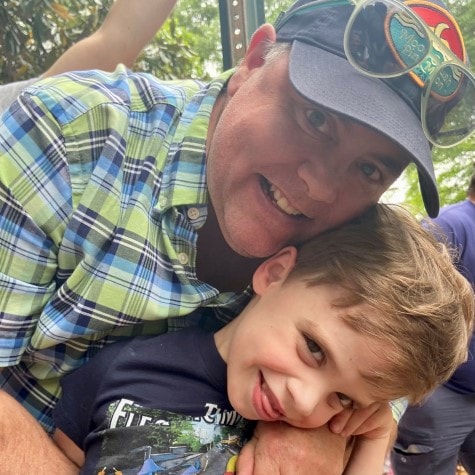
Neil Brogan, Dad to Jack
Neil is a proud dad to joyful 8-year-old Jack. When Jack began to miss milestones as an infant—crawling, holding a bottle—Neil and his wife, Laura, enlisted the services of Baby Can’t Wait, Georgia’s early intervention program designed for infants and toddlers with developmental delays. After thorough evaluation, the team at Marcus Autism Center diagnosed Jack with autism spectrum disorder level 3 at the age of 2. Today, Jack communicates through an augmentive and alternative communication device and continues to be a light in the lives of all fortunate enough to know him.
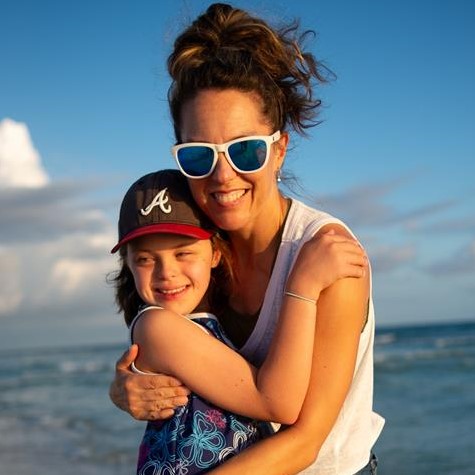
Nicole was an experienced mom with two elementary schoolers when the baby of their family, Ruby, graced the world with her happy-go-lucky presence. Shortly after birth, Ruby was diagnosed with Down syndrome, sending the Eliason family on their own “Welcome to Holland” journey. Now 12 years old, Ruby is thriving and racking up new friends by the day. Nicole shares her experience with Ruby in a mainstream public school setting, as well as praise for classmates who have made Ruby feel a part of their pack since kindergarten.
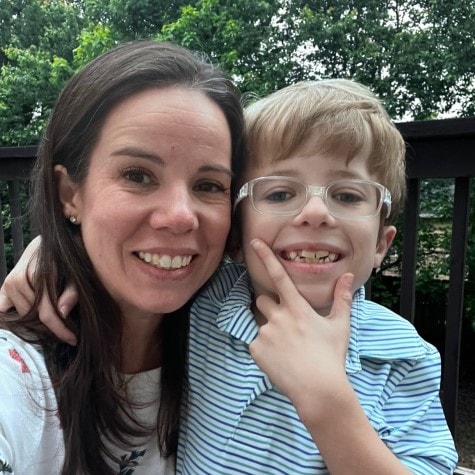
Jenn Keeton, Mom to Wyatt
After several years of agonizing infertility, the Keetons were thrilled to finally be expecting a child in 2014. During a routine ultrasound, they learned that their baby boy was measuring small. Testing confirmed he would be born with spondyloepiphyseal dysplasia. In sharing more about Wyatt’s journey with dwarfism, Jenn emphasizes the importance of finding and connecting with others on similar paths—as well as the power of parents who advocate on behalf of their children, whether that’s at school or anywhere in their communities.