Season 3, Episode 2
Hope and Will: A Parenting Podcast from Children's Healthcare of Atlanta
Precious Cargo: How We Safely Moved 202 Patients in 10 Hours
In this episode, we hear from members of an incredible team that flawlessly executed a feat that reads like a movie script.
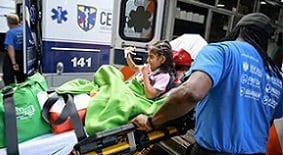
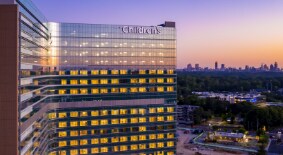
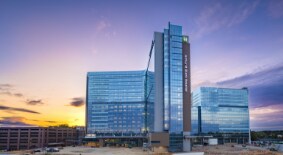
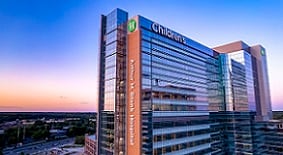
At Children’s Healthcare of Atlanta, Sunday, Sept. 29, 2024 was a day nearly a decade in the making. More than 200 Children’s patients—including several on advanced life support—traveled in a carefully planned caravan of 65 ambulances and made history as the first patients at Arthur M. Blank Hospital. And this was all in the wake of Hurricane Helene unleashing its wrath in the hours leading up to the big move. Joining Lynn for this insightful conversation are four key figures who played an instrumental role in this historic event: Linda Cole, Alison Bolt, Amanda Grindle and Kristen Cranmer. They share behind-the-scenes stories of the complex logistics, collaborative efforts and unwavering dedication that made Move Day possible.
In this discussion, you’ll hear:
- What it was like to be at Egleston Hospital in the final hours before the last patient departed.
- What was happening behind the scenes in our command centers.
- How unsung heroes made a big impact from behind the scenes.
Lynn Smith: You're about to hear a fascinating conversation with members of an incredible team that pulled off something that honestly feels more like a movie script than real life. Back in season two, we were joined by three Children's Healthcare of Atlanta leaders who shared insight into the many layers of planning that went into building Arthur M. Blank Hospital. In that discussion, they shared why Georgia's kids needed this campus and told us all about the amazing amenities and technology that render it a true game changer for Georgia's kids. We also talked about Move Day, the milestone day when children's would officially open the doors to Arthur M. Blank Hospital and transfer hundreds of patients from Egleston and Scottish Rite hospitals. Sunday, Sept. 29, 2024 was a day nearly a decade in the making. More than 200 patients traveled in this carefully planned caravan of ambulances and made history as the first kids at Arthur M. Blake Hospital.
And this was all in the wake of Hurricane Helene unleashing its wrath in the hours leading up to the big move. So today, we’re joined by members of the team who helped plan and execute this historical day. Buckle up and grab a tissue because what you're about to hear is as exciting as it is emotional.
It’s my honor to welcome Linda Cole, Alison Bolt, Amanda Grindle, and Kristen Cranmer to the show. These are women that have partnered with teams throughout the Children's System to lend their skills to countless spreadsheets, meetings, drills and many power points in preparation for this big day. And we're going to dig into the mechanics of Move Day, but let's kick things off by learning more about each of you, the role that you play at Children’s
Linda Cole: I'm the Chief Nursing Officer and SVP of Operations for the Arthur M. Blank campus, which means I'm accountable for nurses throughout the System and operations for the Arthur M. Blank campus.
Alison Bolt: I am one of the three hospital planning directors and have a nursing background. I've been at Children's for almost 19 years. My role was solely dedicated to the project of moving our patients and getting prepared for the new Arthur M. Blank Hospital.
Amanda Grindle: I am the second of the hospital planning directors and also have a nursing background. I've been at Children's almost 16 years and served as a liaison for several of the units. Move Day was in my purview along with many, many other things.
Kristen Cranmer: I've been at Children's for 18 years and have a nursing background, like Amanda and Allison. I also trained as a nurse practitioner. I had the pleasure ofserving as the Director of Hospital Planning for the last several years, overseeing our Arthur M. Blank Hospital planning team. I had the unique opportunity to build the team and also work with Allison, Amanda and Linda on building our committee structure to oversee all of the tasks that we had to get completed for this big day, which was pretty amazing.
Lynn Smith: This was not just a move. I would imagine the logistics that went into this were enormous.
Linda Cole: In addition to the three hospital planning directors that are on the podcast, we had four additional nurses and three project managers that really took everything from the vision of Arthur in Blank down to the most minute detail. I have been at Children's for more than 40 years. I have been involved with hundreds of teams, led many teams, and I can say this truly was a dream come true. I could not have imagined a better team to have gone through all the planning and preparation.
Lynn Smith: How do you go from, “We need to figure out a way how to make this even possible” to “It's going to happen one day.” What is the minute-by-minute plan?
Linda Cole: We had a good consultant that came in to help us that's done several of these moves. It was very organized with multiple spreadsheets, multiple checklists and multiple teams within the Children's System.
Lynn Smith: Amanda, can you give us an idea of some of those teams that came together on the planning? How did they bring this to life?
Amanda Grindle: Yes, it was a year-long process. We had many interdisciplinary teams working together to make that day possible. On the day itself, we had thousands of Children's employees. Many of them were scheduled for that day, but more than 1,000 of them came in to help us make sure the day was a success. Many of them played roles that they've never played. For instance, operating elevators or escorting patient families. Everybody played a unique role, and we couldn't have done it without those employees.
Lynn Smith: Why, Linda, did you choose to do everything in one day rather than in phases over the course of a few weeks? What was the thought process behind that?
Linda Cole: We picked a Sunday because we knew that day would have the least traffic. We wanted to make the logistics of the time moving from one hospital to the other as efficient as possible. We picked late September because pediatric volumes are very cyclical, and we usually have a lower volume in the summer. We wanted to take advantage of that time to get hundreds of people trained over the summer while volumes were a little lower. And we wanted to get the move in before we typically see the respiratory season start.
Lynn Smith: Linda, you told us back in season two that there were backup plans for backup plans, but you couldn't have possibly prepared for Mother Nature. There was a little literal hurricane that struck. It was just 48 hours out from the move. Hurricane Helene significantly impacted Georgia. Many lost power. Schools were closed. That workforce of working moms and dads were hit hard. Tell us a little bit more about how you handled the impact of that.
Linda Cole: It certainly made us anxious because it was planned to really hit Atlanta. At the last minute, it did take a little western turn. Although you really cannot plan for a natural disaster, we had looked at our EMS. We did not pull from any one state because we knew we were in the middle of hurricane season and something could have hit South Carolina or Savannah, so we were not dependent on one state to pull ambulances from. We were fortunate that we did not lose power and we were not significantly impacted. We were prepared with a lot of backup plans. We had different routes in case there was a tree down. Like you said, you can't prepare for Mother Nature, but we had prepared as much as we could.
Lynn Smith: Amanda, I want to get your take on the day of the move. In addition to this hurricane, we had a chemical fire that started in Conyers. What kind of impact did that have?
Amanda Grindle: In the Command Center where I was located, we also had the Director of Emergency Management. He has notifications, relationships, etc. through the state, so he was alerted of the chemical fire. He let me know about it. We watched it very closely. As you said, it has impacts outside of the environment. We didn't know if we were going to have to admit children at Arthur M. Blank Hospital at the same time as the move. We were doing that anyways, not necessarily just with the chemical fire, but we monitored it very closely. We looked at all the ambulances we were using and those that we could give to our partners to help if needed. We had those ready to go, and we also were in contact with the state to let them know what we could do, what time it was available. We managed it from the Command Center. We did eventually have to peel off a couple ambulances toward the end of our move to go and help, but other than that, we just managed it from the Command Center.
Lynn Smith: As a mom, I would be terrified at the idea of my child having to be moved to another hospital, but you did this so seamlessly. Did you have parents that came to you that were concerned, and how did you sort of alleviate some of those worries?
Alison Bolt: Our teams did an amazing job in the weeks leading up to the move, having intentional and thoughtful conversations with the families that they anticipated would still be at Egleston hospital for the move—families in the ICUs, parents of small neonatal ICU babies or cardiac ICU babies, parents with children in the Aflac hematology oncology floor. They started having those conversations early. They enlisted the help of our interdisciplinary care partners, like our social workers, case managers and chaplaincy. It was a team effort to start talking to them early about how we could provide support and ensure that we would do everything that we could do to make sure that it was a safe move for their child.
Honestly, on the day of the move I was pleasantly surprised that the families really had no problems at all with the move. The families were prepared to move, went with the flow and did their part. Whatever we asked of them, they did it just to help everything go along as smooth as possible.
Lynn Smith: Linda, you had years of planning to make sure that what was just described is what happened. What was the final week of preparations?
Linda Cole: The word that comes to mind is orchestrated. We had meetings that we knew we were going to have. We had them planned for weeks, months. The only curve ball was the hurricane because I feel like we had planned so much. We figured that whatever comes, we will get through it.
I think one of the things that really helped everybody be calm months before we moved was working with the physicians, especially in each one of the critical care units. We asked them what it would look like if we were moving today. How would we deal with each patient? Amanda worked the hardest with each one of those groups. Amanda, do you want to say a word about that?
Amanda Grindle: I think the word that comes to mind that I was surprised by was it was very calm. Everybody knew what they were supposed to do. Everybody felt prepared. Everybody knew we had placed physical resources, for instance, like Alison at Egleston and Kristen at Arthur M. Blank Hospital. People knew who to go to for questions. We worked really hard with our communications partners to make sure that people received the right information—not just the parents and families, but also staff about what they were supposed to do that day and where they were supposed to report. When you think about moving all these patients, it could create chaos, and it could create all these unknowns, but the System as a whole did a good job of making sure that everybody had what they needed so that Move Day could focus on patient safety and getting those patients where they needed to be and when they needed to be there.
Lynn Smith: When you talk about the patients that were moved, there were 200 in all, right? Tell me more about the patients you moved and how you moved them. Who did you decide would go first, last, things like that?
Amanda Grindle: We ended up moving 202. Every department was really good. They would take a day, months leading up to the move and say, “If this was our census today, how would we move these kiddos?” Starting on Tuesday prior to the move, we went through every patient we had in house. We had a leader from every unit go through their census and patient acuity of the patient. Who needs to be in the ambulance with the patient? Does it need to be a physician or a respiratory therapist or a nurse? What kind of equipment does the patient need? Are there any special circumstances or things we need to consider?
Then, we paired every one of those patients with a specific ambulance—one that might need extra equipment or extra expertise. We did that every day. We had our last meeting at 3 a.m., the Sunday of the patient move. We had the most up-to-date information. We had paired that patient with the right team, resources, equipment and the right ambulance. We knew there were going to be changes during the day, and we handled through the patient care Command Center. We had a great idea of what we would need, and when we would need it, so that everything could go as smoothly as possible. We made sure we had all the details right.
Lynn Smith: I'm told there were four different tracks. Can you tell me about each of them and the role that they served in terms of logistics?
Amanda Grindle: Yes, great question because the tracks were super important. When we say a track, it's basically a grouping of patients. We had two critical care tracks. Our third track was our most sick patients, what we call ECMO. They are on heart lung bypass. Our fourth track was general care and our hematology and oncology patients. For the two critical care tracks, we did our best to move a patient every five minutes. For the GPC tract, we moved a patient every three minutes. And they were all moving simultaneously, which is how we were able to get everyone moved in about 10 hours. Each track had their own path of travel within the hospital, meaning what hallway would they go down? Which elevator would they take? Which exit would they have at Egleston? What entrance would they have at Arthur M. Blank Hospital? What elevator and hallway would they use at Arthur M. Blank Hospital?
As you can imagine, moving all those patients, at the same time, it was very orchestrated. There was signage. There were people helping clear hallways as route observers. Everybody had maps. Each track was color coded. The ambulances knew where they were supposed to go. If we needed a patient, for instance, to go to the OR, or they needed some type of diagnostic testing, that had to come through the patient move center so that we could orchestrate how that needed to be moved. We were reusing every hallway, every elevator and every entrance and exit there. It was super important to make sure that we could move all those patients safely at the same time.
Lynn Smith: That's unbelievable. And Allison, patients moved from Scottish Rite. Why was that? Describe for us the different logistics that came into play.
Alison Bolt: The patients that we moved from Scottish Rite came out of our Aflac Cancer Center. Before the new Arthur M. Blank Hospital opened, we had the Aflac Cancer Cener inpatient and outpatient services located on both the Egleston and the Scottish Rite campuses. Part of the strategy for this new hospital was to relocate or “co-locate,” bring all the Aflac Cancer Center inpatient and outpatient services together There were 30 inpatient Aflac Cancer Center beds at Scottish Rite and then their outpatient clinics. We had close to 30 patients that we moved from Scottish Rite on move day. They joined up there with their counterparts from Egleston at Arthur M. Blank Hospital, and they're now all located together on that campus.
Lynn Smith: I was watching this all unfold in real-time on the Children's social media channels, and I was just blown away by the coordination. If you haven't seen how they documented the move on social media, you've got to check this out. They have move day recaps all over choa.org, and on this episode's webpage. Kristen, I want to get your take as far as the nurses. How could you anticipate this move impacting the kids receiving care? And then how did you plan for that accordingly?
Kristen Cranmer: Truly a safe transfer of care was at the forefront of our minds throughout all of this planning. Every single detail that we were going to encounter was considered as far as patient care goes. This planning began at least a year in advance of the actual patient move, so we had to consider everything from are we going to transport kids on continuous IV fluids? What if they had chemo infusing? What if they needed lab work or an x-ray on the day of the move? What if there's an organ donation situation that arises on patient Move Day? What if a patient deteriorates?
Our teams had plans for all of these situations, and we also had several backup plans. Additionally, we use those sequencing meetings as a time to plan for a safe transfer of care. What nurses needed to ride? What transport vehicle did they need? Did we need to have a physician ride with each of the patients? The safe transfer of care was our highest priority. I really believe that our plans contributed to the success of Move Day. We owe a huge thank you to our clinical teams and our transport teams for getting 100 percent of our patients to the new hospital safely. We are very proud of the fact that we had zero safety events on Move Day, which is a huge, huge accomplishment.
Lynn Smith: And it's unbelievable when you consider you had some very complex care cases. Allison, can you describe for us some of the more advanced cases that you had to transport? I there were some children that were on some form of advanced form of life support.
Alison Bolt: We offer ECMO services, which is a heart and lung bypass for patients that we do in our ICUs at Egleston. We had to think about how we would transport those patients if we had patients on ECMO on Move Day. We have not previously done ECMO transport within Children's. There are other organizations that do that. A year plus ahead of the move, we started to think about how we could do that because we know that we are the best equipped to move those patients. They're our patients. Our teams worked really hard. Our planning team worked with the clinical team in the ICUs to put a program and plan together to safely move those patients. It involved multiple folks. We did simulations onsite with the physicians, nurses, the ECMO team and the transport team. We physically put the pretend patient in the ambulance and moved them from Egleston to Arthur M. Blank Hospital. We had checklist after checklist after checklist. Every time you moved the patient, the patient went from the bed to the stretcher to the hospital. Before the stretcher moved, before the stretcher entered the ambulance, before they exited, everything had a checklist. It reminds me of how a pilot would go through and do a checklist before a flight. There was a lot of redundancy. We did all of that planning.
As we got close to the move, we ended up having two patients who were on ECMO and then another patient that was on what we call a VAD or a ventricular assist device. We had those three advanced technology patients and we were able to put that plan into action. To see it happen was probably one of the highlights of the move. I was so proud of those teams. They were methodical and calm. Everything went exactly as we anticipated it to go. And those patients were safely moved over to Arthur M. Blank Hospital. All of my career, everything I've seen, everything just kind of came together in that moment. It just was something magical to see.
Lynn Smith: When you're navigating such high stakes, to see it go seamlessly is a huge relief. Amanda, can you give us an idea of what things looked like in the ambulances along the route? How many were there? Could patient family members ride with them?
Amanda Grindle: We used 56 ambulances. We contracted with a company to do that. As Linda mentioned earlier in the podcast, we did pull from several neighboring states. We also had nine of our own Children's transport teams and trucks. Many of our sickest patients went with our Children's teams. Everyone else was divvied up in an ALS, Advanced Life Support Ambulance.
As I mentioned earlier, depending on what that patient's needs were, depending on what equipment and people were in the ambulance, and if there was space, yes, a parent or guardian did get to ride in the ambulance. We knew it was important for somebody familiar with the patient to ride with them to calm those nerves. So yes, we did see lots of family members coming in through ambulances that way, they came in through multiple entrances depending on the route that they had taken or their track. It was fun to see them get off the ambulances. Everybody had a smile on their face. They were excited about the new facility and to come in and see people ready to help them get to where they needed to be.
Lynn Smith: Kristen, it was 7 a.m. when the Emergency Department at Arthur M. Blank Hospital officially opened. What were those first few hours like? How many patients did you see? What kind of conditions were you treating that day?
Kristen Cranmer: Even though our Emergency Department opened at 7 a.m., our first patient arrived around 6:45 a.m. That patient showed up with difficulty breathing, and believe it or not, shortly thereafter was admitted to our Pediatric Intensive Care Unit. We saw a total of 184 patients from 6:45 a.m., when that first patient arrived, all the way until midnight. We had a few other kids that came in shortly after we opened. Most of them were difficulty breathing, fevers, cough. Overall, the feeling, as Amanda alluded to earlier, was very calm. I remember rounding in the Emergency Department about an hour ahead of the move. Nurses were prepared and ready to go to see patients. It was wonderful to see them jump into action 15 minutes ahead of when we thought we would start to see patients there.
Lynn Smith: That's incredible. That's when the planning actually comes to fruition seamlessly. Amanda, when you're talking about the thousands of working hands that made this Move Day possible, what did it look like? How many staff members worked that day? How did staffing work? How many volunteers did you have?
Amanda Grindle: We had about 700 employees that volunteered that day. Again, they were doing roles that they don't normally do. We still had thousands of employees that were regularly scheduled for that day and staffing up for that day so that they could make sure that we could operationalize two hospitals at the same time, meaning Egleston and Arthur M. Blank Hospital. We still had Scottish Rite that was fully operational and Hughes Spaulding. A big shout out to Scottish Rite and Hughes Spaulding—they were ready and did handle larger volumes as we shifted patients that way to offload things at Egleston so the transition would be smooth. They were staffing up, as well.
Functionally, we had four hospitals running on the shift when we were moving. We staffed a one-to-one ratio, which means one nurse to one patient in all of our critical care areas. That nurse could ride with their patient, and there was not an interruption in care. They would ride with the patient in the ambulance and resume care at Arthur M. Blank Hospital when they got there. That was really unique and led to some of the successes that we had on that day.
We also staffed up in our general patient care areas to a smaller patient ratio than they normally have, so that there was minimal interruption in transfer of care that day. We had extra facilities people on staff, from safety, food services and EVS as we were cleaning and turning over things very quickly. Kudos to every employee. I saw thousands of them, and everybody had a smile on their face, regardless of if they had to have gotten there at 3 a.m., and they knew they were going to be there until 6 p.m.
Lynn Smith: I would imagine they knew how important their work was. And Kristen, we hear a lot about those that had the official roles in this move, but I would imagine there were people that had quiet roles, some unsung heroes. Can you share some of those stories?
Kristen Cranmer: Of course we had heroes on the front lines, but we also had heroes that were behind the scenes orchestrating other really critical aspects of our move. A few I'd love to mention here are our technology and engineering teams. As patients were coming over, they were receiving the critical equipment that the patients needed to remain on, so they ensured that it got here safely, got on the network and that it worked for patient care. We also had our technology partners that had a Command Center, as well. As issues were coming up in real time, they were able to resolve those. Our Facilities team also had a Command Center, but they were ready on site to spring into action if there was a door that wasn't working or if something was broken. Our Security and Emergency Management teams were carefully monitoring the routes. They were ensuring that all of our access points at all of our campuses were safe. Our Marketing and Communications teams spent countless hours coordinating just in time messages to our move teams, managing questions that we were getting from volunteers, keeping our community updated and our board members updated. Whether we had heroes on the front line or heroes behind the scenes, it took a lot of different people to make sure that day was successful.
Lynn Smith: Allison, for many of the staff members at Egleston, I would imagine that they were saying goodbye for good when they got in the ambulance. and they rode with that patient during the transfer. Can you tell us what things were like at Egleston in the final hours of the move?
Alison Bolt: It was very emotional. For nurses, physicians and staff that have worked in that hospital and grown up in that hospital, it is like their second home. Most of them probably spend more time there than they do in their actual homes. Each unit had their own special ceremony and celebration as the last patient rolled out. It was really touching to see them honor the wonderful moments that had happened in their areas, the heartbreaking moments, each other, their patients and what that space means to them. It really was an honor to be able to see that.
When we first started planning what our roles would be on Move Day, there was a part of me after building this new, beautiful hospital that was like, “Man, I don't get to be at the new Arthur M. Blank Hospital on Move Day. I'm going to be missing out.” I was exactly where I needed to be at Egleston. I'm at the hospital where I’d grown as a nurse and with that staff and those patients and spend that day there. To physically get to close the doors after the last patient was truly an honor, and I would not have wanted to be anywhere else.
Lynn Smith: Kristen, were there some of the things that went more smoothly than you thought that they would?
Kristen Cranmer: I think the whole day went really smoothly. I know there's likely people listening that are like, “You're totally lying. There's no way that's possible.” But everything went really smoothly. Again, it was years of preparation and planning.
Lynn Smith: I'd love to go around to each of you and get an idea of a memory that really stands out. What about the move are you going to take away most? Amanda, let's start with you.
Amanda Grindle: I was in a more behind the scenes role for Move Day in the Command Center. I was following social media along with everybody because I wasn't able to physically see patients coming and going. I knew we had a tracker, so I could see when a patient had left and when they had arrived. When our last patient was en route, I did walk out of the Command Center and over to the door where that patient would be arriving, and I was able to see all the staff that had worked tirelessly for 12, 14 hours, depending on what time they had gotten there that day. Everybody was so excited. People were cheering and smiling. As that patient came through the door, everything culminated in that moment of the last patient arriving here safely. It was my job specifically to get them there safely, and so I took a deep breath and almost held it as every patient went until they arrived at the hospital. To see that last patient arrive safely and everybody just in the celebration moment, it was really special.
Kristen Cranmer: Similar moment as Amanda, but for me, it was the first patient coming through the door. We had built up anticipation and that first patient was from our Transplant Step Down unit. She walked through and waved. It was just seeing all of the teams there to greet her was pretty amazing—an overwhelming feeling came across me. I had an ugly cry moment. Our move had started, our first patient arrived safely, and I quickly had to pivot and get ready to receive the first and second ECMO patients, so I couldn't have that cry moment very long, but it was pretty amazing to see that first patient arrive.
Alison Bolt: I alluded to this a little bit earlier when I talked kind of about what it was like to be at Egleston, but my top memory was watching the last patient roll out, out of the hospital and being there with all of the staff that had supported the move all day long and kind of closing those doors. The staff had painted on the door at Eggleston, “We love you. Thank you, Egleston.” It was like a family reunion. There were people that were volunteering, like Amanda said, that I'd worked with for 10 years, but I hadn't seen for 10 years. It really was special to be there and watch that last patient safely leave Egleston to make the trip to Arthur M. Blank Hospital and close those doors.
Linda Cole: For me, it was definitely the patients coming in, but I think even more it was the excitement, the camaraderie of our staff. It's rare that you can see that many staff together on the same page and doing things they don't normally do. Many of them, as Amanda shared, were not in the roles they play every day, but we did have one common denominator that day. We all wanted to see the move go smoothly and our patients have a great experience. I think they did. As each patient rolled through, they were cheered. There were some that were low auditory or stimulation patients, and we quietly stood by and watched them roll through. It will be a surreal moment that I'll never forget.
Lynn Smith: And those were the celebrations at the hospital. You go home, you're sharing with your families what this Move Day looked like. Kristen, can you describe for us a little bit about what that “not so typical day at work” was like once you got home?
Kristen Cranmer: I had actually planned to stay at a hotel that night with our team, and my kids were begging me to come back home. I ended up going home and giving them big hugs. My boys had just won a baseball championship, so we quickly went back into just family mode again. Allison, I don't know if you had a similar experience at your house.
Alison Bolt: I got to see my husband on Move Day. He helped feed people. That was a really important job, but it was also nice to be able to get a quick hug. I went home the next day and saw my kids. The best part was that my teenage son texted me, “Good job,” at the end of the day Sunday. That was it. That was all I needed.
Amanda Grindle: Because of the role I was playing, it was very important that I was close to the hospital. I live a little bit away from the hospital, so I actually didn't see my family for almost a week during that time. I was in a hotel a little bit earlier than anticipated thanks to Hurricane Helene. I came home Monday night because there were other things that opened Monday for the hospital, like our ORs and things like that. We had to make sure all of that was good to go as well. When I got home, my two girls had decorated the house and all in Children's green. They had put a ribbon across the front door so I could cut it when I came into the house, and they were so excited. They had followed along with social media the whole time, so they felt like they had a part of it. They had known that mommy had worked really hard for many years to be able to do this, so it was just a great celebration all around.
Lynn Smith: You know, Linda, hearing all of these stories, it just reminds us, these dedicated professionals, yourself included, have families at the end of the work day.
Linda Cole: Without a doubt, and I don't have a great memorable story because I went home and went straight to bed because I was exhausted.
Lynn Smith: Now the work is just getting started. The Arthur M. Blank Hospital is fully operational. What are some of the milestones you've already achieved there?
Linda Cole: Well, of course we did a lot of the firsts—the first surgery, first ER patient—but I think the one that stands out to me is our volume. Our peak volume for a day has been 406 patients. We did not anticipate seeing that until much later in the year. Luckily, we have been very well staffed from a nursing and professional staff standpoint. We've had to really pull on our housekeeping and food service teams that are delivering more meals and cleaning more rooms. That is probably the biggest milestone, but also a surprise that we have become so full so quickly.
Lynn Smith: Wow, it is a full swing there at Arthur M. Blank Hospital. And as we wrap up, Kristen, for families who might need to visit in the future, how can they find it and is there anything that you want families to understand about visiting the campus for the first time?
Kristen Cranmer: The address is located on our website, choa.org. Once you get here, there are a lot of different parking decks and a lot of different buildings, so make sure to follow the signs and to follow your maps or ways that you're using. I do want to make a note for those listening, our Scottish Rite and Hughes Spalding locations do remain open every single day of the year, but our clinical services are no longer offered at the Egleston campus.
Lynn Smith: It is fully operational, the Arthur M. Blank Hospital, and it's because of the hard work and the dedication of the many professionals like you all. I cannot thank you enough for coming to share all of the ups, downs, and in-betweens of this move and the special moments that you got to share together. Again, thanks to this incredible all-star team and their amazing Children's colleagues for helping parents like me sleep better at night. We don't take having such an amazing resource for our kids for granted, ever. It's not easy work and there's no one who does it better than you. So thank you.
I also want to reiterate that the long wait is over and Arthur M. Blank Hospital is open and fully operational. The Hughes Spaulding and Scottish Rite hospitals will remain open. For a virtual look inside Arthur M. Blank Hospital and you can see more of the exciting Move Day highlights, just go over to choa.org podcasts. Right there, we're going to link a ton of resources that will help you feel like you are a part of the action on Move Day. I'm Lynn Smith and this has been Hope and Will, a parenting podcast from Children's Healthcare of Atlanta.
This podcast is for general informational and educational purposes only. It is not to be considered medical advice for any particular patient. Clinicians must rely on their own informed clinical judgments when making recommendations for their patients. Patients in need of medical or behavioral advice should consult their family healthcare providers.
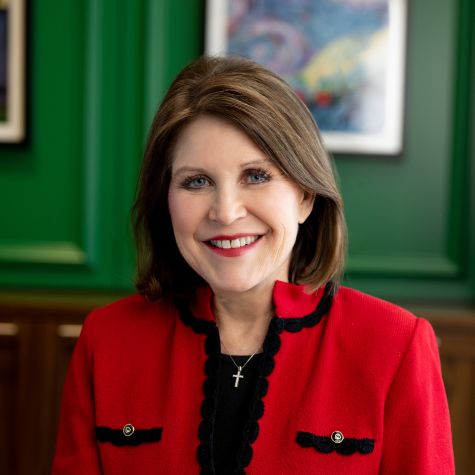
Linda Cole, Chief Nursing Officer
Linda Cole, MBA, BSN, RN, FACHE, NEA-BC, began her career at Children’s as a staff nurse more than 30 years ago. Since joining our team in 1985, she has worked at all three campuses, served in multiple leadership roles and led numerous high-profile projects, including Egleston hospital’s Level 1 Pediatric Trauma Center designation, the integration of the Hughes Spalding campus from concept through operations, the opening of Children’s at Forsyth and the path to Magnet recognition. At home, she’s a proud mom to four adult kids and five grandkids.
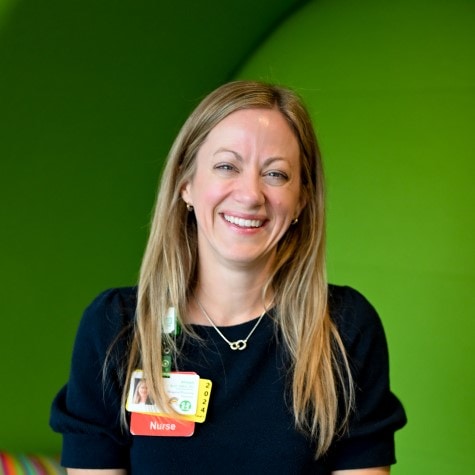
Alison Bolt, MBA, RN, CCRN, NE-BC, Hospital Planning Director
Alison began her career at Children’s as a bedside nurse nearly 19 years ago. In her role as Hospital Planning Director, Alison was instrumental in ensuring our clinical teams were prepared to begin work in Arthur M. Blank Hospital. At home, she’s the proud mom of a teenage son and teenage step-daughter.
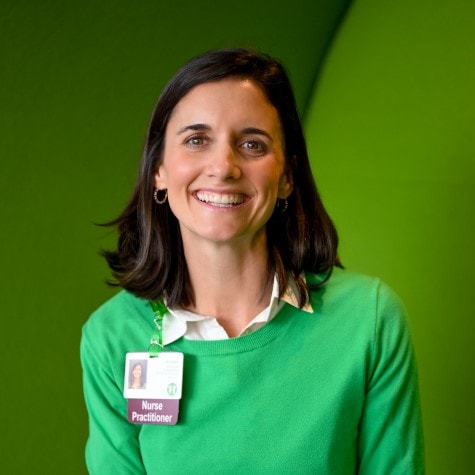
Kristen Cranmer, MSN, RN, CPNP, PCNS-BC, NEA-BC, Hospital Planning Director
Kristen, who’s worn a Children’s badge for 18 years, has worn many leadership hats across our clinical teams. A pediatric nurse and nurse practitioner by trade, Kristen helped build and lead our hospital planning team from its infancy. At home, she’s the proud mom of 11-year-old identical twin boys and an 8-year-old daughter.
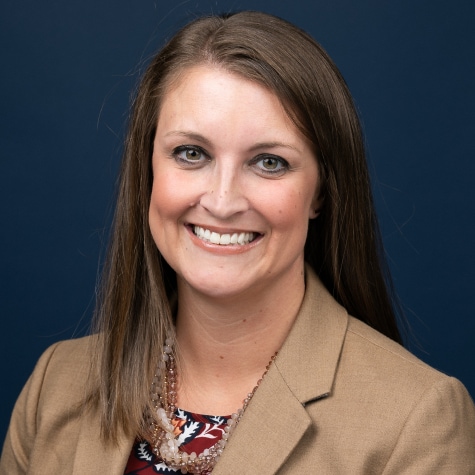
Amanda Grindle, RN, Hospital Planning Director
In her 16 years at Children’s, Amanda has played key roles in several monumental clinical projects. For Move Day, Amanda was at the helm of many patient logistics and helped captain the command center at Arthur M. Blank Hospital. At home, she’s the proud mom of two daughters.