Season 1: Episode 6
Hope and Will: A Parenting Podcast from Children's Healthcare of Atlanta
How to Help Without Saying, “How Can I Help?”
When a child is sick, we yearn to do something—anything—to support the child and their family.
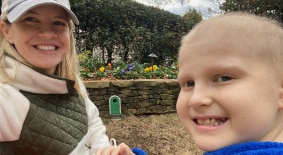
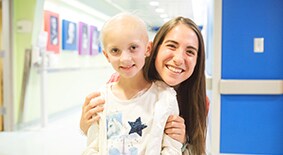
Lex had just started fifth grade when he was diagnosed with leukemia. He and his mom, Ashley, join us to answer questions we’re often timid to ask of those on a medical journey. Should you visit in person, pick up the phone or send a card? What are the best gifts to receive in the hospital? What’s an ideal frequency for a meal train? What do affected siblings need most? Their insight will help you shift from asking, “How can I help?” to having a go-to bank of ideas to support families in times of need. Whether you’re wanting to support someone in your community, seeking insight for your own journey or craving an inspiring story featuring a formidable mom-son duo, this insightful episode is chock full of outside-the-box ideas you don’t want to miss.
Listen to this episode on your preferred podcast platform: Apple Podcasts, Spotify or Amazon Music.




[VOICEOVER INTRO]
You're busy and you want the best for your kids. We're here to help. This is Hope and Will, a parenting podcast from Children's Healthcare of Atlanta.
[Host] Lynn Smith: When a child is sick, we yearn to do something—anything—to support the child and their family. If you've ever Googled what to give someone in the hospital, or you've just been at a loss when it comes to knowing what to do when a loved one is undergoing treatment, then this episode is for you. Hi, I'm Lynn Smith and welcome to Hope and will, a parenting podcast from Children's Healthcare of Atlanta.
I'm so excited about today's show because I have the privilege of being joined by Lex and his mom, Ashley. Lex had just started the fifth grade when he was diagnosed with leukemia and embarked on a year's long treatment journey. Ashley and Lex are joining us for a raw conversation about what it's like to become that family and what they remember most about the people who rallied around them from diagnosis to today. Their candid insight will help answer questions You might be asking yourself about supporting loved ones through a medical. And they certainly will inspire you with their strength all along the way.
Ashley, we're going to kick up our conversation with you and then Lex will join us in just a little bit. And I wanted to point out that you're a pediatrician, and I would imagine this is news you've had to pass along to parents. What was it like for you to get that word that your child has cancer, the biggest fear for so many parents?
Ashley Stolle: Yeah, it was awful. It's like your worst fear being a pediatrician mom. I mean, when they were little, every time they would have a fever, my husband would go to bed and I would say, “How can you sleep? Do you know what it could be? I mean, this could be meningitis, this could be, you know.” It took me years to be normal. And then here you get your worst fear happening. So it was really hard to digest it, knowing when they said leukemia, I already knew, oh my gosh, this is going to be three years of treatment. We're going to be in and out of the hospital. I already knew in my head what was going to come of it, even though I didn't know all the details. I knew the risks and that was really hard and hard to convey with my husband. I didn't want to tell him everything. I didn't want to transfer all the stress that was in my head, but sometimes I needed to offload it. I needed somebody to hear all the things I was thinking about so he could tell me. He was very wise, too. There were many times where he would say, “You need to stop reading studies. That's not your job. That's your doctor's job, and we're going to trust the team. There was a lot of wisdom in that, too.
My initial thought was, “Oh, this is why I went to medical school. This is my whole purpose. I'm going to quit my job and I'm going to dive into this, and I'm supposed to know all this to help my son.” It was an evolution for me to figure out that I'm allowed to just be a mom and be sharp and astute and pay attention, but also just be a mom.
Lynn Smith: Sure, the mom and not the doctor that I'm sure it’s tempting to be. Ashley, I think that there are a lot of times when things happen and you get a diagnosis and things can start feeling very confusing that the child may start losing their hair and somebody doesn't know how to react to it. What advice do you have for people? What should they do if they start crying in front of your son, for example?
Ashley: Yes. That happened a lot. It's okay. You know, I think the hard thing as the mom is sometimes you had already done your crying and so now someone's crying in front of you. But I felt like, I know they think I should cry, but I've already cried about this, and I don't have anything left. I can't help someone else. I had to just come to terms with myself recognizing that it's okay. We all process at a different rate and a different time, and what I really learned is that it is a lot harder to watch than it is to do it. Many times people said to me, “I don't know how you're doing it. Oh my gosh.” And they would be overwhelmed.
What I was doing was watching Lex and, you know, he was the one that was doing all the work. I was just watching and he would say, “Mom, I'm fine. Like I'm doing this just fine.” So, I always remembered that—that when you're in the thick of it, it is very, very, hard, but you're just doing it. It's a lot harder to be a bystander and watch someone go through it. So I understood why people were emotional seeing me, but I was in the battlefield and I didn't have the ability to even process it.
I felt loved. I think when people were emotional, I felt like they really felt for me. They cared for me. It didn't bother me at all, and it didn't bother Lex either. He felt the same way. It was touching. It really was.
Lynn Smith: What about those people that may feel that they're not close enough to come to you, they're more of maybe a friend on the fringe of your life? Do you have advice for those people?
Ashley: Those were actually the people that impressed me so much because they still reached out in their own ways, and I felt like people did it with a lot of respect. I had people just leave things at my door with a note, “I baked this. Hi, and I made two, so you could have one.” People showed up with pre-made meals and left them. I had friends that reached out and said, “Would Lex like a visitor right now? I know you and I aren't that close, but my son is thinking of Lex and wanted to see him.”
There were a couple times where, in the very beginning, Lex refused to see anybody. He was embarrassed. He felt sick, and I kind of had to force him to see one of these people. He was a little older than Lex, and Lex admired him. I told the mom, “That's fine.” They showed up, and Lex perked up and had fun. He talked because he didn't want to look sad in front of this older boy that he admired. It really made a difference. When he left, Lex said, “That was really fun. I'm glad he came over.” And I said, “Yes, see. Visitors can be fun.” When that mom was visiting, she shared that she had gone through something awful in her life with one of her other sons when he was little and had a big hospital experience. It was nice for me as a mom to sort of commiserate with someone that kind of knew how hard it was to go through something medically.
One of the best things anyone did for me was when we were first diagnosed. You don't leave the hospital. You go from the emergency room, and you get admitted and you basically have what you had when you showed up at the emergency room. I had a friend show up. She'd gone to Target and just bought sample sizes of literally everything—razors, body oil, face wash. She bought shampoo, conditioner, bedroom slippers, pajamas, a robe, a face mask that you could cover your eyes so you wouldn't see the light when you slept. It was literally a survival pack for the hospital. It was so cute. She put it in a nice cosmetic bag that zipped all up and it became my hospital bag because anytime we got admitted, I didn't have to pack everything up for the hospital. I just kept that for the entire journey.
Lynn Smith: Ashley, mom to mom, when you receive this kind of diagnosis and you're dealing with everything that comes with it, what would you say to somebody that's just getting the news?
Ashley: Take every day, one day at a time. It is overwhelming to try to process the entire journey, but you can definitely process the next five minutes. You can definitely process that day. If you can just break it down into smaller chunks and try to stay positive. The second thing is to just find trust in your team. Sometimes you do have to look for the right people to work with, but once you find the people that are right for you, your doctor, your nurse, advice nurse, you have to trust the process and sort of trust the team and hand over to them because they do have a lot of experience. And there were so many times where I wanted to ask a lot more questions, and they would just tell me, “It’s going to be okay. We see this a lot, and it's going to be okay.” Trusting that process and trusting those people and their expertise is really a helpful part of it.
At the same time you, you do want to pay attention to everything and keep the communication open. You know, become friends with the nurses. They're amazing. They will help you out. They will talk to the doctors for you. They will get you copies of labs if you need to see them. I do think taking good care of your nurses is important.
Lynn Smith: So I think it's a great time to bring in Lex. I'm so happy to have the both of you here. Lex, it is amazing to see you healthy and feeling great and being energetic, but this is a process that you've been through since you were in the fifth grade. You're now in the eighth grade. Can you tell me a little bit about what it was like when your world was first turned upside down with your diagnosis?
Lex: I remember being in fifth grade and just going for just leg pain and fever and that kind of stuff, and not thinking anything of it—thinking I had a flu or the virus. And then, a couple hours later, my parents come in crying telling me that there's traces of leukemia inside of my blood, which, you know, at the time being in fifth grade, I had no idea what cancer was. I thought that was something that only affected older people. I think it was just such a shock to me. It actually took a couple of days for my little fifth grade body to fully process that and take in all that information that was coming above me.
Lynn Smith: I can imagine. But now you have processed this, you talk about it with your friends. Can you tell me what life is like for you now, going through the treatments and also living the life of an eighth grader?
Lex: After my intense 10 months of treatment and then what was supposed to be two and a half more years of less intense chemotherapy ended up being one and a half years due to updated research. Now that I'm in eighth grade, and I'm in remission and everything, I'm able to talk to other people about my story and inspire other people and live a normal eighth grade life—I have friends and go to people's houses, which has been just a lot of fun getting to experience my childhood again.
Lynn Smith: Oh, I can imagine. You seem so wise beyond your years and probably that experience going through what's called acute lymphoblastic leukemia. What kind of treatment did you receive when you had your diagnosis?
Lex: I originally was scheduled for 10 months of intense chemotherapy. I would go each week for chemotherapy to the clinic pretty much all day outpatient and receive chemotherapy through my port that goes in my chest. I would get a lot of fevers and stuff throughout those 10 months, and I'd have to be admitted to the hospital for a little bit until the fever died down and they figured out what was going on. After those 10 months, I had one and a half years of something that they call maintenance mode, which is where it's less chemotherapy. I would go once a month. I did still have my port in during maintenance, and they would do a little less chemo and it would just be once a month for the remainder of my treatment.
Lynn Smith: I bet a lot of your friends during that time and even still now want to do things to help you. What were some of the things that they did to keep your spirits up?
Lex: I’ve discovered so much in my friends and family and people I didn't even know did so much. You know, some friends sold bracelets at school to raise money for treatment—not for me, but just in general for research, which was genuinely so sweet. I had people who would bring over like a weighted blanket in the hospital or even just come and visit with their time. Lots of people brought meals for my family when they were stressed. Just people being there ultimately … like even just the time spent with them in the hospital where I wasn't distracted. I think that's really what made a difference.
Lynn Smith: Mom, I bet you felt that too. That community. Tell me about that.
Ashley: It was really amazing at how everyone kind of swooped in, and like Lex said, so much of it was like our close friends, but then there were a lot of people that we hardly knew that did things. We just had such amazing things that were like outside of the box. My work arranged for my dog for two months to be taken care of—they arranged for a dog walker to come over and take him the entire day, and so there was no barking dog and there was no hyper dog when we had a sick child on the couch. It was just something I never would've thought of. It was such a creative thing. Neighbors came and when my front pots died, they replanted the planters in the middle of the night, put wreaths on my door, just really outside the box things. They gave us puzzles and bags of brain teasers and things that would pass the time in clinic because that was, you know, eight to 12 hour days. It was so nice that people gave us new things every week to do while we were there because you can only watch so much TV. People showed up with amazing slippers, insulated coffee mug, you know, just those cozy home like things that make a really, really big difference.
I have two daughters and people also kind of jumped in to help with them. Someone arranged all the carpools, like just forever more. I never worried about driving to the event. I was a team mom. Someone just wiped that right off my plate. Someone took all my signup genius activities and just told me, “I'm doing your sign up genius for the rest of the year. Don't worry about it.” Just things I didn't even think about at the time. Just taking things off our plate.
Lynn Smith: I want to ask you both this question. Lex, you first, you're now in remission and hearing the stress everyone goes through for your health, because you're the most important thing to a parent's life. I mean, it's your child. There's no one or nothing more important than a child in a parent's life. And so for you to be in remission, what's it like now to live the childhood, as you say, you have always wanted to have?
Lex: I think like at first when I was at first diagnosed, I remember, you know, asking my parents, the first question I'd ask them is, “Am I going to die?” And you know, that kind of sunk in for me because I thought my childhood was over, and I had lived my life. But after seeing the amazing teams and what they had in store and the research plans, I think just even a month later I went into remission where there was no detected cancer cells in my body. And that was just incredible to hear. There are so many people I have to thank for that and, and then just seeing, you know, this treatment plan is done and now I'm living my eighth grade life and my childhood isn't over. I still have, gosh, nine more years to live of my childhood.
Lynn Smith: I hope you’re all still kids at heart, Lex. I feel like a kid sometimes. And you're going to be able to enjoy that now. It brings tears to my eyes to hear you talk about everything that gave you hope once you got into the hospital. You know, sometimes that can be the scariest place, but it sounds like once you got in there, they did a lot to ease your mind. Tell me a little bit about that.
Lex: You know, Children's Healthcare of Atlanta had so many different opportunities where they had service dogs that would come in, and I'd get to play with them, and that would just ease my mind. They had an amazing garden at both locations that I was at, where I was able to go out and take a glimpse of fresh air and not the hospital room and, you know, just get to take in nature. They had clowns. They had priests, and you know, there were just so many different opportunities where they had Child Life services and everything. They had people who would color with me and volunteering services. And I just think people donating their time even just to help kids like me in that hospital, to have my mind at ease during all this treatment. I think that was, that was really incredible.
Lynn Smith: Yeah, it's incredible to hear. Mom, for you, everybody wants to help. I have a dear, dear friend. Her 2-year-old daughter was diagnosed with the exact same type of leukemia, and we all didn't know how to help. What advice do you have for people when they instinctually want to say, “How can I help?”
Ashley: It is overwhelming when you have everyone asking, “Can I help? I want to help. I want you to know I can help.” But then to actually ask for the help is really hard, and so I really appreciated when people took charge of some things. The meal train is literally the number one thing that I would say is people should do as a meal train for someone. Initially people signed up to do like every single day and I said, “I don’t think that's going to be too much and what I really need.”
I knew this was going to be a couple years journey. I knew the first six months were going to be the worst. I didn't want people to burn out. That was my greatest fear, that I had all this love and attention right away, but I knew that Lex looked really good when he was first diagnosed. I knew he was about to lose weight and lose his hair and lose his appetite. We were going to be in the hospital, and I really wanted to know that like in six months we are going to be okay. And so, I had a friend kind of understand that. She lined it up to do six months of a meal train, which is just amazing. People did it. My kids still sit around often and say, “I miss the meal train. That was so great.” You know, the food was so good, and it was so easy and it was always there, so that was amazing.
I've had a number of people say, “Hey, I'm in Target right now. What do you need? Hey, I'm at Costco. What do you need?” So, it wasn't like, do you need me to do something for you? It's, “I'm already here.” So, I never felt guilty asking and they were willing to do it. It was so nice that I didn't feel guilty about accepting the help because they made it so, so easy.
Lynn Smith: And it is that six months when everyone's all in and we thought about that, you know, a year in and a year and a half in to sort of restart that support, restart another meal train and not just saying, “How can I help?” but just do it. Show up. Offer some kind of help. I think that we've really taken that away.
Lex, I asked you the question, but Ashley, I want to hear from you. What's it like now having your son in remission? Hearing him talk about enjoying his childhood and getting to be the kid that he wants to be?
Ashley: I mean, it's amazing. It makes me emotional, just watching the journey, you know, Looking at him and just reflecting back, like, if I could have seen this three years ago, this would've been amazing. If I could have just known we would be here. We definitely seized the day. Like I think the one thing we've taken away from this is, you know, family's super important. Time together is super important. Experiences are super important. And that's what we kind of, you know, COVID put a damper on everything with everything, but the minute doors open, we were like, we're going to New York City. We're going to go on the cruise. We're going to do something fun. And you know, I'm not going to worry about long term … I am worried about long-term finances in some ways, but I would rather do the experiences than have a nice couch. You know what I mean? We learned that time is precious, and when we feel good, you just never know what's going to happen. So, when everyone feels good, we need to be doing stuff.
Lynn Smith: That's right. Appreciate every single moment. Lex, I can imagine you do that in a new way now that maybe children don't even understand that that's something that they need to do. So for anyone out there listening that's going through something really difficult, there are people listening who have children that are going through treatment now, that are starting to lose their hair, that are feeling that confusion of, “Am I going to survive?” Lex, what advice do you have for them?
Lex: One of the most important things that I had learned throughout my journey was, you know, taking each day just day by day. When I was first diagnosed, they gave us this big paper and you know, this is the plan, this is the three years. And I think whenever I would focus on, oh, well we have this next week and this is going to be a two-week chemotherapy kind of thing. And oh, I'm going to be admitted for eight days. You know, just take it day by day and you'll learn to appreciate things within that day, and it won't be as negative as you think it is. I think that's one of the most important things I had learned throughout my journey, is taking it just day by day, hour by hour, minute by minute, and just being present, being in the moment.
Lynn Smith: For you as a mom, just hearing him say that, what's that like?
Ashley: I do say this often about Lex, and it's a blessing and a curse, but I say he had the perfect personality for this journey. You know, he was full of positivity, and he was full of trying to find the fun and the small things and it's so crazy. We have said it so many times. We look back and we think there was a lot of fun in there. You know, we pass Scottish Rite sometimes and look up at the window. We're like, “Remember that room that we were in for 25 days straight? Remember how we saw Stone Mountain in the morning and the blue angels flew over? Remember they knocked down the door in between because there was a water leak in one of the rooms and they had to come in and knock it down the middle of the night?” We played. We did like all sorts of games. There were ways to make it fun. And when we look back, you know, what would I have been doing otherwise? He would've been at school all day. I would've been at work all day. We would've maybe had 15, 20 minutes at night. Maybe I would be yelling about everyone needs to do homework and clean up and I don't know. We had some really special time in there that, as hard as it was, we do appreciate some of the positive experiences we had during the journey.
Lynn Smith: Lex, for you, how did you keep your sense of humor through this? What were some of the tougher times in your journey when you had to pull yourself back and remind yourself of some of the things your mom's talking about?
Lex: When I first learned my blood type is actually B+, and so my community really rallied around that and they made shirts like “Be positive like Lex,” and all these amazing things. That really encouraged me. And even just like in the really, really tough days when doctors would give us bad news about something or things, you know, there was a reaction or something just wasn't going the best, my mom and I would make a game out of it. When I would constantly be throwing up and, you know, vomiting, my mom and I would make a game out of it where we would like throw the dart into the barf bucket. So just fun games like that and just distracting my brain really helped. When just watching a show together in there, or turning on the TV and making fun of it, or even watching something that maybe I wasn't allowed to watch with my mom, like Friends. We watched all watched Friends when I was 10 years old, which just things that I shouldn't have, but I think it was just a lot of fun. I think having the support there, my family was just definitely 10 times better.
Lynn Smith: What were some of the other ways that the hospital tried to help in passing some of that time?
Lex: Yeah, so as I talked about with the Child Life and all those amazing opportunities and even, you know, a couple times a day they would bring around this big cart with a bunch of DVDs or a bunch of coloring books. There would even be times where they would call on the announcements saying, “All right, bingo at 5:30. Everyone get your bingo boards out.” And they would come give us all bingo boards, and we'd turn to channel three on the TV and we'd play bingo. And if we won, we called down, “Hey, bingo.” Just things like that the hospital did were just incredible. It was fun that was made.
Getting to connect with other patients too, in that sense of like with the bingo and passing people. And there were even times they would have Halloween-themed activities in the arts and crafts room and just different themes and stuff, which was a really cool opportunity for kids in there and the nurses. You had like teams, where you would have the same nurse, like they would try to sign up for the same kids. So, you develop a relationship with your nurses. They were just incredible.
Lynn Smith: Amazing. They really are. I can speak from experience. They’re life changing and life saving. Were there times when people, friends, family, they wanted to help, but maybe they missed the mark?
Ashley: When people visit, I think they feel bad to come too short, and they want to really make sure you know that you're loved and all that. There's value in short visits in the hospital, especially if someone's dozing or starting to get grumpy or things like that. Sometimes hospital stays were a little too long when people were visiting. I think just watching that. We tried really hard to advocate for relaxation in the hospital.
He did not like when he'd have a spinal tap. So, they'd have to put him to sleep every week. And so every week we had to sign a consent form that said, do you understand the risk of death and meningitis and paralysis and all these things that, you know. It gave him a lot of anxiety, and I had to say, please, I understand that you have to do this every week. I understand that, but we, there's no reason we need to read this off in front of a child, and so can you please label my chart that I will step out of the room every week for this?
Lynn Smith: What about for those that want to reach out, what advice do you have on the best time to take action? The best time to help. When is too soon? When is too late? And some actionable items that people can do that made your life easier?
Ashley: I thought it was amazing to get like some point people. The school called and said, “Hey, we've identified ourselves as the point person for Lex. If you wouldn't mind updating us, then we can relate to everybody else.” The school was amazing at just getting the conversation and the communication going so that everybody wasn't calling and asking what was going on. So that was really helpful.
The social worker at the hospital came in and gave great advice that you probably want to have some sort of a post somewhere, a Caring Bridge, an Instagram or a Facebook page or something, because other people want to know what's going on. They want to know how to help. I was really resistant to Caring Bridge because I had several friends be really, really sick and I would cry and cry reading their journeys on it, and I didn't want to bring that sadness to our friends. The social worker was really kind of like, “No, you just need to put something out there so they know when you're at home or when you're in the hospital or what's going on. People want to know that.” So, we chose to do Instagram and that was really a fun way. We did selfies and pictures. We tried to update people without bringing people down, but sometimes we needed to be lifted and so we were able to say, “Oh, today's a hard day.” And that would be when people would text or call or visit and that was really great.
Lynn Smith: Lex, what about you? What is some of the advice that you would give to people that really want to be helpful? Some accessible tips for them?
Lex: Yeah, some people even would get a video from a celebrity and they would send it to me of a celebrity saying, you know, like, “Hey Lex, I hope you're doing better.” And even just on the weekends or if I was having a rough day, you know, some friends, some of my parents' friends would send me a quick text saying, “Hey, hope you're doing well. Just know that you are loved.” And just like having that love without feeling overwhelmed I think was really important.
And then even just the nice comments on like Instagram and you know, there were just a lot of nice little gestures that people did. We would see people in public and you know, they would talk to us but without bombarding. I just think those things really made a difference. Even if they were the smaller things. Someone sent donut delivery to our house. Things like that, that would be out of nowhere.
Lynn Smith: Okay. That's a good one. Let's just send dozen.
Ashley: Send all the sweets.
Lynn Smith: Yeah. Ashley, what about the girls, your daughters? I bet that's challenging to make sure that they're taken care of, but also very scary for them to see this.
Ashley: You know, they grew up pretty fast during the whole thing. My daughter had gotten her driver's license like a month after Lex got diagnosed and suddenly she was navigating highways trying to bring us supplies to the hospital and things like that. So, it was good for them because they really bonded together and they had each other.
We had a lot of friends recognize that because of how old they were, 16 and 13 at the time. They were more independent, but they could be home alone. They could manage some things on their own, but they still needed to be taken care of and our cousins up in Michigan did a lot of like driving down, taking the girls off to do some events together, really just love on them and care for them. People invited them to things like, “Oh, we have tickets to this game,” or “Would you want to go to the play with us?” Or, “How about the Botanical Gardens?” People reached out and included them in a lot of things. It didn't feel charitable. It felt genuine because they would have groups of people and include them in things. So, it was very nice to always think of the siblings. Lex got so many packages and presents and gifts. I was amazed at how many people threw in something for the girls. I just never had thought of that as a mom doing it for other people. I will always do that now. Someone sent like fabulous lip gloss and hair products, really fun things I would've never bought them. They would include it with a gift from Lex too. For a gift for Lex, too. So it was just special that people thought of them.
Lynn Smith: Lex, you're an incredible little boy, and I can imagine that this journey has only made you more be positive. I am curious, what do you plan to do? What do you want to be when you grow up, and what do you think that this cancer journey has taught you in fulfilling your dreams?
Lex: Well, I think that getting the opportunity to speak at many events about my cancer journey and getting to inspire other people has inspired me to go into something, whether it's acting, whether it's broadcasting, public speaking, something of that sort. I think just getting the opportunity to speak in front of people or in front of a camera or in front of a mic, and you know, just getting the opportunity just to inspire other people and making a difference in other people's lives with the story that I've been blessed but cursed in.
I think that because of my cancer journey, it's really motivated me. Whenever I'm having a hard day, I'm like, “Lex, you beat cancer. You can do this. The only easy day was yesterday. You can you can get through this.” I think that that's important and as I take that on with my life and with my career, I think that'll always be an extremely important part of who I am.
Lynn Smith: Well, Lex as a broadcaster, I can tell you, you have what we call the “it” factor, and I have no doubt that you will be gracing stages and screens and sending this message of positivity, resiliency, and endurance to everyone out there. And I'm just so grateful that you took the time to talk to us and share it with us here on this podcast. And Ashley, thank you for staying strong and being that mama that Lex needs you to be.
Ashley: Oh, thank you. Thank you so much. It's so fun.
Lynn Smith: I want to thank Lex and Ashley for joining me today. Their insight has just opened my eyes in so many ways, and it's certainly going to change how I offer support to loved ones in the future. For more information about this episode, the Aflac Cancer and Blood Disorder Center, where Lex received his treatment, and for resources to help you best support your loved ones on a medical journey, visit choa.org/podcasts.
I'm Lynn Smith, and this has been Hope and Will, a parenting podcast from Children's Healthcare of Atlanta.
[VOICEOVER OUTRO]
This podcast is for general informational and educational purposes only. It is not to be considered medical advice for any particular patient. Clinicians must rely on their own informed clinical judgments when making recommendations for their patients. Patients in need of medical or behavioral advice should consult their family healthcare providers.

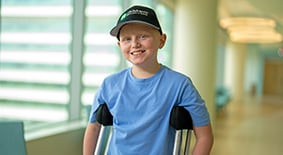
Lex Stolle, Cancer Survivor
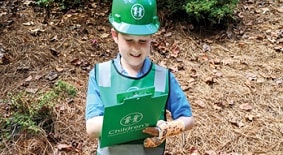
In September 2019, Lex was diagnosed with high-risk acute lymphoblastic leukemia in our Aflac Cancer and Blood Disorders Center. Lex, an Honorary Construction Manager for our new hospital, is on a mission to give hope to kids like him and families like his.

Ashley Stolle, Lex’s Mom
Ashley, a pediatrician and mom of three, was thrust into every parent’s nightmare when a nagging suspicion became reality. More than a decade after training at Children’s during medical residency, Ashley returned to our halls when her youngest was diagnosed with cancer.

Lynn Smith
Lynn Smith is a veteran journalist, podcast host and mom of two boys. Her experience as the parent of a patient at Children’s inspired her to advocate for spreading awareness of childhood illnesses and injuries.