Season 3: Episode 4
Hope and Will: A Parenting Podcast from Children’s Healthcare of Atlanta
Sick of Getting Sick? How to Stop the Cycle
In this episode of Hope and Will: A Parenting Podcast from Children’s Healthcare of Atlanta, we take a close look at the relentless cycle of flu, RSV and other viruses that have been hitting families hard this season. Kayla Lyons, a mom of two, shares her experience of watching her young daughter battle severe respiratory illness—not once, but twice. She opens up about the warning signs she wishes she had recognized earlier and what she’s doing differently now.
We’re then joined by Dr. Andi Shane, Division Chief of Pediatric Infectious Diseases at Children’s, who breaks down why these illnesses seem especially prevalent this season, how they spread and what parents can do to protect their kids. She also tackles the flu and RSV vaccines, the rise of walking pneumonia and the crucial role of hand hygiene. If you’ve been wondering why your family keeps getting sick and what you can do about it, this episode is packed with memorable insight and actionable tips.
For more about this episode and our podcast, visit www.choa.org/podcasts.
Lynn Smith: In recent months, you may have asked yourself, didn't we just get over being sick? Is this the same virus just lingering or have we moved on to a new illness? If that sounds like you, you're not alone. Flu, RSV, norovirus, whooping cough, pneumonia, rhinovirus—the fall and winter germ parade can be relentless, especially with kids who've yet to master the power of good hand hygiene. Today, we'll hear from a mom whose daughter brought back an unwelcome souvenir from a family vacation. By that I mean a case of the flu that landed her in the pediatric intensive care unit here at Children's. We'll then hear from a sought-after member of our infectious disease team, Dr. Andi Shane, a repeat guest who first joined us in season one. Beyond her strong clinical credentials, Dr. Shane is a mom to a school-age son and understands what's realistic to enforce with kids of all ages. She'll shed insight into how and why viruses spread among kids even despite their parents’ best efforts.
I'd now like to welcome Kayla Lyons to the show. Kayla recently spent several nights in our pediatric intensive care unit with her youngest daughter Izzy. Kayla, thank you so much for sharing your story here. We're going to get to the experience that landed you here on the podcast, but first, can you tell us a little bit about your family?
Kayla Lyons: We are a family of four. My husband and I were married in 2014. We had Sophia, she's 6 now. Isabella was born in March 2023.
Lynn Smith: I understand around 8months old, she had her first stay in the pediatric int unit for RSV. Tell me about that.
Kayla Lyons: She did. She got sick, and we were kind of managing it at home. We went to the doctor, and they told me, “You're going to need to take her in.” It wasn't acute enough that she had to be ambulanced, so I drove her. We were there for about eight days trying to wean her off of oxygen after those first initial tough days.
Lynn Smith: Recently you had another stay. She's around 2 years old now. This was just in January. Kayla, can you share what landed you in the PICU this time?
Kayla Lyons: She was sick for about two weeks, and we'd been going to the doctor throughout that time. On our fourth visit, her oxygen levels were bad enough that they had to transport us from the doctor's office to Children's, about an hour and a half away via ambulance.
Lynn Smith: What were her symptoms?
Kayla Lyons: She was having trouble breathing. It was clearly painful for her. She couldn't sleep because of it. When they checked her at the pediatrician, she had a pulse ox of 84. It was pretty clear at that point that we needed to do something. When they got that reading of 84, everything started to happen really fast. They called the ambulance. The ambulance came, and I had Sophia with me, so it was just me and my two daughters. They strapped us in the ambulance, and we rode with lights and sirens all the way to Children's. When we got there, we went to the Emergency room. They checked her out there, put her on oxygen and monitored what she was doing for quite a while.
Lynn Smith: Had you gotten the flu vaccine?
Kayla Lyons: We had not. Growing up, I had always heard from people's anecdotal evidence that they got the flu shot and got sicker that year, so it was not a priority for us.
Lynn Smith: Tell us how you started noticing symptoms and where you think she might have gotten it.
Kayla Lyons: We were at Disney World. I was doing my best, trying to keep everybody sanitized and safe from sickness, but she got sick our last day. There are people everywhere. We're going on rides. You can't predict everything and you definitely can't control toddlers. That last day, she started vomiting, and that was the first sign that something was wrong. About a day later, she got a high fever. We drove eight hours with her in the car, sick. It was very scary. At that point, I thought, “She has the flu. We'll take her to the doctor when we get home, and we'll figure out what we need to do.”
We got home on Monday morning. We took her to the doctor. They said, “Yes, she's tested positive for flu. Put a humidifier in her room. Keep giving her fluids, try to keep that fever down.” That was pretty much all we could do.
Lynn Smith: When you got into the intensive care unit, what was the kind of improvement you started to see? I know you were there for four days.
Kayla Lyons: She was really, really tired at the beginning—could barely stay awake. That's just not my daughter. She's all over the place. When she started to feel more like playing and being more alert, they would wean her a little bit down. Then she wouldn't have a hard time, her oxygen stats would stay up. That was an indication for me that, “I can take a breath. Things aren't as bad as they were.” It was a marked difference from her being really sick and not being able to fully use her lungs to when she got better. That was all with the help of the high flow oxygen. It just helped her heal.
Lynn Smith: You live an hour and a half away. When did they know they needed to get you an ambulance and get Izzy there quickly?
Kayla Lyons: As soon as they got that pulse ox reading of 84, everything ramped up and everything started to happen really fast. Within 15 minutes, there was an ambulance there. The paramedic strapped her little car seat onto the stretcher. We got in the seats in the ambulance, and they did lights and sirens the whole hour and a half drive to children's.
Lynn Smith: Looking back, is there anything you wish you did differently or wish you knew?
Kayla Lyons: I will get my own pulse ox reader. I will just order that on Amazon and have it here at home. I would say for other parents that are in this situation, prioritize that. Say, “My gut is telling me that something is wrong with my child. I know that you see this every day, but please, can you listen to me?” Ultimately, as parents, we know our children best, and we know when there's something wrong.
Lynn Smith: Kayla, you said earlier the flu vaccine wasn't on your radar. You'd heard growing up that anecdotally it made people sicker. Has this experience changed your thoughts on getting the flu vaccine?
Kayla Lyons: It definitely has. What I didn't understand is that it's not always a given what the flu is going to be that year. Some years [the vaccine] is more effective than it is other years. We'll definitely be getting our flu vaccine.
Lynn Smith: How is Izzy now?
Kayla Lyons: She's doing great. She had some night terrors in the weeks after we got home from the hospital. It's a hard adjustment when you're seeing nurses all night long and there are things attached to you. I'm sure that was tough for her. She's doing great now. She's bounced back. She doesn't have a cough anymore. She's feeling good, and now it's a matter of trying to get back in our routine after something so life changing happened.
Lynn Smith: I'm so happy to hear that, Kayla. The most important thing is Izzy's okay. You've shared great information for parents to realize you have to trust that gut, ask the questions and advocate for your child. Thank you for being here.
It is my pleasure to welcome Dr. Andi Shane, Division Chief of Pediatric Infectious Diseases at Children’s. Dr. Shane joined us back in season one for a fascinating discussion about viruses. Welcome back, Dr. Shane. It seems like everyone I know, my family included, has been sick on and off for months. I am excited to get some real information about what's going on here. Let's dive right in. Can you tell us about your role, the infectious disease specialty, and how you support the children for Children's.
Dr. Shane: I think I have the best job in the world because infectious diseases touch everybody and everybody's life. What we do as infectious disease physicians is try to treat children who have infections. We also try to prevent those infections from occurring. It's really a two-pronged approach to keeping children healthy.
Lynn Smith: We just heard Izzy's story. Despite the fact that she was an otherwise healthy toddler, the flu had her so sick that it warranted a stay in the intensive care unit. Can you help us understand what is happening with the flu? We know we don't want to get it, but many of us don't know much about it until we're in the throes of it.
Dr. Shane: One of the things about flu is that it's unpredictable. That's really challenging. [The flu] is both unpredictable in how many infections we will see each year and also unpredictable in how [different people] will handle the infection. One of the things that we do know is that vaccination helps to prevent people from having severe infection. Children under the age of 2 and even under the age of five are more predisposed to having severe infections. The reason for that also is the reason that many of these respiratory viruses, like RSV, affect young children primarily and make them have more severe infections. That's because their airways are smaller, and they're less developed. The flu makes you feel terrible. As an adult, if you've had it, you know, you have a headache, you just want to crawl into the bed. Our airways, as adults, are a little bit larger. We worry about young children having more severe infections. Also, people whose immune systems don't work as well can't fight the flu virus as well.
Lynn Smith: For the listeners, a little brief history about the flu. Back in 1918 and 1920, 550,000 lives lost because of the flu. It greatly disrupted life as Americans knew it. The early version of the first flu vaccine changed the course of how it affected Americans. But it does seem that there are years that the flu is worse than others, and it seems to be the case now. Is that true?
Dr. Shane: Every year there are different strains of the flu virus that are circulating. What we try to do when the vaccines are developed is try to match or predict what strains are going to be circulating. Some of that information is historical, and some of it is prediction. Sometimes we do very well. Sometimes there's more immunity. The flu virus changes from year to year. It's quite smart in what it does and how it adapts. If a strain emerges that there's not a lot of population immunity to, and a lot of people aren't vaccinated, and the vaccine and the flu virus strains that are circulating are not a good match, those are sort of three things that are colliding to make us have a more severe flu season. I think it's also important to remember that the pandemic changed everything. Now, we have young children who were not exposed to flu viruses. We had a little bit of a reprieve for a couple of years and had less severe flu seasons, but now we have a population that is largely not immune.
Lynn Smith: What is the difference between flu A and flu B?
Dr. Shane: Those are just two different types of flu. Our flu seasons are usually October to April. We usually see influenza A start in October. In Georgia, it’s quite prominent in December, usually after the holidays and January. We traditionally see the emergence of flu B in February and March. Flu A usually causes more respiratory symptoms. Flu B oftentimes has other symptoms. Some people may have some more severe neurologic symptoms, headaches and other neurologic symptoms that we may not see so much.
Lynn Smith: With flu A, does it start to taper off as the weather gets warmer? Is there part of the season that you know whether or not it's going to be a bad year for flu?
Dr. Shane: Sometimes we see a later onset, but that doesn't necessarily mean that it's going to be a better season. Sometimes we see a lot of flu in the early part of the season, October, and then it tapers down. Then we have another sort of surge in January. What we do know is that the outside coating of the flu virus is made up of some fat molecules. When it starts to get warmer, that coating starts to dissolve, so to speak. That's why we oftentimes see the virus proliferating more in the winter and colder temperatures.
Lynn Smith: Let's talk about vaccines, specifically the RSV vaccine. That's new. Children like Izzy, they were born before the RSV vaccine. For people who have the ability to get the vaccine, what does it mean for them? Are there any concerns they should have?
Dr. Shane: We are so excited because RSV now may be a vaccine preventable disease. We have two ways of approaching that. One, there's a vaccine for pregnant women that can be given in the third trimester prior to the baby's birth. The idea is that the vaccine produces antibodies in the mother, which then cross the placenta and render the baby immune or at least protected for the first couple of months of their life. In addition to the maternal vaccine, there's what we call an immunoglobulin, which is like a vaccine, except it really doesn't need the immune system to help it work. Basically, we're giving babies lots of high-powered RSV antibodies. That's given at birth or within the first couple of days, two weeks, depending on when the baby is born. That's basically a lot of antibodies to protect the baby against RSV until their immune system can develop, and they can mount a better immune response.
Lynn Smith: Vaccines are a bit of a hot button issue. Can you clarify some things for us? Why do they work? When it comes to RSV vaccine or the annual flu vaccine, is there variability in the effectiveness, and are there any concerns parents should have?
Dr. Shane: Great question. Vaccines are cool because most work by sort of tricking the body into thinking that you're being exposed to the virus or bacteria. Your body mounts an immune response to that virus or bacteria so that the next time you might see that virus or bacteria, your immune system says, “I've seen that before, I know what to do and mount an immune response”. One of the challenges is that everything we do in medicine and healthcare has risks and benefits. When its immune system is mounting in response, that might be a small amount of fever, it might be soreness in the arm or the leg where the vaccine is given. There may be other relatively minor side effects of a vaccine. We track those very carefully. Those are monitored by multiple surveillance systems both in the United States and throughout the world. What we've seen time and time again is that the benefits of vaccination far, far outweigh the risks. Nothing is 100 percent. Some of our vaccines work better than others. One of our big challenges is the flu vaccine. Many people say, “I got the flu vaccine, but I got flu.” Well, yes, that might have happened, but hopefully you were not hospitalized. Hopefully it wasn't a severe infection. And hopefully the vaccine that you got did offer you some protection.
Lynn Smith: I keep hearing about walking pneumonia, that this really ramped up this year. Can you simplify the illness? Describe what it is and why.
Dr. Shane: Walking pneumonia is usually attributed to a bacterial infection called mycoplasma pneumoniae. Mycoplasma is an atypical bacteria, which means it's different from our regular bacteria. In general, mycoplasma infections affect older children, usually school age children. What we saw this year was that much younger children, those most at risk for influenza and RSV, were developing infections attributed to mycoplasma pneumonia. Every seven years or so, we see a surge in mycoplasma. This sort of was on cycle, but it was a little bit off because the COVID pandemic changed our traditional viral and bacterial respiratory seasons. I think the other challenge, too, is that although we saw a lot of mycoplasma in the late fall, early winter, it coincided with the beginnings of the circulation of RSV and influenza. It seemed like a triple demic altogether. There's not a vaccine for mycoplasma, but there are antibiotics. Since it's a bacterial infection, antibiotics do seem to work to decrease the length of symptoms and the severity of symptoms in most children.
Lynn Smith: Is that how walking pneumonia is different than regular pneumonia?
Dr. Shane: Yes, and that's a great question. Oftentimes with mycoplasma, most children don't feel so bad. That's where walking pneumonia comes from—you continue to do your work, you go to school, you play, you may cough and you may have a fever, but you don't feel that terrible. Walking pneumonia comes from the fact that the symptoms in general are much less with mycoplasma pneumonia than they are with some of our traditional staphylococcal and streptococcal pneumonias that we see in children.
Lynn Smith: Will you give us the difference between a viral and a bacterial infection? We went through this when my son was the PICU for RSV. I was like, “Wait, there's no medicine for this?”
Dr. Shane: It's a challenging situation. For most of our viruses, influenza is an exception, we don't have good treatments that actually address the virus. Most of the care for a viral infection is what we say, supportive—oxygen if needed and fluids to help support children who are unable to drink because they are coughing or have a lot of respiratory distress. For bacterial infections, we do have antibiotics, and many of them work well for the bacterial infections. With staph, strep and mycoplasma, one of the biggest challenges is that antibiotics don't work for viral infections. We have to be really careful and make sure that we don't overuse antibiotics and predispose people and children to developing resistant infections. When we have a viral infection, we really want to avoid antibiotics.
Lynn Smith: I want to just point out an episode from season one, Dr. Shane was joined by Dr. Jaggi. It was a conversation that offered insight into antibiotics, how they work, and when they're most effective. For those that missed that episode, can you just give us a quick rundown on why an antibiotic is helpful for pneumonia, but not the flu?
Dr. Shane: Antibacterials or antibiotics don't work on the flu virus or the viral infections, RSV and flu. They don't act on the viral particles, so there's really no effect. One of the challenges is that if you give an antibacterial to someone with a viral infection, there may be some adverse effects. Many antibiotics cause gastrointestinal upset, stomach upset, diarrhea, and sometimes they taste terrible. Most kids don't enjoy them. It can be difficult to give. In a situation where there's a viral infection, giving an antibiotic isn't going to be helpful because the antibiotic doesn’t work on the virus. In a situation where there is a bacterial infection, the right antibiotic for the right duration can be very effective in helping to reduce symptoms. The antibacterial will go to the part of the bacteria and either kill it or suppress it. We've designed antibiotics to work on different parts of bacteria so we know how they work well together.
Lynn Smith: In the most simple way, how do we get sick? We're going outside and we touch [a] surface and rub our nose or something like that. Can you describe what it is, because if we know how we get it, then we can prevent it?
Dr. Shane: The most common way is mucous membranes. That means your mouth, your nose and your eyes. We touch our faces many times a day. We're not even conscious that we're doing it. Kids learn by touching everything. That's an additional sense that they have. They even more commonly than adults put their fingers in their mouths, nose, rub their eyes. That's the way that they explore the environment. That's one of the main reasons why many children and younger children are more likely to acquire viral and bacterial infections. They come into contact with these viruses and bacteria, usually it's person-to-person transmission. Many of these viruses and bacteria can survive in the environment—on toys, on other surfaces. When children mouth objects, which is another way that they explore their environment, they can be exposed to these viruses and bacteria that might live in secretions that are on those toys or in that environment.
Lynn Smith: Post-pandemic, I feel like us as parents we’re like, “Don't touch that. Don't touch your mouth. Don't put your hands in your mouth.” We were just at one of those play places yesterday with my two boys and they were putting things together and then touching their face. I kept having them put on the sanitizer. Most of us do that out of convenience when we're in public, public places. Does that even work?
Dr. Shane: Hand sanitizers do work. Ideally, you want to have one that has more than 60 percent alcohol, because it's the alcohol that is killing the bacteria or the virus. It's also the friction that's created by rubbing the hand surfaces together. The other thing that hand sanitizers do for children is that if you've ever put hand sanitizer on and touch your mouth, it tastes terrible. It’s an avoidance strategy. I think that it is really helpful to use hand sanitizers when you're leaving a place like a common public place before you eat after toileting activities. Ideally, we prefer hand washing, if possible, but in many situations, that's not convenient. Hand sanitizers work well in most of those situations.
Lynn Smith: What are some of the places that harbor germs or prone to bacteria that we don't really think about?
Dr. Shane: Your phone. Something that you probably touch more than your face is your phone. That is a really common place. Many people are concerned about cleaning it because it's an electronic item, and we're wiping the surface. Try to keep your phone clean. We think about high touch. That means surfaces that are commonly touched—doorknobs, anything that people are going in and out of and maybe touching before they have an opportunity to do hand hygiene or hand washing.
Lynn Smith: Is it worth wiping down those surfaces, or should we focus on keeping our hands clean?
Dr. Shane: I'm a proponent of keeping hands clean, but I think that there are certain situations where keeping the environment clean is important. During the pandemic, we probably went a little bit overboard with cleaning surfaces, but we didn't know a lot about the COVID virus or the SARS CoV2, the virus that causes COVID. It's a common reaction to want to clean surfaces. I think the environment is important, and it certainly can be a source of bacteria and viruses that can cause infections. The mainstay of preventing transmission is very simply just hand hygiene, whether that's hand sanitizing gel or foam, or hand washing.
Lynn Smith: It seems like norovirus, or the stomach bug has been more prevalent this year. It's something that I've always felt once it hits one person in our house, it's going to everyone. We should all just brace ourselves. Is that true and is there any way to prevent it?
Dr. Shane: It is a little bit true. There are ways to prevent it. Norovirus spreads very quickly because you only need a very small number of virions to cause an infection. It's a pretty hearty virus. It can live on surfaces for long periods of time—bathroom surfaces, toilet surfaces that may be used by multiple people. My advice is that if somebody has a norovirus infection or any diarrheal infection in the household, try to isolate that individual as much as possible from everyone else. That usually means that an assigned caregiver who may not be symptomatic will be the assigned caregiver and that individual will then take one for the team. Trying to keep the healthy people separate from the ill people, as much as possible, trying not to eat together, if at all possible, having separate toileting facilities is very helpful. If a child is wearing diapers, making sure those diapers are wrapped up and disposed of so others don’t come into contact with them … And hand hygiene, hand hygiene and hand hygiene—especially with norovirus. That is one virus that you want to focus more on hand washing because it's what we call a non-enveloped virus, which means that it can survive for longer periods of time and may not be as susceptible to alcohol as some of the other viruses. Any hand hygiene is better than no hand hygiene, but if you suspect that you have a norovirus infection, it's ideal to do hand washing with warm water and soap as a way of practicing hand hygiene.
Lynn Smith: You've talked a lot about ways to prevent these germs, like staying at home when you're sick and washing your hands. It sounds simple, but experts around the world say that hand washing is the number one way to prevent viral illness. Why is it so effective and is there a right way to do it?
Dr. Shane: Hand washing is effective when it's done properly. What you want to do is ideally wet the hand surfaces, apply soap, and then, as I mentioned before, it's really the friction that's so important. You want to cover all surfaces of the hand in between the fingers, around the nails, doing this for at least 20 seconds, then rinsing with warm water and ideally turning the tap off with a towel. It's also important to dry one's hands thoroughly, whether that's with a paper towel or a heat dryer. If hands are moist, that can be a breeding ground also for bacteria and viruses. It's a process. What we often do is have young children sing the “Happy Birthday” song or say the ABCs or do something that they know is going to last them for 20 seconds so that they really do that well. It's really important to make sure that children are hand washing.
Hand sanitizer is a little bit easier to use. You still want to apply, do that friction and make sure that it dries completely before you do anything with your hands. It's a little bit easier and faster than hand washing. For some of the viruses, norovirus and others, hand washing is really the ideal approach, if that's possible.
Lynn Smith: What are three things parents can do to help keep their kids from bringing home a new illness?
Dr. Shane: Hand hygiene, vaccination, and if they are ill, try to keep them away from other people who may not be ill.
Lynn Smith: I had a friend that anytime her kids came home from school during this season, she would have them change clothes and take a bath. Is that really extreme? Can germs be on their clothing and could that be effective?
Dr. Shane: There's a lot of debate about that. I think taking a bath is probably a good idea in general, but I think we went through this a little bit with COVID and the concern that viruses and bacteria could be on clothing. The main thing that you really want to try to do is focus on hand hygiene and hand washing. I think that in general, focusing on things that are touching other surfaces, touching your nose, your mouth, your eyes, which is usually your hands Should be the focus of attention.
Lynn Smith: Dr. Shane, this has been such great information because all of us want to figure out how we can make sure our kids are not coming home sick or what to do when they get sick. Thank you and Kayla for joining me today.
To stay in the know when new episodes become available, be sure to subscribe by searching Hope and Will in your preferred streaming platform and clicking follow or subscribe. For more on this episode, you can also check out related content by visiting choa.org podcasts. I'm Lynn Smith and this has been Hope and Will, a parenting podcast from Children's Healthcare of Atlanta.
This podcast is for general informational and educational purposes only. It is not to be considered medical advice for any particular patient. Clinicians must rely on their own informed clinical judgments when making recommendations for their patients. Patients in need of medical or behavioral advice should consult their family healthcare providers.
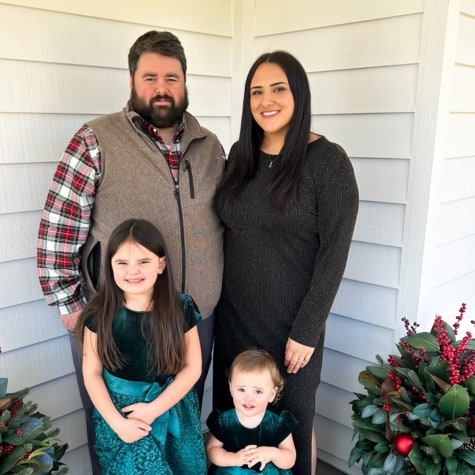
Kayla Lyons, Mom of Two
Kayla and her family were on their last day of a picture-perfect trip to Disney World when her youngest, 2-year-old Izzy, came down with the flu. The virus wreaked havoc on Izzy's respiratory system and ultimately landed her in our PICU. Kayla shares their experience and what she wants other parents to learn from it.

Dr. Andi Shane, Children’s Division Chief of Pediatric Infectious Diseases
Dr. Shane specializes in prevention and management of infectious diseases, as well as bedside care for children with highly infectious special pathogens. Her wealth of clinical expertise, balanced by a practical approach honed while raising her 11-year-old son, has rendered her a sought-after media guest in the COVID era.

Lynn Smith
Lynn Smith is a veteran journalist, podcast host and mom of two boys. Her experience as the parent of a patient at Children’s inspired her to advocate for spreading awareness of childhood illnesses and injuries.