Season 2: Episode 10
Hope and Will: A Parenting Podcast from Children's Healthcare of Atlanta
How to Avoid Sports Injuries in Kids and Teens
Every time an athlete heads out to a practice or a game, there’s risk for injury. As kids play more frequently and advance to more competitive teams, that risk increases.
From tee-ball to varsity football, from ballet to tennis doubles, the good news is that no matter the age of your child or their preferred sport, there are lots of things you can do to help prevent injuries.
In this episode, we open with the personal story of a stand-out high school athlete who was sidelined not once but twice by an ACL tear. We also hear from her pediatric orthopedic surgeon, Dr. Crystal Perkins, who serves as Medical Director of Orthopedic Quality and Outcomes and Medical Director of Girls Flag Football at Children’s. An athlete herself, Dr. Perkins knows what it’s like to be taken out of the game you love and why it’s so important to do everything possible to prevent injury.
Dr. Perkins tackles parents’ frequently asked questions, such as:
- Should kids specialize in a single sport early on to increase chances for playing at a collegiate level?
- What are the most common injuries we see in kids?
- Are athletes in certain sports more prone to injuries?
- Do some conditions affect girls more than boys and vice versa?
- How important is rest?
Listeners will leave the episode with increased understanding of the most common risks associated with each sport. You’ll also learn why a pediatric sports medicine program dedicated to growing athletes gives your child the best chance at full recovery should the unfortunate happen.
Listen to this episode on your preferred podcast platform: Apple Podcasts, Spotify or Amazon Music.




Lynn Smith: If you have a child athlete, you know that every time you send your child out to that field for a practice or a game, there's a risk for injury. And the more a child plays, and the more competitive they become, the greater the risk—from T-ball to varsity football, from ballet to tennis. The good news is no matter the age of your child or their preferred sport, there are lots of good things you can do to help prevent injuries from happening.
Today, we're going to hear from a standout high school athlete who was sidelined, not once, but twice by an ACL tear. A little over a year after her last surgery, she's back on the field and gearing up to play college soccer. We'll also hear from her pediatric orthopedic surgeon Dr. Crystal Perkins, who serves as Medical Director of Orthopedic Quality and Outcomes at Children’s.
Dr. Perkins is an athlete herself. She knows what it's like to be taken out of the game and why it's so important to do everything possible to prevent injury. Of course, not every injury can be prevented, but she's here to share tips to try and keep injuries at bay and share why a pediatric sports medicine program dedicated to growing athletes gives your child the best chance at full recovery should the unfortunate happen.
It's my pleasure to welcome Maddie Massey, her dad David and Dr. Crystal Perkins to the show. Welcome to all three of you. Maddie, I want to start with you. I understand you spent a lot of your childhood. You played sports and all that hard work paid off. You earned spots on your school varsity softball and soccer teams as a freshman, which is impressive in and of itself. Tell us how you got into sports and how you ended up focusing specifically on softball and soccer.
Maddie Massey: I got into sports around 4 or 5 years old for soccer and about 6 or 7 for softball. I just fell in love with playing and being out there and really just having nothing else to focus on but me and the ball and my teammates just working together as one.
Lynn Smith: Then in 2021, something feared by a lot of athletes, especially ones that have started early, you had a devastating injury. It was an ACL tear. Can you take me back to that moment? How it happened and what was going through your mind?
Maddie: I was playing defense on flag football for my high school team, and I was defending the person who had caught the ball. My cleat stayed stuck in the turf and I fell to the floor and just really was in shock more than I could say anything else. I think the pain was pretty obvious for the most part, but I really didn't know how to feel. Were you thinking to yourself, what is this going to mean for me? Am I going to be able to play sports again? 100%. We were all of four minutes into the game and maybe all of three games into the season. So, it really just took a turn, and I was more focused on whether I was going to be able to play soccer season in two months or not.
Lynn Smith: Were you thinking to yourself, what is this going to mean for me? Am I going to be able to play sports again?
Maddie: 100%. We were all of four minutes into the game and maybe all of three games into the season. It really just took a turn, and I was more focused on whether I was going to be able to play soccer season in two months or not.
Lynn Smith: And what is everything going to look like once you get back on the field? David, you were particularly helpful in the road to diagnosis because I know you had a similar experience yourself. Can you tell us a little bit about that?
David Massey: I tore ACLs playing small college football at Presbyterian college. I don't know that I was particularly helpful with the diagnosis, but hopefully it was helpful with the recovery—knowing what it's like to push to have all those things going on and have all those feelings and be pushing to get back to question what your body is going to be able to do and the level of dedication it takes to get back to that point.
Lynn Smith: And Dr. Perkins, I want to bring in you here. When you hear that, the obvious question is, do genetics play a role in this? A father having the same injury as his daughter would experience, is this something that people might be predisposed to?
Dr. Perkins: Yeah, that's a great question. We don't know of a specific genetic link or inheritance or risk of ACL injuries. Although intriguingly, when you look at our pediatric population who tears their ACL, about 30% of people will report that an immediate family member has a past history of ACL injury, most commonly being the father. There's probably a lot of reasons for that. A big contributing factor may be the fact that sport mom or dad played is also a sport that son or daughter play or perhaps more athletically-minded parents raise more athletically-minded children in some instances.
Lynn Smith: How did you get under the care of Dr. Perkins?
David: It was tough to diagnose the injury on the field, but we obviously wanted to follow up with some of the best and find out for sure what had happened. And then we had an appointment the next day and sped down the path to getting back starting then.
Lynn Smith: So, Dr. Perkins, you're a pediatric orthopedic surgeon. Can you help us understand your role in diagnosing an injury or condition, then treating it and getting the patient returning to play?
Dr. Perkins: At Children's, we have a wide range of healthcare providers that help facilitate the whole process. From our involvement in schools with teens and athletic trainers on the field, there could be an on-field injury in one of the high schools or clubs we cover, and they help facilitate evaluation with us. So, they end up in my office, and our initial priority is making a diagnosis. That involves examining a child and understanding what the injury may be, as well as helping facilitate x-rays or an MRI that we can do all directly through Children's. And then once we have a diagnosis, then the next step is treatment. That may be with one of our physical therapists in the community who can work with them and rehabbing an injury, perhaps not operatively, or in the case of an ACL injury or significant shoulder dislocation and many other injuries that we see, it may require a surgery.
Somebody like Maddie and her dad, I've known for two and a half years now. We've seen each other a lot, and she's seen her therapist even more. Then full circle, she's playing high school soccer again. She sees her trainer at school. We have a huge team that supports the mission of taking care of these athletes and getting them back as safely as possible.
Lynn Smith: Can you describe for us, Dr. Perkins, what happened to Maddie from the clinical perspective? People out there listening might know exactly what is an ACL tear.
Dr. Perkins: The ACL is one of four main ligaments around the knee, and it's one of the two big ligaments in a central aspect of the knee. And so essentially the ACL helps control the tibia and femur from moving in different directions. Most of the time, these are what we call non-contact injuries—not necessarily a tackle or a collision with another player, but non-contact, what we call open-field injuries. They most commonly occur as people cut or pivot or change directions. As Maddy very nicely described, as a foot stays planted and the body turns in a different direction, that puts force across the ACL. It's the most common way we see ACL injuries occur.
Lynn Smith: And what exactly might be a contributing factor that would make it hard for maybe a trainer or provider to diagnose this as a tear?
Dr. Perkins: So acute ACL injuries and really acute knee shoulder injuries on the field initially are always challenging for an athletic trainer to assess. A lot of that is because there's the immediate pain and guarding, right? So as Maddie described, she had severe onset of sudden pain. People describe kind of a pop and a pain swelling happens very quickly. There's a lot of motion in the moment. of fear in the moment. Our natural tendency is to try to hold real still, and the last thing you want in that moment is somebody taking your knee and trying to examine it or move it in different directions. Very commonly, we can tell on the sidelines something's wrong. There's swelling. There's acute pain. They're unable to return to play. It's not uncommon that it takes us a couple of days to let that simmer out some, or even occasionally an exam may be challenging, and we rely on more advanced imaging techniques like an MRI to confirm the diagnosis.
Lynn Smith: Why would you need to have surgery? This is obviously not something that can heal itself.
Dr. Perkins: ACL tears are unique. There are certainly some ligament tears in the knee that will heal with non-operative management. ACL injuries aren't one of those. I describe it to patients and families a lot of times as you have to imagine as this being like a tug of war rope, and it breaks in the middle. Then, you have two floppy mop ends. They retract from one another and don't heal with any tension and so it leaves the knee loose and unstable.
Frequently, we'll hear patients tell us, “Oh, two weeks went by and I felt so much better. I tried to go back to soccer, and the second that I tried to cut or pivot, my knee shifted again.” And I tell them, “You've proven yourself the point that the ACL doesn't heal in the fact that it doesn't protect your knee from those motions and it causes those pivoting injuries to recur.”
Lynn Smith: Is it more dangerous in teens than adults because maybe their tissue or their muscles aren't as developed?
Dr. Perkins: What makes adolescent and pediatric ACL tears a little bit different than many adult ACL tears is not how the ACL tears or the consequences on the knee. It's really the exposure risk and activities that these teenagers participate in that makes them rely on their ACL much more heavily. So, if you have a 50-year-old adult who tears their ACL skiing, but most of the time they play golf and have a desk job, they're not reliant on their ACL. If you take somebody like Maddie, or many of our other athletes, they play soccer or softball or basketball or football seven days a week, so they're constantly cutting, pivoting.
Those are normal motions for them that you or I may do once a month or once every six months when you take a ski trip, they're doing these every single day. That makes it really important for them to have a stable knee.
Lynn Smith: Maddie, you get out of surgery, you make it through. What was the recovery like?
Maddie: It's probably one of the hardest things I've done, and I wouldn't change it for the world. I don't think that I'd be the person I am today if I didn't tear my ACL. I’ve gone down a completely different path than you think you would be going through because it's a physical injury. But I think you truly realize your love for sports and just how much you enjoy having that background of a family of teammates every day throughout life.
I think my biggest thing that I struggled with is just having that snatched out from under me for about nine months, but definitely not something that you can't overcome and you can't get through. It's just really tough.
Lynn Smith: You also had to get back at it. You had to ramp back up, get out on the field, get to practicing. How did you do that?
Maddie: I can't remember a time that I didn't want to get right back out there. I think really just the pain is what held me back the most. I lifted, just building back muscle and having teammates support me and doing the little things on the field instead of like game speed of play stuff. I obviously couldn't do that until a certain point.
Lynn Smith: Maddie, your dad touched on this. It happened again. It was actually a year after the first tear. Can you walk us through what happened the second time? And I understand this time it was your right knee. Tell us about that.
Maddie: I was actually in my third soccer game back, and it came down to a 1v1 at the top of the 18, and she had the ball, and I went to go grab it from her. Next thing you know, I was on the floor, but I think the minute it happened, I knew exactly what it was. You couldn't tell me any different.
I think the one thing I can remember saying the most is I just can't do this again. I can't have sports taken away from me like that again. I don't think that anybody can truly realize how much sports do impact teenagers or even kids at our age. With everything else going on in life, it's the one thing that you can just do to step away from everything.
Lynn Smith: And we're going to dig into just some of the ways that you got through that. But Dr. Perkins, how common is it that you would have the same type of injury just in the other leg?
Dr. Perkins: This is a conversation I always have with families and everybody wants to know, “Hey, let's have surgery, recover, get back doing what you're doing.” And then you have to go, “Let's just step back for just a second and talk about the risks that you could re-injure that knee or injure the other one. The words Maddie probably remembers me telling her this in the past is “I'm not telling you this to scare you. I'm just telling you this because it's an important part of this injury.” It's an important part about why we work so hard in therapy. And then I also tell them, I say, “Listen, there are risks that come with being an athlete and we decide when we play sports, we're willing to accept those risks.”
We try to mitigate those risks and do everything we can in terms of injury prevention across the board in sports. Sometimes things are going to happen, and that's why we have good people to try to put you back together again and get you doing the things that you love. The risks I tell people when they tear their ACL and they're working their way back, we know from multiple studies that it's about 7% of people will tear the opposite knee, the ACL and the other knee.
Part of it is that it's risk exposure. We spend a lot of time working on the other knee, even in rehab, trying to minimize that risk, but unfortunately, it happens. There are two big points to missing out on sports student injury. Yes, part of it's the physical aspect of exercise, but a big part of it’s their social network. That's life outside of school. It's the number one thing they have going on outside of family and school. The thought of missing that for a prolonged rehab, nine months is, it's really challenging.
Lynn Smith: Maddie, just hearing that, how did you get through it? What did you do?
Maddie: I think the first month just being on crutches is probably the most torture that you're ever put in. But after that, just really at the end of the day, seeing the amount of support I had through family and friends really went a long way. Just building good habits mentally for me to just take time to myself every day, just to make sure that even now that I'm okay.
Lynn Smith: And you talked about this, Dr. Perkins, mitigation. I want to get your take on the role of an athletic trainer in sports medicine.
Dr. Perkins: Children's is certainly fortunate to have a big network of athletic trainers and physical therapists in the community. And I can't emphasize enough their importance and value to us that they bring to the patients and really enhancing the care that they provide. We certainly encourage working directly with formal physical therapy initially early on, but then ultimately, as Maddie said, you have to kind of transition.
Some people that are strong willed and have great family support and resources, they can be in the gym and working and lifting and they naturally have intuition and how to guide that. Others need that support of an athletic trainer, personal fitness coach who can work with them on that level. And then the next phase where they're outside of physical therapy, they're like Maddie, they're back playing sports and we harp on them over and over again. You better be going to the gym. You better be lifting. You better be working on injury prevention. And I think there's growing awareness in the community about the importance of injury prevention. We see many soccer clubs and baseball clubs and groups around town who now have specific injury prevention work.
Lynn Smith: And you also are a lifelong athlete yourself. So, you can relate to the feeling of having to pause on what is such an incredible outlet for athletes.
Dr. Perkins: For all of us, whether you're adults, teenagers, kids, you need an outlet aside from work or school or day-to-day activities, right? You need some way to clear your mind to listen to music, to go for a run, to play soccer, whatever that may be.
When you take a hobby or interest that for many of these kids is 16, 18, 20, 30 hours a week, you take that away completely because of an injury that leaves a big hole. You have to approach that and the care of these athletes. There are great, awesome days where we're back playing soccer. And then there are the days where it's in the middle of it, where I tell them, “This is the hard part. You can't do what you want to do. Your knee feels fine, but I'm not letting you do the things you like. And it can be depressing and really frustrating.” And we talk about, “You need to go to practice. You need to be around your teammates. You need to see your friends.” Sometimes parents are like, “Oh, we're just going to keep them at home. We don't want them around the field or anything.” I'm like, “Take them. Let them be around their friends. Let them enjoy the social environment. You can't take 100% of that away.”
Lynn Smith: I think this is why so many parents fear this. A lot of Georgia parents are focused on preventing injuries in kids’ sports. In advance of this episode, we actually round up a bunch of questions that they sent into us. So, I want to dive into those with Dr. Perkins. I'm going to run through a bunch of these. So, let's start with this one that came in. There's so much pressure these days. It's all so competitive. Is it smart for kids to choose their sport early on and begin specializing at a young age? And, I'm adding this second part because I know this. My son loves it—plays all the sports. Does that increase his risk? Should he just focus on soccer, for example?
Dr. Perkins: My advice that I give people is that they should play everything. Every season should be a different sport because for young kids. Sports is less about competition, even though the parents think it's competition. It's less about competition. It's more about motor skills and social development and learning to kick a ball or swing a bat or sprint up and down the field or how you change directions or how you work together as a team with other athletes. The best thing elementary school age kids can do is be involved in a different type of sport each season.
Lynn Smith: That's such good advice. Okay, this next question is what are some of the common sports injuries in kids that parents and their kids should have on the radar?
Dr. Perkins: They vary a bit by sport, so I would say overall, ball sports, excluding baseball, softball, so we'll talk about football, basketball, lacrosse. Soccer kind of field-based sports, those are largely cutting, pivoting, and change of direction injuries. You’ll see ankle sprains being mild of them, but more commonly significant knee injuries, like ACL injuries. And then some upper extremity injuries, like in football, like shoulder dislocations. Those would be common top injuries for those types of sports.
Then as you move into baseball and softball, we think about a lot of overuse injuries from repetitive throwing. We'll see in younger kids’ irritation of the growth plate. We call that apophysitis or a lot of parents will have heard of little leaguer’s elbow or a little leaguer’s shoulder. That's an overuse problem. When you have kids that are playing 11 months of baseball a year, when you do that much throwing, eventually something has to give. These kids are growing and developing. Their growth plates in their bodies can only tolerate so much of the same repetitive injuries. So, we'll see a lot of overuse injuries there.
Probably the other big category are the kids running, so track and cross country. Again, a lot of overuse injuries that we'll see some hip pain as well as knee pain, things like shin splints.
Thinking outside of the traditional orthopedic injuries, the other big things we'll see are concussions. Those fill our clinics, especially in the fall and lesser degree in the wintertime with sports like soccer. Football is a big one that we see a lot of concussions and head injuries and those non-traditional orthopedic injuries, which have significant implications, potentially in the long term, certainly in the short term, on people's ability to function and focus and work in school.
Lynn Smith: And another question that came in is how important is rest because it can be really hard to get a competitive athlete, Maddie, you're probably in this boat, to take days off?
Dr. Perkins: Yeah, so days for the body to rest and recover. I think the traditional thought behind this was rest day means I lay on the couch all day and do nothing. You take many athletes whose either coaches don't take a rest day or parents are training the next major league baseball player and they don't want to rest day. Everybody needs rest in order to maximize the benefits from your training. Your body has to have a period of time to recover and rest doesn't have to mean to lay around all day.
Rest could be cross-training. Let's say you have a cross-country athlete, a rest day could be doing a little bit of light swimming or doing a little bit of light spinning on the bike. It could be a day to be able to work, weight train, but your body doesn't do well doing the exact same thing every single day. That's the biggest message would be some variety, some break from impact, high impact activities in particular.
Lynn Smith: I want to go through each of the popular kids sports individually, because as a parent there are some things that you say are the top things to watch for in each. Let's start with soccer.
Dr. Perkins: So, when I hear teenage female soccer player, especially my biggest fear is ACL injuries. I think acute knee injuries are the most probably devastating of the injuries. I would say certainly there are probably more frequent ankle sprains, concussions, things like that with less lasting impacts, but knee injuries, I would say, rate number one.
Lynn Smith: Dr. Perkins, when it comes to common injuries in soccer, is it similar with boys as it is with girls? Are girls more prone to ACL tears?
Dr. Perkins: We do see greater rates of ACL injury in teenage female athletes as compared to male athletes. There are a lot of reasons that are the cause for that. There are some anatomic reasons, the alignment of the hips and the knees. There are some hormonal influences that increase ligamentous laxity and can increase rates of ACL injury and other ligament injury. Some of that's the orientation of things in the knee—how the bones are structured. What we call the notch in the middle of the knee that's narrower in our female athletes. And all of those things contribute to why we see increased ACL injuries in females as opposed to males.
Lynn Smith: What about basketball?
Dr. Perkins: Probably knee and ankle injuries are what I see the most. A lot of jumping and landing. Right around the basket, they'll land on other people's feet and twist and roll their ankle or break their ankle and knee injuries.
Lynn Smith: Football. And we talked about head injuries. What are some of the other things to look for?
Dr. Perkins: Yes, a concussion, is certainly a big one. Our primary care sports doctors will see that kind of first and foremost, shoulder instability. So traumatic shoulder dislocations, very common. And then knee injuries being another common injury.
Lynn Smith: Cross country and running long distances?
Dr. Perkins: Shin splints are probably the number one injury that I see related to this. These are largely all overuse injuries. So, building a lot of volume quickly changes in intensity and training. We'll see hip pain, shin pain, largely overuse injuries.
Lynn Smith: And then for volleyball?
Dr. Perkins: Mostly a large number of shoulder injuries associated with volleyball with so much overhead hitting activities. But again, the jumping and landing at the net, landing on other people's feet, see a fair number of ankle sprains related to that as well.
Lynn Smith: Do you see swimming? Swimming is probably something that's more of a low impact sport.
Dr. Perkins: It is low impact, but it's kind of high impact or high volume and repetition for the shoulders. So most common injuries we see in swimming relate to shoulders and overuse.
Lynn Smith: Tennis?
Dr. Perkins: Largely shoulder injuries, as well. Occasionally we'll see some lower extremity injuries, but this tends to fall, especially for our teenage patients, more into the kind of overuse category where that's repetitive overhead motion, so shoulder and elbow.
Lynn Smith: And finally, dance.
Dr. Perkins: Yeah, so much of dance is really mechanics driven, repetitive and depends a lot of hip and core strength and largely lower extremity injuries, a fair amount of hip pain that we'll see related to that. And then foot and ankle complaints, as well.
Lynn Smith: And finally, what would you say are the most common causes of overuse injuries, and is it the same as it is for girls and boys?
Dr. Perkins: Yeah, so I think this one ties into the rest. The biggest problem that I see are sudden changes in training. This is very common every year, moving into the summertime, early August, so cross country starts up. Sam and Sally have been running two miles a few days a week, and then cross country starts, and now we're running 40 miles a week, and we change that in one week. Sudden changes in intensity—there are sudden changes in volume that lead to these overuse injuries most commonly.
Sometimes it's changes in intensity. So, we'll frequently see this moving from middle school towards high school baseball, when we're throwing off speed pitches, when the velocity of throwing has increased and we see significant changes.
Lynn Smith: My oldest is just now getting into really competitive sports. He's 8 years old, and I'm starting to hear more and more about why kids’ sports injuries have to be treated very differently than adults. So, can you walk me through what's so different about a treatment plan for a child or teen versus an adult?
Dr. Perkins: So many pediatric injuries that we see really stem from mechanics, we'll call it. So, in other words, how somebody runs and jumps and moves and their flexibility. And there are things that are very dynamic about that in the growing child. The common misnomer, and we'll hear families say this all the time is, “Hey, this happened six months ago. We rested. Baseball season ended. We rested. He felt better. And then we started again and it started back and then we stopped pitching and then we rested and now it's back. And we're so frustrated because we've rested every time it's gotten better. And then it comes right back.”
The common thing in many adult clinics may be just to rest from what you're doing, but I tell families, we have to change something. Oftentimes for pediatric injuries, that's tightness of the calf. So maybe they're getting recurrent foot or ankle problems because their calves are tight. Or maybe they're having recurrent ankle sprains or hip pain because of some weakness in the hip and core muscles. We need to change that.
I tell them, “It's rest plus. We have to do more than just rest. We have to change the underlying mechanics.” And I think that's a really unique part in pediatric athletes that you need to address. And also, a really great opportunity to mitigate future injuries, correct those the first time and make them successful moving forward rather than repetitive injury after injury every season, which gets very frustrating.
Lynn Smith: As Maddie, you know well, I really want to get your take for anyone who might be listening, who might be in their early stages of dealing with an injury. What kind of advice do you have for them?
Maddie: My first piece of advice, at least, would be go to Children's, 100%. I think that I definitely went in there and was very shaky about it, just because you're so emotional. You're so caught up in everything. When something like this happens that you don't even know what to think. I don't think that I could have gotten better care from anyone else, from surgeon to physical therapist. I'm very appreciative for that part. So that would be my first piece of advice.
But, don't lose sight of the love that you have for your sport because you've been set back. You've got to continue. You've got to push through. You've got to have that support system, which my teammates were so quick to jump on. Hey, even when you can just pass the ball all of five feet apart. Yeah, to keep pushing on and have that resiliency
Lynn Smith: Dr Perkins, hopefully no one listening to this ever finds themselves in the situation like Maddie's or David. You've been through this as well, but if you are finding yourself in this position where your child has gotten hurt, what should a parent do?
Dr. Perkins: Injury recognition is really important. Oftentimes, I think as parents, we have that natural instinct. That's “Oh, brush it off. You're okay. Nothing's bleeding, nothing sticking through the skin. Everything's going to be all right.” And certainly, we all have those bumps and bruises and that's a very reasonable thing. If your child has an acute injury where they're unable to continue playing or you notice there's significant swelling in an ankle or knee or elbow or shoulder, those are reasons to get that checked out because I would much rather you come in and visit myself or one of my partners and us reassure you, “Hey, everything looks okay. You're going to be great. Here's our key to getting back successfully.”
Then you have additional injuries. I would say at Children's, our availability and interest in seeing you and diagnosing your condition and making sure we have you on a safe path to getting healthy is a huge priority for us. Don't hesitate, reach out and get in with one of our Children's team members and we'll get your kid back as healthy and safely as we can.
Lynn Smith: As you are now, Maddie, and we're happy to see Maddie, David and Dr. Perkins. Thank you so much for being with us and sharing this story. It's such an important one for parents out there. Thank you.
For more tips and resources to help prevent sports injuries in kids and teens, visit this episode's webpage at choa.org/podcasts. No matter your child's age or preferred sport, we're going to link to resources designed to help them stay in the game and at the top of their game.
I'm Lynn Smith and this has been Hope and Will, a parenting podcast from Children's Healthcare of Atlanta.
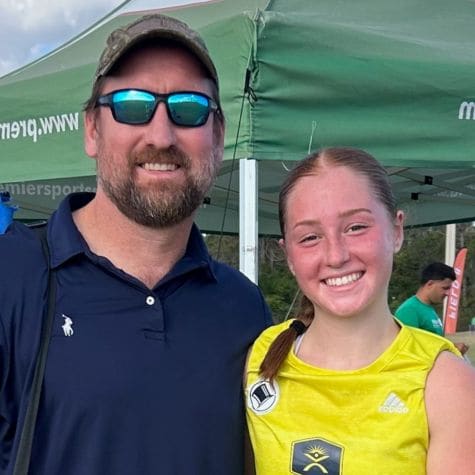
Maddie Massey, Two-Time ACL Tear Athlete, and Her Father, David
A stand-out, multisport athlete at her high school, Maddie tore her left knee ACL in October 2021. The injury occurred while playing flag football during the off-season for her main sports, softball and soccer. After successful surgery, she spent months preparing to return to the field—before tearing the ACL in the right knee almost exactly one year later. Maddie shares candid insight into the physical and mental burdens caused by sports injuries, as well as tips for fellow athletes to make it through the challenges of recovery.

Crystal Perkins, MD, Pediatric Orthopedic Surgeon and Medical Director of Orthopedic Quality and Outcomes at Children’s
Dr. Crystal Perkins specializes in the treatment of sports and traumatic injuries in children, adolescents and young adults, including injuries related to the hip, knee, ankle, shoulder and elbow. A former teen athlete herself, Dr. Perkins is still an avid athlete and often competes in triathlons. She understands the drive our patients have to get back to their sport and how important sports are to them—both mentally and physically.

Lynn Smith
Lynn Smith is a veteran journalist, podcast host and mom of two boys. Her experience as the parent of a patient at Children’s inspired her to advocate for spreading awareness of childhood illnesses and injuries.