Season 4: Episode 1
Hope and Will: A Parenting Podcast from Children's Healthcare of Atlanta
Eating Disorders: Warning Signs and What to Do
Eating disorders are showing up in younger and younger children, and not always in the way parents expect. In this episode of Hope and Will, we unpack the warning signs, who’s most at risk, and how eating disorders can look different in boys and girls. We also break down the most common types, what to watch for at home and how to step in with early support that actually helps.
We’ll hear a personal account from Ellen Ewing about her daughter’s six-year journey with anorexia. Ellen shares what led her to seek out a diagnosis and eventual treatment. Dr. Anna Tanner explains the early warning signs that are often missed and walks us through the most common types of eating disorders she sees in practice.
You’ll also hear the important role parents and caregivers play in treatment, how early action is important and resassurance that recovery is possible.
Katie Beasley: Today's conversation is one every parent, caregiver and educator needs to hear. For years, social media has been changing the social landscape of childhood. From what-I-eat-in-a day videos to fitness trends and filtered images, kids are being exposed earlier and earlier to unrealistic standards around food, body image and health. And those messages can shape how they see themselves in powerful ways. It's no surprise that eating disorders are on the rise in kids. Today we're joined by two incredible guests. Dr. Anna Tanner is a pediatrician who specializes in treating eating disorders. Ellen Ewing met Dr. Tanner when her then 16-year-old daughter was diagnosed with anorexia.
In this episode, we'll talk about recognizing early warning signs, who is most vulnerable, the role genetics can play, and how eating disorders can show up differently in boys and girls. It's my pleasure now to welcome Dr. Anna Tanner and Ellen Ewing to the show. Before we dive into medical discussions with Dr. Tanner, let's start by hearing directly from Ellen about her daughter's battle with anorexia and the challenging road to a diagnosis. Ellen, thank you so much for joining us. Take us back to the beginning and tell us about your family and what Josie was like as a child.
Ellen Ewing: I have two children. Josie is my oldest and then I have a son who's about two years younger. My daughter had a little bit of that perfectionist personality. She wasn't terribly anxious that I could see as a child, but I think it was underlying. And she will say that now she knows she has anxiety and she manages it. Kids who end up with eating disorders tend to have some of those characteristics. She was lovely. She always did her homework. She never got in trouble. She was social in a reasonable way. She was always very responsible. She was always very active. I mean, my daughter is very, very outdoorsy. When she was younger, she played soccer. She's a rock climber. She's now a downhill mountain biker.
Katie Beasley: When did you start to feel like something wasn’t right? That mother's instinct going off in your head that something was not right with her growth or development?
Ellen Ewing: So when she was 11, I remember taking her to the pediatrician and saying, “She's not growing. There's something going on here.” And we subsequently would go back like every three months. She's still not growing. We didn't get a diagnosis until she was just shy of 16. We went to endocrinologists, we went to all kinds of other doctors. We missed it. We switched pediatricians, too. One of them finally was like, “You know, this might be an eating disorder.” The pediatrician said, “Well, here's some people you can call.” And that's how I actually met Dr. Tanner. We brought my daughter in for assessment.
Katie Beasley: Describe some of her behaviors around food that you were starting to notice.
Ellen Ewing: She never stopped eating. I mean, that's a misnomer in her case. In restrictive anorexia, a lot of times they don't stop eating. They just don't eat enough. So she would eat. She was like, I want to eat healthy. And we're like, “Oh, great, this is wonderful. Eat healthy.” So, she started down that path and then she started eliminating things from her diet. “I'm not gonna eat a lot of carbs. I'm not gonna eat a lot of sugar. I'm gonna eliminate a lot of animal fat. I'm gonna be a pescatarian.” You'd also see weird behaviors. Near the end, right before we got the diagnosis, of course, we didn't know she was ill. Cause she didn't act ill. I mean, she was at a competitive rock-climbing competition the day before she was admitted to Children's for two weeks. She was running up and down 60-foot walls. But she would do things like if you tried to feed her lunch at 11:55 or 12:05, she would flip because it needed to be noon. She would start trying to eat with the tiniest plates and bowls. She went and found her baby spoon and she started eating food with her baby spoon. She had exercise as one of her compulsions. That was really one of the big components of her eating disorder as well, along with all of the rock climbing that she did. Going to the grocery store, she would not sit her butt in the seat. She would hold herself up on her arms the entire car ride. Because it's exercise. She would not sit. She would try to eat by putting one knee on the chair, the other leg on the ground and sort of stand there like that at the table. Her teachers told me that she stood up during class. She would stand up the entire class at school.
Katie Beasley: This had to be so heartbreaking for you and your husband to watch. Tell us about when you eventually did get the diagnosis and how you met Dr. Tanner and how things escalated pretty quickly from there.
Ellen Ewing: So we took Josie in for an assessment, and I have to stop and give pause. My husband was awesome through this whole thing. He was huge. We shared the whole treatment of my daughter. We both ended up taking off work. We shared it. It's really, really invaluable to have a partner in this who's on the same page, who can help with the treatment because the caregivers deliver a ton of this treatment. So, we took her to see Dr. Tanner, and usually I think the assessment is like a three-hour assessment where they do a medical profile, they talk to the caregivers, they talk to the patient themselves, kind of get some vital stats to figure out really what's going on. Dr. Tanner came back in the room where Tim and I were after maybe 20 minutes and said, “Yeah, we're sending her to Children's right now, and I'm calling ahead, so walk into the emergency room and they're gonna let you right in.” So that's how bad it got. That's when we got diagnosed. That's how we actually ended up at Children's for a couple weeks before she got into formal treatment.
Katie Beasley: So, Josie was 16 years old. She was 4 foot 10 and weighed 70 pounds. Her heart rate, they said, was very dangerously low. And I know that had to be, again, so scary to go in for an appointment just hoping for a diagnosis and then be rushed to Children's. What was the hardest part about this whole thing for you guys at the time?
Ellen Ewing: I mean, there are different parts that were hard through that whole four-year period. You can just imagine you're sitting there, waking up in the middle of the night, thinking, “What is wrong with my kid?” There's something going on. There's something not right. So getting a diagnosis, someone who understood, was a huge relief. There's a little bit of denial going on. A lot of times with caregivers, early on particularly, and then you feel incredibly guilty. How could I have done this? How could I have messed this up? I think I'm a great parent. I think my husband's a great parent. Once you get the diagnosis, there's a lot of guilt to work through. As a caregiver, you're having to deal a lot with your child's distress. Because it's incredibly distressful for them to eat. And so managing your child's distress probably becomes the largest challenge as a caregiver. There is nothing that feels as awful as watching your child in distress. You have to keep going with them. So learning how to manage that and be calm, not react to yourself emotionally. I know caregivers whose kids punched holes in the wall and would also run when it would become dinnertime. I had to lock all the doors in the house and do lots of other things to keep her safe. But she would get up and run. She would leave the house. That's the hardest part is managing your own distress. At your child's distress, it's very, very difficult. And that's why it's important to have the right tools to be able to do that.
Katie Beasley: What did treatment look like for your family?
Ellen Ewing: Treatment for anorexia, a lot of it is initially on nutritional rehabilitation. You've got to feed the child. In our case, we were at Children's for a couple of weeks for medical stabilization. Anna mentioned that her heart rate was the challenge. So I remember laying there. We stayed with her every night. My husband and I switched off, and you'd hear that little heart rate monitor go off when her heart rate dipped. When they come home, they never come home cured. So you've got to continue this nutritional rehabilitation. And you may need to add in some other things on the back end as well. But that all falls on the caregiver. If you're in a good program, a lot of them will be training the caregiver on how to actually do this. So the average recovery time is around eight years for recovery from an eating disorder. A lot of that, they're going to be home. We were fortunate. My daughter recovered in about three years. So that was the time period, sort of from beginning to end, where she was in active treatment. Everybody has their own sort of set point of what they need to be at to be healthy. As a 18, 19-year-old, near the end of this, she grew five inches. She had been so stunted from the nutrition.
When you're malnourished, one of the things that goes is your brain. Fall of her sophomore year of high school is when this all got diagnosed. By spring she was way better. But I remember she was supposed to read something for class. She couldn't read a book, so I was reading aloud to a 16-year-old. School can become really challenging. A lot of these kids are very school-oriented. They'll want to be successful. They're high achievers. So it can be really distressful for them not to be in all the top honors and AP classes and we had to pull back on a lot of that. And like, no, you're not taking all those AP classes. No, you're not taking all those honor classes. We let her take two classes at school and then she came home and did a couple online.
Katie Beasley: Well, Josie definitely was lucky to have both you and your husband in her corner fighting for her, fighting for her health and recovery. And I want to ask you in a few minutes how she's doing now, but let's bring in Dr. Tanner. Dr. Tanner, now that we've heard Josie's story, help us understand the big picture here. How common are eating disorders in children today?
Dr. Tanner: Katie, it's such a great question and I really appreciate Ellen giving a voice to the lived experience. For families battling eating disorders, they're extremely common. We think the current prevalence rate is about 6 to 8% of adolescents. So that's really common. It's actually as common as anxiety. And to your earlier point, we know that eating disorders have increased in children. We also know during the time that I've been treating them that the average of onset has come down. So the average age of onset of anorexia nervosa is 12.3 years old. The average age of onset of bulimia nervosa is 12.4 years old. So Josie's story is not unusual. In fact, about 40% of kids have onset of the illness before age 11. So it's actually more common than most people think.
Katie Beasley: Wow. There are so many misconceptions people can have, if they have not personally experienced something like this. So what are some early red flags that families or caregivers might miss?
Dr. Tanner: We talked a lot about Josie's case and anorexia nervosa, but I want to point out for parents that are listening that we now understand that eating disorders encompass a broad range of behaviors. So in addition to restriction, which is what Josie exhibited the most of, we also see kids who engage in purging behaviors. They try to compensate for calories they're consuming. We see kids who engage in binge-eating behaviors where they lose control of eating. And we also see kids engage in selective eating where they can't take in a wide variety of food. So there's a whole range of behaviors we see. It's also really important for parents to understand that eating disorders probably affect males and females equally. We used to think this was an illness of just girls, but newer data suggests that that's not the case. And presentations can be a little bit different between males and females, but more similar than you might think. In addition, we know that eating disorders affect kids across all races, ethnicities, and socioeconomic groups. So I want every parent to know that if they're worried about their kid, I want them to feel heard, and I want them to see somebody who understands eating disorders and get their kid a specialized eating disorder evaluation. We know that parents are the key to detecting eating disorders.
Katie Beasley: And there is such a wide spectrum of symptoms. What are some of the wide-ranging symptoms that a family could be looking out for?
Dr. Tanner: Parents are typically the first ones to notice a change in their child, and Ellen did a beautiful job describing that. So for kids who are engaging in restrictive behaviors, to Ellen's point, they're not taking in enough energy to make their energy needs. And in really, really young kids, this can sometimes be missed because they might not eat lunch at school, but their parents might make them eat dinner. And so lots of times in really young kids, the body slows down growth or slows down puberty as a way to save energy. And there aren't overt findings like a low heart rate when they go to the pediatrician. And nobody really understands why. Their growth is slowed because the behaviors aren't occurring in front of the family. But parents may notice that their kids aren't eating meals, aren't completing meals, are throwing away food or hiding food, cutting food into tiny bites. Those are some common presentations for kids who are not taking in enough energy, who are restricting. For patients who are purging, their parents might notice that they get up and go to the bathroom right after a meal or take a really long shower in the evening after dinner. They might even find signs that their kid has been vomiting. They might clog the sink or clog the toilet in their bathroom. They might find vomitus in their bedrooms. For kids who are engaging in binge eating, those parents might find wrappers in the child's room. They might find food hidden or hoarded in the child's room. They might see their child lose control while they're eating. And in really young kids, they may sometimes eat until they vomit that they lose control of eating and they can't stop eating, and they're not trying to compensate for calories. They're just eating until they reach a physical point of fullness. And then for kids with selective eating, these kids often get missed in the broader pediatrics world. But those parents will come in and say that there are very few feuds their kid will eat that they're not outgrowing it during those middle school years. It's not childhood selective eating. That variety doesn't get better. And a lot of these parents are giving their kids supplements, for example, to get enough calories in during the day so that they keep growing or. And keep them on track for growth. So those are some of the common things that parents will notice or present to their pediatrician with when they're noticing behaviors that could indicate an eating disorder.
Katie Beasley: Some kids, of course, are just naturally thin. As parents, we know they tend to go through growth spurts, or they tend to go through periods where they're eating a lot of food, and then poof, that can change. And then you're begging them to eat. So it can change very drastically per child. And how do you know when it is something to worry about versus something that's normal or expected, like a growth spurt?
Dr. Tanner: One thing we can do is really make sure that kids are growing to their genetic potential and that they're following family pubertal patterns. So if you have a family that has early puberty, both parents, and then the kid's not going through puberty, and there's a worry from the parents they're not eating enough. That's probably a true concern. As Ellen pointed out with Josie, Josie wasn't growing. And Ellen's not the tallest parent I've ever met, but Josie wasn't growing to her genetic potential. She was completely off her growth chart. And so looking at where a child should be for growth, linear growth, and pubertal development is really important, which means that the pediatrician has to be looking with the family at what is their family history, what is their family genetic potential for growth, and analyzing that child individually versus making sweeping statements that growth or weight looks okay, because every child is different, and every child needs an individualized evaluation.
Katie Beasley: You walked us through the different eating disorders, but please explain them in more detail.
Dr. Tanner: One of the things that has happened in the last years is we've given a naming voice to more eating disorders than just anorexia nervosa and bulimia nervosa. And so the new DSM 5 includes additional diagnoses including binge eating disorder, which are patients that engage in binge eating without compensatory episodes, and then ARFID, avoidant restrictive food intake disorder. That's a very heterogeneous diagnosis. Some those kids have a fear that something bad will happen if they eat. Some of those kids have sensory concerns that keep them from eating enough volume and variety. And some of those kids just have a lack of interest in eating. They can't take in enough volume because their brain isn't driven to make them want to eat. Additionally, and this is really important for children, we have a new category called osved other specified feeding or eating disorder. And those are eating disorders that parents might hear referred to as subthreshold, meaning that the child has all of the features of an eating disorder, but they don't quite meet frequency or intensity qualifications. And in children, what we need to remember is they have these really intrusive eating disorder thoughts, but they live with their parents and those parents are interrupting behaviors. So if the parent doesn't let them go to the bathroom after a meal, if the parent makes them eat dinner, if the parent's giving them a supplement, then that parent is interrupting the behaviors, but that doesn't mean that the thoughts are less severe. And so it's really important for parents to realize that all of these eating disorders are brain-based illnesses and all of them need therapy to get better.
Katie Beasley: That's a great point, that it's not just something that's going to get better on its own. There really does need to be some treatment and some help involved. Who is most at-risk here? And are there any factors that make a kid more likely to be affected by an eating disorder?
Dr. Tanner: There are a lot of genetics to eating disorders and I think that's a really important thing to recognize. Ellen brought it up, but it's worth reviewing. So when a parent says we have a family history of an eating disorder, that's one more red flag for pediatricians to be concerned. But these brain-based illnesses also happen in families where there's not a known genetic tendency. We know that factors like bullying and social media, to Ellen's point, can kind of accelerate or make these eating disorders kind of start. But these are brain-based illnesses. So I always tell parents, don't do the shoulda, woulda, coulda game. If it wasn't the bullying at school, it might have been something a coach said. And if it wasn't something a coach said, it might have been a commercial they saw on tv. And if it wasn't a commercial they saw on tv, it could have been anything else. And so to Ellen's point, we now try and get beside parents and not look back at what might have caused it but look ahead to what we can do to help that child get well and help that family support that child.
Katie Beasley: We've talked a lot about eating disorders, but there's also disordered eating. Can you talk to us about the difference in those two?
Dr. Tanner: We think that rates of disordered eating are about 22% in children. So that means about one in four kids is engaging in patterns around eating that don't follow those normal hunger fullness cues. And a lot of kids can have really intrusive thoughts about shape and weight. And sometimes it's hard to tell if those disordered eating patterns or behaviors are going to develop into an eating disorder or if they're just some early behaviors that are going to correct on their own. And so again, when any behavior shows up that's concerning to a parent, I think it's really important to get that kid medically evaluated, not just for overt emergencies like what Josie presented with, but also with growth issues and other hidden medical emergencies, but also to get a psychological evaluation to see if an eating disorder is present. Because what we're seeing with behaviors doesn't tell the full picture of what those thoughts are. So sometimes it's very hard to tell if disordered eating is actually an eating disorder.
Katie Beasley: That's great to know. And what does treatment look like? I know it can be individual for every family.
Dr. Tanner: A lot of evidence has come out about the best care of youth with eating disorders. And what we know is that parents need to be involved. And we know that with these younger onsets of illness, not only do parents need to be involved, but they're the primary deliverer of healthcare to these kids. An 11-year-old is not going to get a lot out of therapy because they're still a concrete thinker, they're still a kid. And so we really need to put parents in charge of recovery. And so newer programs called family-based treatment have been developed and evolved over the last decade or two. And the American Academy of Pediatrics, the Society of Adolescent Health and Medicine and the American Psychiatric Association all now recommend that family-based treatment is actually the first line treatment for children who have an involved caregiver, especially when they have anorexia nervosa or bulimia nervosa. Now, some kids with binge eating disorder or ARFID might need different types of programs, but that idea that most of the care needs to happen at home, that parents need to be involved, that we're not blaming parents, that they're part of the solution, and detecting these illnesses and treating these illnesses, those are really important points. And so again, parents should be validated in their concerns, and parents should be incorporated as an important part of the solution.
Katie Beasley: And this can be an uphill battle, of course, for so many families. I assume relapses are pretty common. And what does that look like for most children that relapse? And is there such a thing as being cured from an eating disorder?
Dr. Tanner: So certainly patients with eating disorders get well every day. And to Ellen's point, sometimes patients get to recovery in a short period of time. And in this world, that's usually measured in years. But for some patients, this illness can go on for much, much longer. Really young kids, these 11-, 12-, 13-year-olds with super-involved parents, we often get them back on track, we interrupt those behaviors, and they often do really, really well until late adolescence. And what we'll often see in late adolescence is they start owning their recovery for themselves, is we see a little bit of those eating disorder thought still there. And so often those kids need to go back and do some additional therapy work themselves so that they can recognize those thoughts and have skills to use against those thoughts so that they can be an independent and healthy adult. And I don't actually consider that a relapse. I consider that something we should expect with adolescent development. We don't expect our kids to master anything perfectly as they're finishing high school and starting college. And we shouldn't expect them to manage recovery perfectly on their own either.
Katie Beasley: What are some potential serious complications associated with eating disorders? We talked about Josie's heart rate, but what else?
Dr. Tanner: So for kids who aren't taking in enough energy, we can see some really dangerous medical emergencies: low heart rate, low blood pressure, low body temperature and electrolyte abnormalities are some of the most dangerous. And most pediatricians are pretty good at recognizing those. At Children's, in our emergency department, we actually have an eating disorder protocol that outlines all of those factors that would indicate that a child is so medically unstable that they need to come into the hospital. But again, we have a lot of hidden medical complications. And delayed or stunted growth, faltering growth, delayed or faltering puberty are really important things for pediatricians to detect. They should listen to parents when they're worried because, to Ellen's point, and she said this, and I hope everybody heard this, when these kids aren't growing, they also aren't building brains. Remember, a kid's brain grows until 15 and then myelinates to 25. So if they don't have enough energy to grow in height, they're also not growing their brain the way they should. We also know that kids are at risk of not building bone when they don't take in enough energy. Kids put down half their bone for life from 12 to 18. So if the average onset of anorexia nervosa is 12, but at 12, kids start putting down that bone every day, every month that these kids go and they're not weight restored, they may not be putting down the bone. They need to be healthy adults. So there are a lot of overt medical emergencies, but there are also a lot of additional concerns that children and adolescents with a known or suspected eating disorder should be evaluated for.
Katie Beasley: What should parents do if they suspect an eating disorder within their family?
Dr. Tanner: I think the most important point is that to diagnose an eating disorder, a child or adolescent needs a psychological evaluation with a psychologist or a therapist that has advanced training in evaluating and diagnosing eating disorders. And that is the most important thing. Pediatricians have a role in evaluating for medical concerns that are a direct result of the behaviors. But the pediatrician is not going to be the one to make this diagnosis. It's going to be that psychological assessment.
Katie Beasley: And Ellen, I want to come back here to you and to Josie. How is she doing today? Flash forward a few years and tell us how she's doing.
Ellen Ewing: She's been recovered for almost six years now. She went to college, graduated from college. She got married this past year. So she's married. She's teaching third and fourth graders. She is still incredibly active. She just did a downhill mountain bike race and came in third. She's living the life that she needs to be doing. When you ask her, she can talk about her eating disorder, and she does. She's written things about it, which is another really good sign. If somebody's really recovered from an eating disorder, they can see that they have it and acknowledge it. It's not something that she thinks about every day. If you asked her, she's like, I don't live with an eating disorder. I don't live with those thoughts in my head. I just know if I'm gonna go out and go bike for 125 miles, which she does, I need to have nutrition appropriate for that. So she just incorporates that in how she lives her life.
Katie Beasley: That's wonderful to hear. And what do you want parents to learn from your experience here, Ellen?
Ellen Ewing: I mean, the biggest thing is that you can recover from an eating disorder. Recovery is absolutely possible. Having to do this kind of recovery is really, really difficult. You can recover, and it's really hard.
Katie Beasley: Tell us, Ellen, about an organization that you're involved with now: FEAST, which was created for families affected by eating disorders.
Ellen Ewing: FEAST is a nonprofit organization, global, and we support caregivers of those with eating disorders. Dr. Tanner is actually on our advisory panel. We provide support and education for caregivers. As you can tell from my story and from what Dr. Tanner was alluding to, parents and caregivers are hugely important in getting your child to recovery. And it's incredibly stressful, and you need lots of tools. We provide support groups for caregivers, provide support groups for siblings of those in the family. When one person in the family gets an eating disorder, the whole family gets an eating disorder, and it massively impacts the whole family unit. So we provide support groups for that.
Katie Beasley: You've been able to use your experience to help others. So thank you so much for all you're doing. And, Dr. Tanner, I'd love to end with you. What do you want parents to remember from today's conversation?
Dr. Tanner: Thank you, Katie. If a parent's worried, they're probably right to be worried. And they need to find resources to get to the right people for the right evaluation. Eating disorders thrive in silence, and parents often feel alone. I think Ellen touched on this. A lot of parents still feel a lot of shame and stigma about these illnesses. So I applaud Ellen for her bravery on just coming onto the podcast today. I want those parents to feel heard. I want them to feel validated. I want them to know that there are resources out there that they can connect with. Connecting with FEAST is a great first step. We have a great adolescent medicine team here at Children's, so there are a lot of places that families can turn. And if they're concerned, they should remain concerned until they've had a good evaluation.
Katie Beasley: Dr. Tanner, thank you so much for sharing your knowledge with us today. And Ellen, thank you very much for sharing your family story. And we're so happy to hear that Josie is doing better. For more information about this episode, head to choa.org/podcasts. That's choa.org/podcasts. Thank you for listening. This is the first episode of the fourth season of Hope and Will. I'm Katie Beasley and we look forward to bringing you more fresh stories and medical insights as we embark further into Season 4.
This podcast is for general informational and educational purposes only. It is not to be considered medical advice for any particular patient. Clinicians must rely on their own informed clinical judgments when making recommendations for their patients. Patients in need of medical or behavioral advice should consult their family healthcare providers.
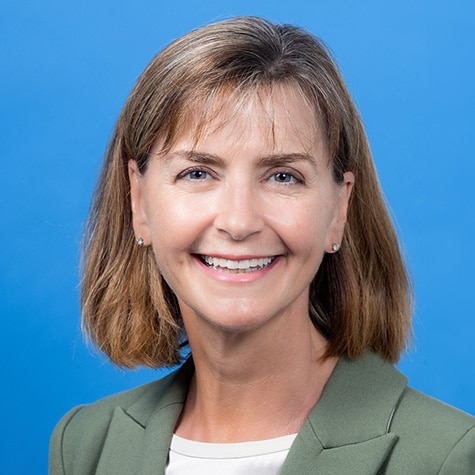
Anna Tanner, MD, FAAP, FSAHM, CEDS-C, FAED
Dr. Anna Tanner is a board-certified pediatrician who has specialized in the care of complicated adolescent patients, in particular patients with eating disorders, for more than 25 years. Dr. Tanner has been very involved in advocacy and education efforts for patients with eating disorders and serves on national and international committees for eating disorders education. Dr. Tanner currently serves as an Associate Professor of Pediatrics for Emory University School of Medicine and works with our Adolescent Medicine team at Children’s. She has served as co-chair of the Academy of Eating Disorders (AED) Medical Care Standards Committee and was an author on the fourth edition of the AED Medical Care Standards “Purple Book.” She’s also the proud mom of two grown kids.
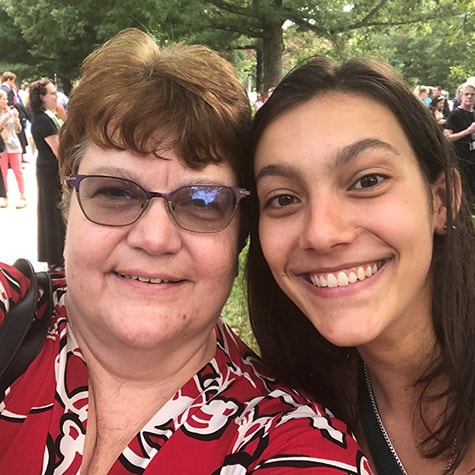
Ellen Ewing, mom to Josie
Ellen Ewing was a full-time working mom who raised her two children in East Cobb. When her daughter was 11 years old, Ellen had a gut feeling that something wasn’t right. She brought her to the pediatrician, and so began a years-long journey that culminated in a diagnosis of anorexia nervosa. Dr. Tanner was the one to finally diagnose Josie, when she arrived to her office at age 16 with stunted growth and a dangerously low heart rate. While Ellen knew something was wrong, looking back, she believes she was in denial. Today, she dedicates her time to sharing with others what she didn’t understand then.