Season 2: Episode 2
Hope and Will: A Parenting Podcast from Children's Healthcare of Atlanta
Changing the Narrative on Suicide: The Parker Family’s Story
In January 2022, Erin Harlow-Parker and her family were thrust into media headlines when her husband, Jeff Parker, died by suicide. Jeff was the CEO of MARTA, a well-respected businessman, father, partner and friend. He had been married to Erin for more than 30 years.
Erin—an advanced practice registered nurse specializing in pediatric mental health and beloved member of the Children’s Strong4Life team—shares her family's story as part of her and her daughters’ crusade to talk openly about mental health, mental illness and suicide.
The Parkers hope listeners will leave the episode:
- Understanding that suicide can and does happen to any family.
- Encouraged to stop seeing feelings of sadness, anger and anxiety as a sign of weakness.
- Empowered to talk openly about both mental health and mental illness because the only way to reduce the stigma related to mental illness is for us to talk about it and not see it as someone’s fault.
Listen to this episode on your preferred podcast platform: Apple Podcasts, Spotify or Amazon Music.




[VOICEOVER INTRO]
You're busy and you want the best for your kids. We're here to help. This is Hope and Will, a parenting podcast from Children's Healthcare of Atlanta.
[Host] Lynn Smith: Listeners, I want to begin by sharing that you're about to hear a very personal story about suicide. Please remember that any thoughts of suicide should be taken seriously. If you or a loved one are experiencing thoughts of suicide, self-harm, or any mental health crisis, call or text 988. For this episode, I have the incredible honor of being joined by Erin Harlow-Parker. You might recognize her name, as she and her family were thrust into local and national headlines in January 2022, when her husband, Jeff Parker, died by suicide. At the time, Jeff was the CEO of MARTA. A well-respected businessman, father, partner, friend and life of the party. He had been married to Erin, an advanced practice registered nurse specializing in pediatric mental health and beloved member of the Children's Strong4Life team for more than 30 years.
Today, Erin is sharing her family's story as part of her and her daughter's crusade to talk openly about mental health, mental illness and suicide with the goal of ultimately reducing the stigma. Before we begin, I want to share an excerpt from the eulogy that Aaron gave at Jeff's funeral. Listen.
Lynn Smith: Somehow, Erin found the strength to write and deliver those words just days after she lost her husband and the father of her two daughters. Erin, thank you for finding the strength to join us today. I have no doubt you are poised to help a lot of people. Just as you've been doing your entire career. You've worked at Children's Healthcare of Atlanta for 16 years and have been an advanced practice registered nurse for 35 years. First tell me about your job and what inspired you to go into this field?
Erin Harlow-Parker: Sure. As a young kid, I've always wanted to be a helper. That's just, it was my natural personality. I was that person that in your yearbook. You put your little job at the bottom, like what you want to be, it said pediatric nurse. I knew that from the get-go. I didn't know that I would be a pediatric psychiatric nurse, in all honesty. However, when I reflect back to my undergraduate, what I did best was the talking part of nursing. What I did not so great and didn't love was the blood part of nursing. I was equipped for that connection that psychiatry allows for, and that has grown into an unbelievably wonderful career.
I've been fortunate to do just about everything you could possibly do in psychiatry, including teaching and my own private practice and a therapist and a prescriber and at the bedside and manager level and then fell into this work at Children's on the psychiatry consult team initially and then ultimately here at Strong4Life in prevention.
I say this is the end of my career. I'm at the last fourth of my career. I never saw myself in the prevention space because quite honestly, it's when you work in crisis and intervention, you don't think about upstream and all of that. It is such a privilege to be in this prevention space and to really think intentionally about how do I make a difference. How do I stop pulling kids out of the water? How do I go upstream and think about why are they falling in and what can we be doing differently?
Lynn Smith: Your experience now adds to that, and it starts with the meeting of your husband. It was in the midst of you starting a career and you got married, started a family. Tell us about your husband, Jeff.
Erin Harlow-Parker: There are so many things. I get a little croak in my throat thinking about it. I talk a lot about him because there's a question people ask a lot. What I know of Jeff and what others is very different. He was a goof, annoying sometimes, like any husband would be, an amazing dad, very present despite how busy he might have been in his career. He made it to all the dance performances that my older daughter performed in from the time she was 3 all the way through college. My youngest daughter played competitive lacrosse. He was at every game, sometimes to a fault where I didn't want to drive to somewhere in the middle of Nowheresville, but he wanted to be at every game.
He was always the life of the party. My younger daughter describes him as the man of the people, which is a really great way of describing him. With his job, he never forgot who everyone was that made the subway system work. That really was who Jeff was. He really did care about everyone. And he was a loving husband. I think the sense of adventure is something we shared together. We were very fortunate to be able to travel a lot in our adult life with our kids and without. He was always up for it ... for any adventure.
He loved all kinds of food. He enjoyed my cooking and appreciated that. Those are some of my most favorite things. I also love that he loved our dogs, although he would always say how much he couldn't stand them. Then, I would come in, and he'd be talking to them. It’s those kinds of things. I also loved the kind of dad that he was.
This is where I get really choked up. I love being a mom. It was, in addition to being a pediatric nurse, I always knew I would be a mom. To be fortunate enough to be their mom, they are just amazing, compassionate women who are driven in their professions as advocates. My oldest daughter is in mental health. She's a licensed clinical social worker and a therapist in pediatrics. She's an advocate of similar things as me, pediatrics and stigma. My youngest is in transit and rail planning. She's a huge advocate of the environment and the impact that has. Their passions are amazing, but also in the wake of this tragedy of our family, I watch them step up alongside me and lean in, and in their different ways advocate for mental health awareness, specifically around suicide. That to me has been so impressive. They both have done it on their social media because they know how to do that way better than me. Isabella has run races because that’s how she channels her energy. Gabrielle has been very active in the supportive environment and bringing awareness and navigated the suicide prevention walk team. We raised an extreme amount of money, but she shepherded that.
The two of them have taken our tragedy and looked for opportunities to bring awareness and education. It has been remarkable to me because they're 29 and 23 years old. They figured out how to do this. I think a lot of people would have just gone into their own shell and put their head down and said, “I can't. I cannot.” They didn't do that.
Lynn Smith: Erin, when we hear your stories about Jeff, it sounds so joyful. The family was so wonderful. Everything seems great. What did it feel like when you learned that Jeff had died by suicide?
Erin Harlow-Parker: Initially, it was horrible. It was devastating, shock, overwhelmed, gut wrenching, all the things that someone might describe when something so tragic happens because this was not on our radar. Jeff didn't struggle with mental health challenges, which I know is a big misconception that those who die by suicide must have a diagnosable mental illness. When you’re living that, you can't wrap your brain around how this is possible. How did I not see this? All of those things. Initially, it was shock, devastation, overwhelming, and then immediately my personality is to shift to a place of, “What can I do about it?” I had a conversation with the kids immediately around, “I want to call this what it is. I want to be really clear that this is suicide.”
Jeff was in a public position. There were going to be press release. There were going to be things on the news. I had seen in the news other people who had died by suicide and how it was handled in the media with incorrect terminology being used, like “committed suicide,” which is incredibly stigmatizing. The word committed is often associated with crime. We need to be thoughtful and intentional about language.
I'm an expert on suicide prevention. I educate on it. I went into that teacher mode with permission from the kids to call it what it was. I worked with an expert friend of mine that could help work with MARTA to craft an appropriate press release because I knew that I was not in a place to do that part. All the right language was used because I wanted to name suicide. I wanted to take away what is often associated with the word and the act—that shame component. The shame component is what inhibits people from accessing help and inhibits people who are left behind in talking about it and receiving help. If we didn't call it what it was, just like we would say a heart attack or cancer, we were not creating an opportunity to normalize that this is how people are dying, and we've got to get ahead of it. We’ve got to talk about it. I knew he was a big public figure, and I knew it was an opportunity that we could make a difference. Even in those moments, I knew I couldn't save Jeff. I had a lot of feelings about that later on, after I got past the helping, but I knew we could do something different to change the story and the narrative.
Lynn Smith: We point out it wasn't a mental illness. This wasn't something that you were aware of. How do you educate people now to look for those signs? How do you know that you need to be stepping in and helping?
Erin Harlow-Parker: The way I think about it, and I'd come at it from my prevention lens in my current role. is we need to start from the get-go, early on, having intentional conversations about emotional illness. I'm going to be talking intentionally about our feelings, all of them, and not just the happy feelings that we post on social media and make everybody look like we're having this great life. That we are out and okay and talking about them all, and we're supporting kids starting at birth to identify and express all of their feelings, because they aren't good or bad, they just are. When someone struggles, and I said “when” intentionally, because we are all going to struggle, maybe not with suicide, but we're going to have struggles. We've created opportunities that it's okay to talk about the good, the bad, and the ugly.
I don't know what was going on in Jeff's mind, but obviously he was struggling and for whatever reason couldn't reach out. I think that is reflective of the society that we live in, that we create this sort of black and white way of approaching feelings and specifically for men and even leaders. They can't show the side of them because they'll be seen as weak. I do think that is something that we need to change and that we need to also be okay as loved ones or coworkers to say to our friends and families and coworkers, “I see you. Hey, I don't know exactly what's going on, but I'm worried. I'd love to talk and I'm here for you.” And if you're really worried, “Have you been having thoughts of suicide?” That's a really scary question to ask someone. We often avoid those kinds of things because we think, “What if I put the thought in their mind?” There's no research to support that asking about suicide is going to put a thought in a person's mind. “What if I don't know all the answers?” Okay, I don't have to know all the answers, but I can let that person know I'm here for you. “I don't know exactly what to do, but I know that I can ask my doctor for more help, or I can ask this friend.” We're usually good as humans figuring out how we can connect to someone else. When it comes to something around mental health and mental illness and specifically suicide, we're like, “Nope, not going to talk about that. That's scary.” I get it. It is scary. It's scary. But there are lots of resources out there now, and you should ask that question.
Lynn Smith: Many people might think this will only happen to a certain type of person or certain type of family. That's one of the big myths you want to dispel. Can you give us a feel for a typical week or month for your family to paint the picture of how this really can happen to anyone?
Erin Harlow-Parker: Absolutely. That is something that I heard so much. “I'm shocked. You guys look so happy.” They see our lives on social media—our trips and our vacations and things like that. It wasn't necessarily a reminder to me as a mental health expert of that misconception that suicide only happens to a certain type of person or a certain type of family. What we know in this space is that suicide doesn't discriminate. It can happen to anyone.
Our family was like a lot of families. We had two girls. One had flown the nest and the other one was close to flying the nest. Jeff had a successful career. I had a successful career. We've been married a really long time. Yes, we had our challenges like anybody, because anyone that's married a really long time is going to have their challenges. Our family was like a lot of families. So, the idea that this couldn't happen to us is false because it can happen to anyone, which is why what I said earlier is so important. We need to have these intentional conversations within our families, within our friend groups, around our feelings and emotions, creating space that talking about it is okay.
When I say talking about all of our feelings, we're going to all feel sad and mad and that's normal and okay. Where it crosses the line is when we start to feel sad, more days than not, and we can't function. Then, I'd be worried about things like depression or anxiety. Most of us are going to feel sad, and we know that's a temporary feeling and that we can get to the other side of that. We get to the other side of that by our own internal coping skills, the things that we do. There will be people that will have these kinds of thoughts and feelings for a longer period of time, and it impacts their day ability to function, whether that be to successfully navigate school or their career or their relationships. It will impact and percolate into that. Those are the kinds of things that we need to pay attention to and say, “Hey, I've noticed that you haven't been sleeping really well for the last few weeks and you seem a little withdrawn,” or “You haven't been eating like you used to,” or “You don't seem to have the energy level”—those kinds of things that we can notice in people. We don't have to be experts in that, but we can have a conversation about it.
Lynn Smith: This has been your life's work to ensure that kids and teens understand that they have resources to prevent suicide. When someone that you love the most died by suicide, how did that impact or change the work that you do today?
Erin Harlow-Parker: When you asked me first how I I heard the news, sort of what it was like for me, I went into that action mode. A month in, I went into the self-doubt mode, which then led to an answer to your question. That was a dark place for me because this is my area of expertise. I was left with, “How the heck did you not see this? What did you miss?” You know, the signs. “Why couldn't you have saved him?” Thankfully, I have lots of friends and family and my Children's family, in particular, who stepped up and leaned in with me and dispelled those myths and misconceptions that I was convincing myself of and helped me see that at the end of the day, this was not my fault. I didn't do anything wrong.
Getting to that place in my grief recovery journey allowed me to get into a place of thinking about my work and the work that myself and the team that I manage does. I've always loved this work, but it has become a new meaningful work for me because it was an opportunity to educate from this prevention lens from a lived experience that I never thought I would have. I don't talk publicly about my lived experience in my teaching, that's not appropriate, but I come at my teachings with a completely different perspective than I ever had before. I have an energy for the work that's compounded as a result of my now lived experience around suicide prevention. I wasn't quite ready to be that person last year, but I'm ready for it this year.
I want to bring awareness to this and use my voice and my story to help navigate that in any way possible. That's really what happened as I started to doubt my expertise in this space. I had to work through that because that was normal to feel that and then get to a place to leverage my prevention work in a way that I wouldn't have done previously.
Lynn Smith: It's been 18 months since that journey, and there may be some people listening that aren't there, yet. They're in those early days of grieving—grieving a death by suicide or an attempted suicide. What kind of advice do you have for them?
Erin Harlow-Parker: Be kind to yourself. Don’t have unrealistic expectations that you will be back to the place you were before. I think my work is really about resilience. That's what we do in Strong4Life is raise resilience and bring teachings around that. I had to remind myself about my own resilience and of the strength that I have and that I will never be back to the place that I was before. That's okay, but I'm going to learn from all of those things.
I would say be kind to yourself. Be patient. Understand that your grief is your journey and only your journey. It's very easy to compare yourself to other people's grief journey. People will say that to you because you'll hear all sorts of things about the way I did this or the way I did that. That's their way of managing grief. In addition to seeing all the misconceptions around suicide, I've seen lots of misconceptions around grief. Those are two buckets that I've noticed. People have a lot of opinions about grief, and it really comes from a place of their own uncomfortableness sitting with grief and wanting to fix it.
Just like we're supposed to accept all of our feelings, we need to accept our grief experiences where we are in that moment. Understand that the way I feel today is not going to be the way I'm going to feel forever. That feeling is likely temporary and I need to experience it all, not shove it down. Work through it. I'll get to the other side and guess what. I could be driving down the highway, and I'll hear a song and feel a sucker punch of a memory that causes me to cry. I'll be like, “I was doing so well, why am I here?” I have to remind myself, that's part of grief, that I'm going to feel this way a lot of times.
So be kind and patient with yourself. Accept and ask for help, which is not my strength at all. I'm absolutely horrible at it. I'm the helper. I'm not the receiver of help. I needed to dig down and ask for help and then accept help as well. Huge learnings for me. A lot of my friends knew that I'm not a big asker for help. They didn't wait for me to ask. They just kept doing, and that was really helpful for me in the beginning because I definitely wasn't going to ask. I was just going to go into action mode. I was going to do what I needed to do, not slow down. People stepped in and said, “I'm going to do this for you.” I had to work on asking for help.
It's a journey. It's not a destination. It will last a lifetime, but it will get easier. When I think back to where I was 18 months ago and where I am now, I probably wouldn't imagine myself getting to this place because it was so hard to imagine. I have many periods of joy that I'm grateful for. I think about joyful things in a very different way than I did 18 months ago. I'm much better at living in the moment and appreciating what life has to offer for me in that moment, but that's for me. That may not be for everyone, and that's okay because it's your journey.
Lynn Smith: A lot of people don't know what to say. They feel like they don't have the words. What advice do you have for people on how to be there; how to be comforting and be productive in their support?
Erin Harlow-Parker: One of the things I've learned in this journey is that people don't feel comfortable with grief. That's a general statement, period, full stop. Then you add the layer of suicide to the grief, and it gets compounded. We're already in a space where people don't always know what to say when someone is grieving, and then you add the suicide. I saw this in people where they would say, “I don't know what to say to you.” I would just automatically say, “If my husband died by a heart attack, what would you say?” They would say, “I'm so sorry for your loss.” I said, “My situation isn't any different. You don't have to say anything extra special because he died by suicide.” It allowed an opportunity for conversation that we feel uncomfortable with grief conversations, and we really feel uncomfortable with conversations around suicide. Once I call that out there, the person would be like, “Oh, okay. I would normally say, I'm so sorry for your loss. If that's all I have to say, I can do that.”
I think that is a powerful message to get out there to support families who are grieving after a loss of a suicide. Step up and be there like anyone else who experienced a loss. Stay away from asking them personal questions like how the death by suicide occurred. Those kinds of things are not helpful or productive and typically come from a place of human curiosity—thinking you need to figure that out. Those things aren't necessary. What's necessary is to show up and be present.
When I reflect on my first few months, I had people in my Children's family that in all honesty helped me get through it. They showed up and were there. They texted daily. For me, that was really helpful. Would I want to talk to someone on the phone every day? Probably not. But knowing that person was thinking of me was so meaningful. I had many examples of those kinds of showing up. People dropping off the food, which is this stereotypical thing that happens after grief, but intentional about the kinds of foods that I like or making sure they included my kids. Those kinds of things were so helpful.
Those who stayed away because they weren't sure what to say … ultimately, in the end, you feel sad about that because you feel that they don't care. I know that's not really what's happening. They're just really in their own head because I've learned that grief is uncomfortable for so many people. You don't have to say anything more than “I'm so sorry for your loss, and I'm here for you.”
Lynn Smith: Erin, when I hear you describe the advice for others on how to grieve, it also sounds like some of the advice you may give to patients on how to overcome their adversity and the struggles that they're having.
Erin Harlow-Parker: Our work through Strong4Life is community prevention education with the key influencers in the lives of kids. We work with teachers, healthcare professionals, faith-based organization leaders and early care educators to impart resiliency messaging and education to youth. We are imparting change to the adults in the lives of kids starting at birth. It's important that we talk about all kids. We know that eventually this will help the children who may be in crisis and may be contemplating suicide. We need to get way ahead of things and come at this in an universal prevention approach so that every kid is hearing messages starting at birth into early care, into elementary, middle, and high school, that your feelings aren't good or bad, positive or negative. They just are.
We're equipping kids with skills to be able to learn how to identify, label and ultimately express their feelings because we're not born knowing how to do that. We're good at helping little ones when they have no verbal skills. We put words in their mouths and say, “I wonder if you're hungry. I wonder if you're sad.” When they get words, we stop doing that. We know that the feelings language isn't very comprehensive. It's way more than happy, mad, sad, anxious. There are layers to that, but we don't teach that. Even as adults, we struggle with understanding to be able to describe our feelings because we've never been given those skills.
What I've seen happen in our trainings and teaching is those proverbial light bulbs going off. You can see it on their expressions of, “Wow. I wasn't brought up that way thinking about that way. I wasn't brought up with it being okay for me to talk about being sad if I'm a guy.” Those are the kinds of things that we've heard and seen in our education. We're helping to change the narrative early on and having those intentional conversations around our feelings and emotions and equipping kids with skills. “Hey, now I have these feelings. What do I do about it? How do I manage it?”
The management part is also equally important because we talk about coping skills, but we usually do it in reaction to stress. After something happens, let's practice a skill. We're not so good, as humans, embedding it into our daily lives—that this is what we do. Maybe we come home from work and we take a walk, but we probably never thought of it as a coping skill that we've embedded. If we're adults in the lives of kids, we're not intentionally talking to the kids like, “Hey, when mom comes home and takes her walk, that's my time to chill, get my mind wrapped around the day and relax,” or “I wanted us to do this as a family because I realized I probably should have started this when I was young and that would have helped me manage what life throws at me because it's going to happen.” Those are the kinds of things that I'm seeing change as we educate these adults in the lives of kids in having intentional conversations around feelings and emotions and proactive practicing coping skills.
Lynn Smith: And starting at a young age, because you make such a good point. This is not something that we know how to do. If you can start at a young age, by the time you're an adult, it's something that you actually are putting into practice. What do you think Jeff would think of all the important work that you're doing?
Erin Harlow-Parker: think he'd be proud. I hate that this is the reason we're having to do it, but he was always very proud of the work that I did. I know that he would be incredibly proud of that. He would be so proud of his daughters and the ways in which they have channeled the awareness, Gabrielle, in the walk and how much money she raised and the social media awareness. Isabella running the New York City Half Marathon on the American Foundation Suicide Prevention Team. She chronicled her journey and every week would have something around suicide awareness. This is not her area of expertise. I think he would be proud of us— taking a really horrible dark time in our lives and allowing for an opportunity to make a difference in lives of other people.
Lynn Smith: He'd be proud. And you truly are making a difference. Thank you for sharing with us, Erin.
As we mentioned at the opening of the show, Erin is a part of our Strong4Life team at Children's. She and her colleagues have created a wealth of resources and articles about raising resilience, emotional wellness, and mental health topics such as depression and suicide. To access those resources, visit choa.org podcasts where we're going to link a lot of emotional wellness content.
Remember, all thoughts of suicide should be taken seriously. Call or text 988 if you or a loved one are experiencing thoughts of suicide, self-harm, or any mental health crisis. For a medical emergency such as a suicide attempt, call 9-1-1 or go to the nearest Emergency Department. You could also chat or text for support by downloading the MyGCal app in the App Store or on Google Play.
To hear more impactful stories from the people who walk our halls, be sure to subscribe or follow Hope and Will wherever you stream your podcasts. I'm Lynn Smith and this has been Hope and Will, a parenting podcast from Children's Healthcare of Atlanta.
[VOICEOVER OUTRO]
This podcast is for general informational and educational purposes only. It is not to be considered medical advice for any particular patient. Clinicians must rely on their own informed clinical judgments when making recommendations for their patients. Patients in need of medical or behavioral advice should consult their family healthcare providers.
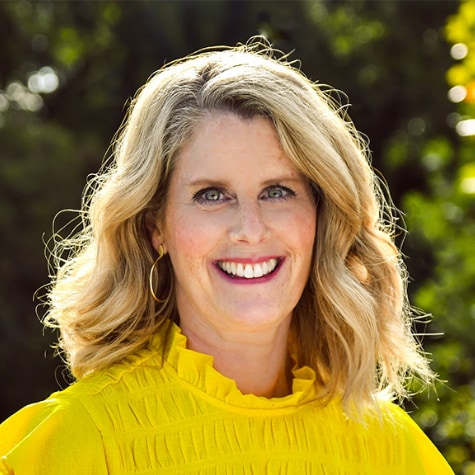
Erin Harlow-Parker, Jeff Parker’s Widow and Children’s Strong4Life Mental Health Expert
In January 2022, Erin suffered a devastating loss when her husband—a well-respected CEO, travel enthusiast and incredible father to their two daughters—died by suicide.
Erin has worked in child and adolescent psychiatry for more than 30 years. Suicide prevention has been an area of her expertise for more than a decade, which she says makes sharing Jeff’s story even more important.

Lynn Smith
Lynn Smith is a veteran journalist, podcast host and mom of two boys. Her experience as the parent of a patient at Children’s inspired her to advocate for spreading awareness of childhood illnesses and injuries.