Season 1: Episode 8
Hope and Will: A Parenting Podcast from Children's Healthcare of Atlanta
My Son Experienced Cardiac Arrest at School: What I Want Parents to Know
Shortly after running up a flight of stairs, 13-year-old Collin suffered cardiac arrest at his school. Now his parents are on a mission to ensure that other schools and youth-minded organizations are equipped with the resources and training that helped save their son. Collin and his mom join us to share harrowing details from the day that changed their family forever. We then talk to Dr. Robert Whitehill, pediatric cardiologist and medical director of Project S.A.V.E., about how CPR and automated external defibrillators, commonly known as AEDs, can make all the difference during a sudden cardiac event on the field, in the classroom or out in a community.
As this episode’s clinical guest, Dr. Whitehill offers insight into:
- What can cause cardiac arrest in children and teens.
- How some at-risk patients may be identified.
- Skills to prepare you to help someone in a moment of need.
- Resources to support your child’s school and sports programs in developing emergency action plans.
Listen to this episode on your preferred podcast platform: Apple Podcasts, Spotify or Amazon Music.




[VOICEOVER INTRO]
You're busy and you want the best for your kids. We're here to help. This is Hope and Will, a parenting podcast from Children's Healthcare of Atlanta.
[Host] Lynn Smith: Recent headlines about Demar Hamlin, the NFL player who suffered cardiac arrest on the playing field may have added heaps of worry to your parenting plate. Especially if you have kids that play sports, it's even more concerning. So, on this episode, we have a harrowing story from a mom and son who experienced firsthand what it was like, the whirlwind emotions that come from having a child go into sudden cardiac arrest.
Hi, I'm Lynn Smith, the host of Hope and Will. While all of this may seem incredibly scary, I want to assure you today's episode is meant to lessen some of that mental load by empowering you to become more aware of available life-saving resources should the unlikely happen in your own community. We'll hear from Dr. Robert Whitehill, a pediatric cardiologist who talks us through what can cause cardiac arrest in kids, how some at-risk patients can be identified and skills to prepare you to help someone in a moment of need.
It's my pleasure to welcome Meghann and Collin Etheridge to the show. It was almost one year ago that a seemingly normal day at school turned their world upside down. After running up a flight of stairs, Collin suffered cardiac arrest in front of his middle school classmates. Meghann and Colin, thanks so much for being here, and before we dive into the details of that day, help us get to know your family a little.
Meghann Etheridge: Sure. Myself, Collin, who's 14, his younger sister Mackenzie, who is 12, my husband Justin. We have three dogs, Copper, Daisy and Fluffy that keep us on our toes. We live in Columbus, Georgia. We like to travel. Collin is a foodie. He likes trying new, unusual foods, play video games and golf.
Lynn Smith: What else? What kind of shows do you watch?
Collin: I like to watch DC shows.
Lynn Smith: We should point out, this was an electric scooter. He was with an older child. He wasn't wearing a helmet. I want you to tell me, Dr. Washington, how you ended up in a Children's ambulance at that point.
Dr. Washington: When he seized, he vomited, and he aspirated while he was on the CT table. I'm like, “Have you guys called Children's already? Maybe we can fly.” But that day we had a low ceiling, so I don't think the helicopter could fly, but I was hoping he could. I kind of knew that when I went in, I was like, “It may not fly. So, just go ahead and get them if they're going to drive.” When you do medicine, it's hard to go be a hopeful family member and it's hard not to be a doctor. So, you're stuck in the middle. When he seized the second time and he started desatting, that's when things started happening. He went into cardiac arrest for a while. I was just sitting there, you know, thinking like, “Okay, good compressions. Okay. They're doing good compressions. Why is he not coming up?” I'm holding his leg. And then the nurse grabs my hand. I looked over, and I saw Julie's eyes. We hugged right there at the bedside. They were there probably five minutes, and they kind of changed some things. Okay, it codes over. I remember the heart rate is like 127, 28, and he had a pulse again. Julie and that team, they were like, “Okay, we got to get them on the truck. We'll get them over to Children's.”
Lynn Smith: So, all of this sounds very normal. And then Meghann, one day, last April, you got an unexpected call from Collin's school. Can you walk us through that phone call and what happened after you answered?
Meghann Etheridge: Initially, when we first got the phone call, they told us that Collin had fainted, and of course we were very concerned, but he had been on some medication for a knee injury that was supposed to cause some dizziness. My initial reaction was, “Okay, the medicine has finally gotten to him. We're probably going to go to the hospital, then he'll just be home for a couple days.”
I had just gotten out of the shower to answer that phone call. So, I started getting ready and then got a second phone call that said he's actually not breathing and does not have a pulse. And so at that point I think my world has kind of stopped and went into slow motion. Luckily, my husband was working from home that day. We were able to leave immediately. I'm honestly not sure how many red lights I drove through with my emergency blinkers on.
We finally got there, and they were trying to stabilize him, so we were not able to go back and to be with him, and I think that was probably one of the hardest parts, not knowing whether he was going to survive or not being able to hold his hand. And I always remember that morning thinking in my head, like, “Did I tell him I loved him?” All those thoughts run through your head as to what you would've done differently that morning because it was a morning like any other. We had just dropped him off at school. He had been fine. And so, after they worked on him, I think it was for probably about an hour or an hour and a half, they ended up medevacking him to Children's Healthcare of Atlanta.
Lynn Smith: Can you walk us through the steps that were taken that saved Collin's life? He went from having no pulse at all to coming back to life.
Meghann Etheridge: Collin had just gotten done with PE class, and it is a two-story building. All of the children were upstairs on the second level, and there was a door that was locked they needed to go through to get out. After gym class was over, he volunteered to run across the gym at the top, go down the steps, run across the other side, run up two flights of stairs to unlock the door. So, after he makes it up, goes down, goes around the other side, runs up the two flights of stairs. When he gets to the top, he falls. First the children thought he was joking because they didn't really understand what was happening. It was a glass door that you could see through. So, I know they were, from what I've been told, banging on it, trying to get his attention, trying to get him to move. One of the girls realized probably after about a minute, that something was severely wrong because he was not getting up. He was not moving.
After the children recognized that something was severely wrong, one of the children alerted the PE instructors. Two of them came up and immediately started CPR on Collin, as well as alerting the school nurse. This is another one of those miracle things that everything sort of fell into place. The school nurse had started the year before, and she was actually in a previous ICU nurse at our local hospital. So, she ran across campus and also helped administer CPR as well as an off-duty police officer that was there that day.
While they were waiting for the medics to arrive, they had an AED in the gymnasium and they had to use that on him twice to restart his heart. And something that I have told a lot of people that I didn't realize either until this happened is in Georgia only high schools are required to have AEDs. Luckily, Collin’s school is pre-K through high school. They had them there luckily in the gymnasium right where this happened, too. I keep thinking about what if he would've been somewhere else where they're not required to have one. Would we still have had the same outcome?
After medics arrived, they transported him to our local hospital where they worked on him for some time, but realized he really needed specialized treatment. They called Children's to bring a helicopter down, and he was transported up there.
Lynn Smith: Collin, for you, even just hearing your mom describe that and taking you back to what happened, what is it like for you?
Collin: Well, I don't really remember much. The only thing I remember is like waking up in the hospital.
Lynn Smith: And what did you feel? What were your feelings that you were going through when you learned what you experienced? Just being in the hospital, how did you feel?
Collin: When I first woke up, I didn't really know what was happening. You kind of understand it, and then they have to explain it to you.
Lynn Smith: It's pretty hard to get your head around going into cardiac arrest at your age at 13. Mom, is this anything that you would've comprehended as possible?
Meghann Etheridge: No, not at all. I mean, he was a perfectly healthy child. We've been to all of his well visits throughout, you know, his 13 years. Looking back, the only thing I can think of that still wasn't even a red flag, but he would get winded easier than maybe other children. But you know, when soccer, a lot of those other kids were running cross country and other activities, I mean, my husband and I just always assumed, well, they're just a little more in shape. That was the only reason why he was as winded as he was. I mean, obviously we know differently now, but yeah, that was the only thing I could have ever looked at and thought was even slightly different.
Lynn Smith: Let's talk about his diagnosis. What happened once he got to Children's and later was diagnosed?
Meghann Etheridge: They medevacked him from our local hospital. It's about an hour and 45-minute drive. I believe it's about a 45-minute helicopter flight. The medics did tell us, and we were so grateful they did this, that they called in medevac status to go through Hartsfield International for the second time, I think she said, ever in her career, to shave off a few minutes for that flight. After he got there, and was stabilized, Justin and I arrived later and were finally able to go in and see him. They still couldn't get his heart to regulate properly, and so they had to put him on ECMO, which is the highest level of life support that they can offer.
Finally, four days after he got into the hospital, he woke up for the first time and was able to talk to us, which was a huge relief because he had survived to this point, which was incredible. But we also weren't sure cognitively where he was going to be because no one knew how many minutes he had been without oxygen. He is perfectly, you know, he's amazing. He is with us. He's taking honors courses this year. We are just so thankful for everyone that was involved every step of the way.
At that point, I think it became trying to figure out why this happened. They did MRIs on his heart. They did EKGs. Nothing was coming back. Pinpointing what might have led to this, which of course was concerning to us because we didn't want this to happen again. As he was starting to recover, I remember Dr. Whitehill came in and started asking us questions. You know, “Has anyone in the family's other ever been a sudden death at a young age?” And looking back, we said, “No. You know, there'd been no indication of anything.” And he said, “Well, let's try to put him on a stress test.” So, once he was feeling well enough, he sat on a bicycle and they hooked up the monitors to his heart and had him start pedaling. I'm not in the medical field, but I could recognize within two to three minutes that something was severely wrong. Just looking at the heart rate up on the screen. And so at that point, that's when Dr. Whitehill stopped the test and said, “I think that this is CPVT,” which is a rare heart arrhythmia disorder.
Lynn Smith: What does the future look like for him now?
Meghann Etheridge: It is very bright. We are so thankful. Even within just the past 10 years, they have advanced so much in understanding his diagnosis and being able to help us treat it. He takes medication twice a day. He'll be on that for probably the rest of his life, but he is doing amazing. He's doing well in school. He's a normal kid again, and we're hoping he might even be able to be clear to play sports again in the next few months. That would be a huge accomplishment compared to last year.
Lynn Smith: Collin, what's it like to hear your mom say that?
Collin: I just want to be able to play soccer again.
Lynn Smith: I can imagine. Meghann, what's the one thing that you want parents to take away from hearing this story?
Meghann Etheridge: As a parent, I think it's so important to advocate for your child. I think that if a parent realizes that they can go and talk to their school. They can go talk to their coaches. Even if they're a member of a church—any of these places where something like this could possibly happen to ask, “Do you have an AED? Do you all have an action plan? Are people trained in CPR and trained in how to use the AED?” Probably as much it is advocating for your own child, but realizing that we can each do something ourselves by becoming CPR and AED trained.
And I'll be honest, before this happened, my husband and I were not CPR trained. I had never seen an AED out of a box. I always thought an AED was for use in a heart attack. I didn't even know there was a difference between the two. I feel like everyone should get CPR trained and know how to use an AED. I mean, you never know who you're going to be able to save, but it could be your loved one. It could be your child. It could be your parent. So, it's something that everyone can take upon themselves to really make a difference.
Lynn Smith: Well said. Collin and Meghann, thank you so much for sharing your story, sharing some of the awareness that will continue to save lives. Thank you so much.
I'd now like to welcome Dr. Robert Whitehill. Dr. Whitehill is a pediatric cardiologist who specializes in heart rhythm disorders. He's also the Medical Director of Project S.A.V.E. Dr. Whitehill, thanks so much for being with us. You're an EP. Can you help us understand what that stands for and the work you do?
Dr. Whitehill: Thanks for having me. Excited to be here to chat with everybody today. An EP is an electrophysiologist, someone like myself who is a pediatric cardiologist, has done pediatric training, pediatric cardiology training, and then has chosen to get subspecialized in heart rhythm disorders that affect young adults and children.
Lynn Smith: Collin's story, it's terrifying, and parents might be thinking to themselves, I need to go have my child checked for possible underlying conditions. Is that something every parent should do?
Dr. Whitehill: Every child should be screened for a risk of heart disease. The good news is if your child is keeping up with well child checks, if you know your own family history, you're already getting the screening that you need. While every child may not need an echocardiogram, an ultrasound of their heart, or maybe even an EKG looking at the heart's rhythm, the most important screening kids can get is by going to see their pediatrician and getting a good physical exam to listen for new murmurs or anything else that may be concerning, which if you're keeping up with your pediatrician, is already happening.
And then the other thing is really just to look out for certain red flags that can pop up that your pediatrician is already looking for—things like episodes of passing out, particularly with exercise or related to some kind of startling or physiologic stress. Other things, like any symptoms with activity, things that really you as a parent can be empowered to know about your kids and bring up with your pediatrician. Things like, “Do you have shortness of breath when you exercise?” Very simple questions. Those are the most important screening things you can do.
And then really as a parent, knowing your own family history. I think that's a challenge. I speak for myself included in that—just to know what sort of family history is out there.
The APP has questions out there, which you can look four different questions, which address all of these. Simply, if you as a parent look through these questions to look for the cardiac screening by the APP website, you can also be more prepared when you go for that well child check.
Lynn Smith: And would those maybe be some of these children that should be proactively screened?
Dr. Whitehill: Absolutely. One of the most important things we do in our arrhythmia clinic is identify siblings and other family members that are risk for some of these events. And it really starts with that thorough history, for sure.
Lynn Smith: And you talk about primary prevention versus secondary prevention. Can you walk me through that?
Dr. Whitehill: Primary prevention is that first visit you're going to get with your primary provider or cardiologist, where they're going to run you through those questions to try and identify who is at increased risk—some sort of heart disease or a cardiac event, like a cardiac arrest. That's your primary prevention. Can we identify people at risk?
The secondary prevention is the piece that we are really rely on the community at large—schools, places of worship, anywhere people are active, congregating where an event happens. As good as primary prevention is, it's not perfect. Okay? And we still miss kids at risk. That is why we have the arm of Project S.A.V.E. and different things through Children’s to try and reach into the community where we have those emergency action plans. We want AEDs in schools. We want as many people as we can get CPR trained. That's that secondary prevention arm because things do happen that we can't predict.
Lynn Smith: Yeah. I heard you mention AEDs. That was pivotal in Collin surviving. Can you describe a little bit about why an AED is so instrumental when it comes to cardiac arrest?
Dr. Whitehill: Absolutely. That was huge for Collin. Huge, for many of our patients. We're so thankful that his school had one, and importantly that there was someone there who knew how to use it and was willing to. AEDs are defibrillators, essentially, but if you've never been in a situation like that, it's terrifying, particularly if you're a non-medical person. The AEDs are very simple. It's one wire with two stickers. You can put it on someone's chest, and it'll actually tell you what to do through voice command. So, in the modern era, AEDs are incredible technology, and they're very simple to use. I think people hear AED, and they sort of picture the old days with the paddles and clear and shock and the things that you'd see in movies. But that's really not what it is. And what it'll do is, it'll walk you through everything you need to. It'll tell you to do CPR.
Not every abnormal heart rhythm can actually be treated by an AED, but AEDs are smart enough often to interpret heart rhythms, tell you when a shock is advised, and then deliver that shock if needed. AEDs really can be helpful, even just identifying a problem, walking you through what you need to be doing, and then delivering the shock if it was needed like it was for Collin.
Lynn Smith: We should differentiate. Collin went through cardiac arrest. That's different than a heart attack, right?
Dr. Whitehill: Yeah, great question. It’s really difficult, I think, to kind of tease the two apart. What Collin had was a severe cardiac arrhythmia causing a cardiac arrest. And cardiac arrest is really a broad term that we use to say that there was inadequate output from the heart causing you to have a full arrest.
When people talk about a heart attack, usually they're talking about a problem with blood flow to the muscle of the heart. Something like a coronary artery being clogged or something like that. While a heart attack can cause a cardiac arrest, all cardiac arrests are not heart attacks.
Lynn Smith: Can you help us understand why some of these sudden cardiac events tend to happen when someone's exercising? Right? For Collin, he was running up a flight of stairs, or we hear about Demar Hamlin or high school football games. Why is it in that situation?
Dr. Whitehill: Those are episodes where your body is under physiologic stress. Anytime that's happening, you've got all your fight or flight hormones going. Your body's ramped up. Your heart is really working, and your body's placing a lot of demand on your heart. Your heart rate goes up, blood pressure goes up, and your heart is really doing everything it can to make sure you have plenty of blood flow to your head and to all your skeletal muscles that are working during exercise. That's a significant amount of stress. And if you're somebody who's predisposed to have some sort of arrhythmia or heart problem, oftentimes that additional amount of stress is what kind of pushes your heart over the edge and causes this event.
Now, Collin specifically had a diagnosis related to his electrical system, which we know is very sensitive to exercise.
Lynn Smith: And you mentioned how pivotal the AED was. CPR really played a big role in it, as well. And is that always the case when it comes to cardiac arrest?
Dr. Whitehill: Absolutely. That is the first thing that we encourage—everybody to be CPR trained. There are studies going back decades showing that improving bystander CPR uptake has allowed communities to increase the out-of-hospital cardiac arrest survival rates significantly. This has been shown around the world. Certainly, our communities are no different. The AHA, American Heart Association, has also tried to make CPR more approachable for people that aren't in medicine. By doing things like hands-only CPR, I think most people would be intimidated to maybe give mouth-to-mouth to somebody they don't know. Most people can go do hand-on CPR. So, CPR is definitely our first line. Uh, an early CPR, early defibrillation with an AED, we know lead to better survival.
Lynn Smith: All of this is encouraging people to become a lifesaving resource to their communities by becoming trained in CPR, raising awareness about the need for strategically placed AEDs and helping schools and organizations develop effective action plans. That's the basis of Project S.A.V.E. Collin’s family is now particularly passionate about it. You're the program's Medical Director. So, tell us more about this mission.
Dr. Whitehill: Project S.A.V.E. is just a wonderful organization started by my friend and mentor Robert Campbell and Richard Lamper, who really had a mission to try and provide that secondary prevention arm to the children of Georgia. Nowadays, we have over 130 different saves of someone who may not have survived, and these are not only kids. These are bus drivers. These are teachers. These are parents sitting in the stands. People who maybe have been healthy their whole lives, maybe they didn't have symptoms, and that's over 130 different families who have their family member back with them. Incredibly important.
As I mentioned, primary prevention is not perfect, and so Project S.A.V.E really tries to be the organization that can provide that secondary prevention by providing AEDs to schools, CPR training to families for children at risk, and really trying to develop action plans—a thought out prepared action plan for schools where kids are often going to be very active and may be at higher risk of having an event.
Lynn Smith: That action plan was lifesaving for Collin and also for a young woman. There's a video that Children's created back in 2016, and it features a patient who suffered cardiac arrest during a volleyball game, and her parents happened to be recording all of this, caught the whole thing on tape. It's incredibly emotional. It starts with the moment she collapsed, to the moment she regained her pulse. What in particular was really special to you about that video?
Dr. Whitehill: That video is incredibly powerful. We're so thankful to Claire and her family for providing that and being the spokespeople for Project S.A.V.E. I can sit here all day and talk to you about Project S.A.V.E., but nothing I could ever say will be as powerful as that video or Collin and his family. And what you'll see is that this was a Project S.A.V.E. school.
Claire had an event. She's a healthy volleyball player, super athletic kid. She had an event that was unexpected, and you'll see within seconds her team was there to respond. She had defibrillation very quickly, and no question, they not only saved her life, but they saved her life quickly, which meant that she did not have a whole lot of residual damage from the event. It is remarkable. I encourage anybody who's interested to go look at it, it is exactly what Project S.A.V.E. is about.
Lynn Smith: And you also point out, that's why it's so important for AEDs to be within close proximity of where they would be playing.
Dr. Whitehill: Absolutely. We have countless stories that Richard could tell you, who used to be going around the state doing the training and making schools heart safe of, “Well, we've got the basketball gym on this campus.” “Where's the AED?” “Oh, it's way across in a third building that's usually locked on weekends and nights.” I mean, you really want it right there. You need that AED on the patient within seconds, within a few minutes. Every minute that it's not in the room, in the patient … Someone's going to get it. Someone's trying to figure out how it works. The outcomes are just not as good to be honest, and we really want those things in the gyms. We need people who know how to use it and how to get it immediately.
Lynn Smith: And you'll be able to see how, because it was so close by during that volleyball game, it saved this girl's life. And for you listeners, we're going to link to that video. It's been seen around the world millions of times, so we're going to have it on this episode's webpage. But, I really do want to speak to some people who might be listening and think to themselves, I have no medical background, and I'm intimidated by this box that says AED. You're in a stressful situation. What sort of advice do you have for someone and sort of the steps they could take to feel more comfortable if they're in this kind of crisis?
Dr. Whitehill: Great question. I think these are incredibly intimidating things to think about. I would encourage anybody who's interested to demystify it by taking a course either through the American Heart Association. You can easily find these courses online, or Red Cross, where you can do an online CPR training and AED training courses. They don't take that long. I think they're maybe $35 to $40. They're reasonable, and you can go on, demystify what an AED is, and really prepare yourself to respond if you ever were in that situation. I encourage everybody, all my patients, everybody and my family and everybody to go do it.
Lynn Smith: Also, I shared with you a little bit offline, when my son was born, he was diagnosed with an irregular heartbeat, and then my second son with a tiny hole in his heart. And thank goodness all of that was resolved. And they're healthy and everything's fine, but as a mother, as a parent, it's your worst nightmare when you hear something like this. And I think even just listening to this episode, there may be parents thinking to themselves, “Oh my gosh, I need to have my child checked.” Can you give us a little reassurance in sort of reality, a final word to parents in that regard?
Dr. Whitehill: I think this is something that's been in the news a lot since Demar Hamlin. Cardiac arrest in a young, healthy person is something that is incredibly rare. And I hope every parent hears that. And I think the thing that makes it so challenging is that it often affects entire communities. You can ask Collin and his parents. That entire school has been affected by that. Every parent in that school is now thinking, “Do I need to get my child checked?” And I think that is why these episodes are so powerful.
The best thing you can do as a parent is again, look into the AHA website, the Red Cross website to get yourself CPR trained, or at least some familiarity with it. And, know your own family history, so when you go to see your child's pediatrician, you can provide that update every year.
And then really just educating yourself on the warning signs of what's happening. “Is my child having symptoms with exercise? Is this a red flag or something that I need to know?” And I think those are the things I would do. And honestly, all the primary prevention that we do, just like for your kids is because I spend much more time in my clinic telling kids, “I want you to put the video game controller down, and I want you to go outside. I want you to play sports.” There's so much physical and psychological benefit from all that.
What I hope that parents are able to get from all this, conversations with their pediatricians and knowing their own family history is really reassurance to let their kids go be kids.
Lynn Smith: Such helpful advice. Dr. Whitehill, thank you so much for being with us.
Dr. Whitehill: My pleasure. Thank you for having me.
Lynn Smith: I want to thank Meghann, Collin and Dr. Whitehill for joining me today. And to stay in the know when new episodes become available, be sure to subscribe by searching Hope Will Parenting in your preferred streaming platform, and clicking follow or subscribe. For more information about this episode end related content, including that incredible video of a high school volleyball player being saved by an AED and timely CPR, you can visit choa.org/podcasts.
I'm Lynn Smith, and this has been Hope and Will, a parenting podcast from Children's Healthcare of Atlanta.
[VOICEOVER OUTRO]
This podcast is for general informational and educational purposes only. It is not to be considered medical advice for any particular patient. Clinicians must rely on their own informed clinical judgments when making recommendations for their patients. Patients in need of medical or behavioral advice should consult their family healthcare providers.
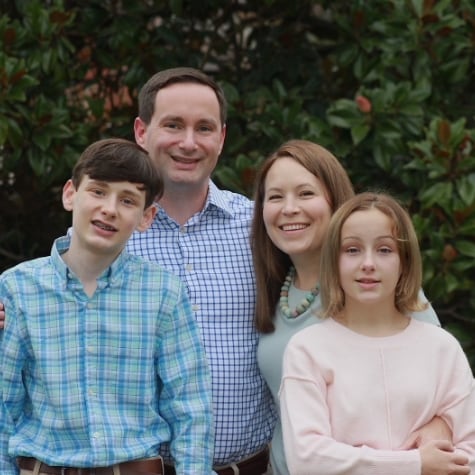
The Etheridge Family
The Etheridge family’s world turned upside down when 13-year-old Collin suffered cardiac arrest at school. Thankfully, his school was equipped with a well-placed AED and CPR-trained staff to save his life. Now they are asking: Are the places your family frequents prepared?
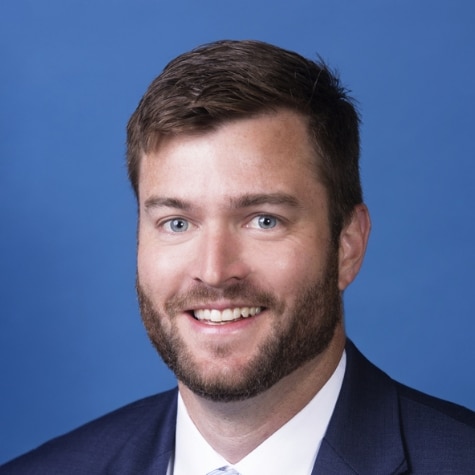
Dr. Robert Whitehill, Pediatric Cardiologist and Medical Director of Project S.A.V.E.
Dr. Whitehill is an electrophysiologist who specializes in heart rhythm disorders. He’s particularly passionate about Project S.A.V.E., a Children’s program working toward preventing sudden cardiac arrest in children and teens. At home, he’s the proud dad of two toddlers.
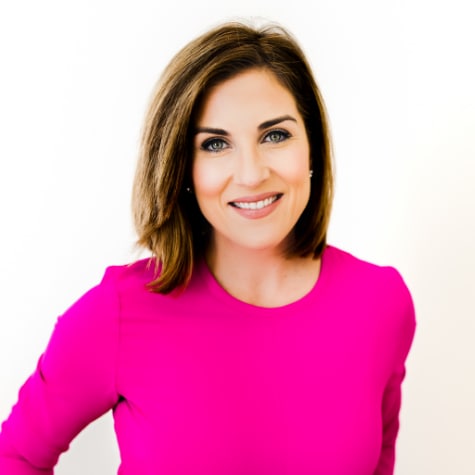
Lynn Smith
Lynn Smith is a veteran journalist, podcast host and mom of two boys. Her experience as the parent of a patient at Children’s inspired her to advocate for spreading awareness of childhood illnesses and injuries.