Season 3: Episode 5
Hope and Will: A Parenting Podcast from Children's Healthcare of Atlanta
Phones Off, Focus On: Benefits of a Phone-Free Classroom
Teens receive hundreds of phone notifications a day. Those notifications aren’t just a distraction—they’re reshaping how kids learn, engage and feel.
In this episode of Hope and Will: A Parenting Podcast from Children’s Healthcare of Atlanta, Lynn talks with Grant Rivera, Ph.D., Superintendent of Marietta City Schools, and Erin Harlow-Parker from our Strong4Life team about a new policy that requires middle school students to lock up their phones and smartwatches during the school day. Two students also join the conversation to share how it’s impacted their focus, friendships and time with family.
Dr. Rivera walks us through what sparked the idea, parameters of the policy and the data coming out of its pilot year. Erin shares insights into the mental health implications of screen time and how families can keep those boundaries going at home.
Whether you're a parent wondering if your kid is ready for a phone, or a school leader weighing new policies, this conversation will get you thinking differently about what happens when kids unplug.
Lynn Smith: Before you have kids, or even when you're still knee deep in crayons and playdates, it's easy to think, “My kids won't have a phone until they can drive.” Then you blink, and your kids are preteens. Maybe you're running late for a pickup or your kid missed out on a social invitation because they weren't part of a group text. Pressure is mounting from your child, and one by one, the parents around you are giving in. Like it or not, the average age a child receives their first personal device in the U.S. is 10 years old.
As many of us know, frequent social media use in children can affect brain development and emotional learning. The prevalence of phones among kids has had a noticeable effect on schools. That's exactly why in the fall of 2024, Marietta City Schools implemented a transformational, yet relatively simple, device policy. As we head into the end of the school year, the data appears to be stacking up in favor of the policy's benefits. There's a lot more to it, but you'll have to stay tuned to find out what that is.
Today, I'm joined by the Marietta City Schools Superintendent, Dr. Grant Rivera, along with two middle school students who've been impacted by the policy and mental health specialist Erin Harlow-Parker from the Children's Strong4Life team. Erin is an advanced practice registered nurse who has worked in the field of child and adolescent psychiatry for more than 35 years.
Erin is a repeat guest on this podcast, having joined last season for an episode that took a deep dive into mental health. It is my honor to welcome Dr. Rivera, Erin, Faith and Titan to the show. And Dr. Rivera, I want to start with you. Can you tell me a little bit more about the school system?
Dr. Rivera: It's great to be with you today, Lynn. Thank you. Marietta City Schools has 12 school campuses. We have an early learning center, eight elementary schools, and for purpose of this conversation, we have two middle schools. One is a sixth grade academy for all sixth graders. The other has about 1,400 seventh and eighth graders. Our high school is grades nine through 12 with just over 2,600 kids. We have just under 9,000 kids total. We sit about 30 minutes north of Atlanta It's a wonderful community and a certainly amazing school district. I'm honored to be superintendent here.
Lynn Smith: Tell me a little bit about the implementation of limiting the use of smartphones and smartwatches in students for your middle schools.
Dr. Rivera: Spring 2024, we initiated a conversation with our staff and with our community and said that we had a vision where we would limit student access to cell phones and smartwatches during the school day. At the start of our school year, Aug. 1, as students returned, every student was given a pouch. Some people may be familiar with it because they might use it at concerts, but for us, it's a fabric pouch that locks on the top. It's opaque. You cannot see through it. It is just larger than the size of a cell phone. Our kids receive the pouch at the very beginning of the first period of the day. They get off the bus or get out of the car. They walk into the building. They go to first period, and their teacher will hand out the pouches.
Kids then place their cell phone and their smartwatch, if they have one, in the pouch and they lock it. Those pouches will remain in the child's possession all day long. Usually, kids put them in their backpack, and they do not pull them back out again until the very last period of the day. At the end of the school day, the teacher will go around and unlock those. Our kids do not have access to their phone during class. They do not access or unlock the pouch during class changes or in the cafeteria. It is literally the entire day where they retain possession of this pouch with their phone or their smartwatch, or both, and it remains locked all day long.
Lynn Smith: Why did your team consider limiting access to smartphones and smartwatches for students in middle school?
Dr. Rivera: It's been both a long-term and short-term conversation, long term. Over the years, we have seen more and more phones and smartwatches enter classrooms. Over time, teachers would become frustrated and share concerns. We would walk classrooms and walk schools and see kids distracted. It's been quite honestly a slow burn where it's not anything that happened overnight. It's things we've been watching for years, but I think really more recently it's been a priority for us to be reflective and act with a sense of urgency around how we know this is impacting students, their well-being, classrooms and teachers. Candidly for myself, I was coaching my daughter's 8-year-olds’ soccer team and a group of dads on the sideline got into a conversation. I started doing research, less as the superintendent of Marietta City Schools and more as a dad of a middle schooler. Although we had been watching it for years, the time to act was now. That's how we got to this moment.
Lynn Smith: It's important to note here that what you have just described is not unique to the Marietta school system. This is something that other cities, other states are seeing, and they're taking similar action. I imagine there were some things you saw in the early days of rolling this out that gave you confidence that you made the right decision.
Dr. Rivera: As you mentioned, this is not unique to Marietta. There are schools across the country in both middle school and high school that have tried different solutions to this. The pouch was our solution. The impact was immediate. In fact, Erin and I had the opportunity to walk classrooms two weeks into the school year. We implemented this back In August of 2024, the start of this current school year. It took days for the kids to adjust. It was simple. The idea was once we pulled that distraction out of their hands, kids were able to focus on one another. They were able to engage with their teacher. We're having a different conversation in the cafeteria. We were seeing different interactions in the hallways. All of it was immediate. All of it was incredibly empowering and helpful for us.
Lynn Smith: What were some of the examples of what you saw that was so empowering?
Dr. Rivera: Walking into classrooms and seeing kids not with their head down on phones or on their smartwatches is one conversation. But one of the things that meant the most to me was I walked into the middle school cafeteria. It was the loudest I had ever heard the cafeteria. There were a group of boys in the corner who might previously have been on their cell phones and now they had made these little paper footballs, and they were flicking them back and forth with each other. Kids were engaging with one another. Kids were leaning into learning. Kids were connecting with their teachers. All of those things were observations that we saw within hours of implementing our approach to limiting student access.
Lynn Smith: Were there some big obstacles that you faced? When you take something away that a teenager is used to having. I'm sure they experience serious side effects.
Dr. Rivera: As you think about side effects and reactions by children and adults, let's acknowledge that I believe some children, not every child, but some children are addicted to their phone and addicted to their smartwatch. National research says the average middle school and high school student gets 237 notifications a day—that dopamine hit and that distraction is real. I think what we also have to acknowledge, and this is where Erin Harlow-Parker has been a valuable resource in Children's Healthcare of Atlanta and a valuable resource for me. It's one thing for us as adults to limit access to cell phones and smartwatches. It's another thing for us to watch what are their reactions and what are their needs as a result of that. One of the things that was very profound when Erin and I were walking classrooms together and walking the hallways, she said, “We need to be checking in with the school nurse to figure out if students with any degree of frequency are checking in with the nurse complaining of headaches or stomach aches because those might be symptoms for kids who might have anxiety or otherwise.” There's been a very comprehensive approach. We acknowledge that taking the phones out of their hands is the easy part. It's really watching how they react to it and supporting them through that transition because there's a reason why they're addicted. It certainly goes beyond just saying, “We're going to lock your phone up.”
Lynn Smith: There might be some parents listening to this that send their child to school with a cell phone because of serious safety concerns. They want them to be in contact if there's ever a situation at school. What do you say to parents that might be concerned about that?
Dr. Rivera: Safety of our staff and absolutely safety of our children is our highest priority. I send my 11-year-old daughter to the same school as the kids you're going to talk to today. My wife reminds me that while I may have a vision and a belief around cell phones and smartwatches, the empathy we should have towards families who have anxiety about safety is very real. I also believe that schools are some of the safest places for children. We have controlled access. We have kids in classrooms with teacher supervision. We have 100 adults or more on a school campus at any given moment—all of whom have been trained explicitly to care for children in the event of an emergency, whether that's a stop the bleed kit, whether it's CPR, whether it's a diabetic reaction, whether it's a seizure or God forbid, it's a active shooter. There are adults there caring for children who've been trained to do exactly what we need them to do in any emergency. While that anxiety is real, I don't know that in the balance of the risk and concerns that cell phones and smartwatches bring into the classroom. We have taken a lot of proactive measures in Marietta, as I trust schools around the country have done, to keep kids safe.
Lynn Smith: What about medical conditions like Type 1 diabetes, where children need their smartphone to monitor their levels? Are there exceptions made?
Dr. Rivera: Yes, there are absolutely exceptions made for any child who has a documented medical need, whether it's a child who may need to monitor blood sugar, or a child who might have potential for seizures. All of those exceptions have been made in Marietta. We do that on a case-by-case basis. I can tell you, having dealt with numerous families whose children have medical needs, those kids understand their cell phone is for purposes of their health. It's not for purposes of distraction, but absolutely no issues in Marietta with that whatsoever.
Lynn Smith: We're about halfway through the second semester this policy's been in place. What are some of the wins beyond the immediate noticing of symptoms?
Dr. Rivera: We have been collaborating with Children's Healthcare of Atlanta as well as Emory University to accomplish two things. One is to understand how this is working in Marietta, and how we constantly do better. The other part is to contribute to the larger body of research and the conversation around, “What does all this mean for children?” How can other schools and communities learn from this? For us, one part of that collaboration is we have been doing focus group interviews with students, staff and families. We have done surveys, and I'll give you two numbers just to drive home the point around the success of this. We interviewed our teachers at Marietta Middle School, and we said, “Compared to last year, this year you have pouches and expectations around no cell phones and smartwatches. Last year we had rules, but they weren't really enforced.” In response, 68 percent of the teachers said they are better able to do their job this year and less stressed with the pouches in place. That, to me, is significant. Listen, every one of us had a caring adult and caring teacher who we remember forever. The idea of teacher burnout is real. For us to have 68 percent of the staff saying they are better able to do their job and less stress, that translates to happier kids. That translates to better schools. The other thing that is significant for me is we asked this year's eighth grade class, “How would you compare this year to last year?” There was a 22 percent increase by our current eighth graders inside the same school who said, “I can learn better this year than I could last year.” A 22 percent increase. For us, when you look at the feedback from the teachers and you look at the agency and empowerment of students, this thing has been a win far beyond a group of kids playing paper football in the corner of the cafeteria.
Lynn Smith: Let's hear from those students, Faith and Titan. My boys are still young, but if I had a middle schooler, and they had to make this big shift, there'd be feelings about it. Faith, what about you? As an eighth grader, what was your first reaction when you heard about this new policy?
Faith: I was a little surprised at first, but once I finally put my phone in a pouch and got to my classes, I was able to learn.
Lynn Smith: Was it hard to give up that cell phone? I know how much everyone's addicted to it these days.
Faith: Honestly, no. It was pretty easy.
Lynn Smith: Titan, what about you? You're a sixth grader. What was your initial reaction to this?
Titan: My initial reaction was mixed feelings, not knowing what to go into, but now that I've started to put my phone in a pouch, I've grown with it, and I like it.
Lynn Smith: Tell me a little bit about what's different at school for you.
Titan: I feel like more kids, including me, pay more attention to the teacher in class. And my grades have improved much more.
Lynn Smith: Faith, my boys are always asking, “When can I get a phone?” It's this blessing and a curse because you get to contact everyone, then you're addicted to this device. Did you feel like you were really glued to it? Did you feel like you were addicted to it?
Faith: Honestly, I was addicted. As soon as I get home, I'd be on my phone 24/7. Now I go outside. I do a lot. I help around the house, and I can do my homework.
Lynn Smith: Music to parents ears. Everything that you're saying that we want our children to experience, especially being outside, being in nature. Titan, what about you? Were you addicted to your phone?
Titan: Yes, a little bit. Like what Faith said, I wasn't interacting with my family as much. Now that it's happened, I've been playing with kids in my neighborhood more.
Lynn Smith: You hear Faith and Titan describe that, and it's no wonder a recent study in the Journal of the American Medical Association showed a disparity for how teens intend to use their phones versus how they're actually using them. Of the average 66 minutes spent on a phone during the school day, about 25 of those minutes were on Instagram, whereas many parents cite parent communication and learning purposes as the primary drivers of getting them their phones. What we're finding, Dr. Rivera, is they're using these phones for things that we have data and evidence showing they are not beneficial for our children, like social media. When you've heard your students describe the difference, it's like back to when we grew up, right? We got home from school. We went out and played with kids in the neighborhood. When you hear this change, how does it make you feel?
Dr. Rivera: As an educator and as a dad, I have incredible hope. I'm so grateful for Faith and Titan for having an open heart to this, to being reflective on not only how could this add value during the school day … we're in the kid business. We're not just in the math and English business. And for us, I'm encouraged and I'm hopeful because Faith and Titan talk about not only how it impacted them during the day, but also how it might impact them at home, with their family and their friends and outside. I know for some it's not easy, but these kids give me hope, and I think they give me inspiration to be reflective on how we can do the right thing by Marietta and how others who are in leadership roles in schools and otherwise can use Faith and Titan as hope and inspiration for how their schools can be different.
Lynn Smith: Erin, we talked about how much time is being spent on phones when it comes to social media, and we have some really scary statistics here. Frequent social media use in children affects their brain development and their emotional learning. They believe it has an effect on things like one in five youth had at least one major depressive episode in the last year. Twenty percent of children ages 12 to 16 have an anxiety diagnosis. There's so much evidence that points back to social media. When you hear some of the results, from your perspective, how can parents keep the limits going beyond just what people like Dr. Rivera are doing for our kids in school?
Erin Harlow-Parker: It's a great question, Lynn. We heard Titan and Faith touch on how they've noticed it carrying into their home lives. I think one of the first things we as adults don't always do a great job of is explaining why. Why are we doing this? Why is this important? What do we know? For middle and high school kids, we can say things like, “Research has shown us that when our screen time increases, our psychological well-being goes down, and that means it impacts our moods negatively, our thoughts and our behavior. We know that kids who spend a lot of time tied to their phones are going to decrease in the quality of sleep. They're less physically active.” You heard both kids say they are playing more when they're home. When we aren't getting good sleep and we're not physically active, that has a direct effect on our emotional well-being.
We also know that the apps are designed purposely to keep us on our phone. Think about yourself, Lynn. When you've been on your phone and you look at the time that you spent and you've gone down that rabbit hole, that is intentional. Kids in particular, the front parts of their brains that help them make decisions don't fully develop until they're 25. Impulsivity and that drive towards getting sucked in, they're even more at risk than adults. Explaining the why is important.
The next is limiting access. The school system in Marietta is doing that through the pouch. What are creative ways you could do at home? It may be having rules, like no cell phones at the dinner table. That allows opportunities to have conversations about the day, having strong rules about when and where technology happens in bedrooms, specifically around sleep time. The American Academy of Pediatrics’ recommendation is you unplug from technology of all kind an hour before bed—being steadfast that no cell phones ever enter into the room. My kids are 30 and 25. My girls did have their cell phones because I rationalized it was their alarm clock. In retrospect, I would have had a regular old school alarm clock. Now I would never have a phone in my child's room, but that stuff we didn't know about.
Then, how do we model healthy attachment to technology in the family? Calling out the importance of, “I notice that when I put my phone away, I'm more able to be present. Have you noticed anything like that?” Being intentional as we're having conversations around that, but also saying things like, “You know what? I noticed that I spent a lot of time on my phone today, and as a result of that, I feel kind of on edge. I wonder if you've ever noticed that about your body and having those curious questions.”
The last is being intentional about the benefits and that modeling. I kind of did a little bit of that. I talked about the benefits of what I notice in my body. I heard both Faith and Titan say that one of the benefits they notice is that they're more intentional in their interactions with their peers and their family. As a healthcare provider in mental health, I literally wanted to jump up and down to say, “Yes, this is exactly what I want to happen.” As a result of this, improving their sleep, improvement in their mood, increasing physical activity.
Lynn Smith: Faith, when you hear all these benefits, it's great and you've experienced them, but what was hard about making the transition from just being glued to your phone to having to interact? What did it feel like when you didn't have your phone to be able to scroll through things?
Faith: It was hard to do anything without my phone. I couldn't scroll on TikTok or call my mom or do anything. It was hard, of course.
Lynn Smith: What about for you, Titan?
Titan: Kind of like what Faith said, like being bored. Normally, all my other friends live off their electronics. Their schools don't have these pouches, and they communicate through their phones. But now I'm able to start a conversation without using my phone or anything.
Lynn Smith: Erin, you are nearing the end of the first school year with this policy. Children's and Emory are researching some of the data that's coming out of this pilot year. What are some of the takeaways that you're seeing?
Erin Harlow-Parker: We did focus groups. The things you're hearing both Faith and Titan and Dr. Rivera talk about are the things we heard in the focus groups that we're seeing. For all groups we did with kids, parents and teachers, the common theme amongst the three groups was the idea of connection. As a mental health professional, it’s one of the most important things for me because connection is an amazing protective factor for many mental health challenges like depression, anxiety and suicide. Knowing that taking a phone away has improved connection is so powerful. The next thing we heard from teachers in particular was that increase in student engagement, which you heard Faith and Titan talk about, and decrease in distractions, which is only going to contribute to successes academically. You heard both of them talk about how much more successful they have been academically. Those are amazing things to me—that the beginnings of the research are telling us.
When you were talking with Faith and Titan about how they're handling not having their phone and this idea of boredom, I think it's really fascinating the response they gave. I have paid more attention to my own cell phone use as a result of the various kinds of educational things we've created to support this initiative. One of the things that I noticed was in the old days, because I've been around a while before cell phones existed and you were waiting in a checkout line, you'd likely talk to the people in line, which would mortify my children when they were young, that I would talk to complete strangers. Now that we have our phones, I don't do that. And I'm a very social person. I'll be scrolling, waiting because I'm bored. I have a hard time being present. But because I'm doing this work, I realize I am attached to my phone, and I didn't think I was. I intentionally now don't take it out of my bag and go back to what I used to do before they existed and talk to people. I really appreciate Faith that you noticed that yourself and how challenging that was. I don't think kids are alone. This is a human problem that we need to fix.
Lynn Smith: I think modeling that behavior is going to be most impactful. My children don't have devices yet, but they see me and they're like, “You always watch that app with the camera. What's that, mom?” I'm busted because I’m trying to not get them to understand what social media is, yet. Dr. Rivera, knowing what you know now in this first pilot program, what, if anything, are you going to change and what's coming up next for this policy?
Dr. Rivera: First is what might we change. We have to be reflective in middle school that while I think we did a good job of limiting student access to cell phones, we have to continue to be reflective on how we support children and meet them where they're at when taking away that cell phone creates a different dynamic that could be hard for them. We're not trying to make school harder. We're trying to make it easier and better and more connected. I continue to be reflective on how we help students who struggle with the transition because they're fifth graders who will be sixth graders entering into this for the first time. That's an area where I want our staff and myself to learn from experts like Erin to figure out how we continue to support children and meet them where they are, acknowledging that that may be without a phone in their hand.
I think the second conversation for Marietta, which has been interesting over the last several months, is my desire and my belief that we should leverage the success at the middle grades up to high school. To say that has not been received well by everyone is an understatement. Middle school families were more open to the idea because their kids hadn't become as connected to a phone. It's created a lot of community discussion and debate relative to high school. For us in Marietta, in April of 2025, we will be engaging with our Board of Education to determine whether we're going to move forward with this in grades nine through 12. So, Faith, hang tight. I know you're an eighth grader. We haven't made the decision yet for freshman year.
Lynn Smith: Erin, what would you tell parents who are unsure if it's too soon to make the call about intervening between devices, social media and their kids?
Erin Harlow-Parker: I work in prevention, and I'm always going to think of things through that lens. I understand that as human beings, we tend to come from a place of a wait and see. I feel strongly that a wait and see is going to get us to a place where it's too late. When I was getting ready to do this work and walking the halls with Grant, we were in a classroom and one of the kids asked the question, “Why do we have to do this?” It came to me in the moment thinking about back to my own childhood. Seatbelt regulation didn't exist when I was a young kid, and we would literally roll around the backseat of the car, no restraints whatsoever. As public awareness came out and the dangers of riding in a car without a seatbelt and people dying in motor vehicle accidents as a result, more regulations came. We can't approach prevention from that lens anymore. We really need to get ahead of things. If we wait for all the research to tell us that there is a direct connection between increase in social media or technology use and devastating effects on our mental and physical well-being, it will be too late. We're too smart now. We have too much information in our hands to ignore the effects by limiting access to technology, even for chunks of day at a time. We're already seeing in a half of a year things that both Titan and Faith spoke of, that they're noticing in themselves. That is also what we've seen in the research that kids are noticing. I have more energy. I am interested in physical activity. My grades are improved. I'm less distracted. I'm more socially connected. All of those things individually, there's tons of research to support how they affect, in a positive way, our physical and mental health.
Lynn Smith: Dr. Rivera, is there any argument against doing this in schools?
Dr. Rivera: The reality is the research and common sense is obvious. And yet why is this such a contentious topic, at least in some communities? I believe that there has become, especially with older children, an expectation by families that they be able to reach their child anytime they want. That's the real issue. That pertains to schools. There's a whole separate conversation. It's really about where do we believe our children are developmentally and how do we, as adults, even when they don't like it, put up guardrails. This cell phone tsunami that has occurred in recent years has made it such that we can't imagine a day where we don't check in with our kid with some degree of frequency. We justify that they don't have a problem and that's why we don't need limitations during the day. Truth be told, it's a distraction, no matter how you look at it.
The other conversation is, what do we believe about our homes and at home? It's not about being tethered to your kid at home. It's about what do we believe? The appropriate guardrails. I think we have a lot to learn. As a parent, I'm being reflective because there are things that I have allowed to happen that are so much more significant than just holding onto my phone at their grocery store checkout aisle. It's having my phone at the kitchen table or in the living room. I think as a community, as a society, as people who care about our children and these other children, how do we allow kids to be kids during the school day in ways that are healthy? How do we model for children, and how do we set up guardrails when we know that these algorithms are intended to suck in kids and adults?
It might be too late for the adults on this call, but it's not too late for Faith and Titan. And that's our responsibility. What do we believe about the school day? What are we willing to give up that maybe has become conditioned? What do we believe should happen in our homes as we as adults establish appropriate models and guardrails for children? That's hopefully where the listening audience can take this conversation. We're starting on that journey here in Marrietta, and I believe it's a conversation that could occur in every classroom, every school, and every home across the country.
Lynn Smith: You make such a powerful point that we're almost conditioned to know what our children are doing, where they are, how they are, 24 hours a day, from monitors in their rooms to photos and updates from daycare to emails from school. We want to be connected. Erin, just a quick take on that, because a little leeway is probably important for us parents to have.
Erin Harlow-Parker: Exactly. You're speaking to where we've come as a society, that there's a sense of anxiety when we don't know what's happening 100 percent of the time with our kids and our loved ones. As a result of that, we are living at this high end of anxiousness. I'm not saying everyone has an anxiety disorder as a result of that, but you're living at this higher level, meaning if my child isn't responding to me at my text because they're busy. Then I look to see where their location is and then I go down this rabbit hole of convincing that is causing a physical reaction in your body that's likely increasing your heart rate, increasing your respiration rates, focusing in and even getting dizzy. This sort of anxiety, panicky type of feel, which is not a healthy way to live. And it isn't certainly how my parents lived. When I left for the day, I went to school. They knew I was at school. They knew eventually I'd come home on a Saturday. I'd be outside and you'd come back when the streetlights came on, kind of thing. We survived it then and there wasn't this sense anxiety around that, the need to know it all. The reality is, it's not a healthy way to live.
Lynn Smith: This has been such an enlightening conversation. Faith and Titan, you are incredible. You've done such a great job describing for us some of the effects that you had initially, but more importantly, the positive benefits that have come from this. Have a great rest of your school year. Thanks everyone.
To access Strong for Life tips and resources aimed at helping parents navigate conversations with their kids about devices, screen time and mental health, visit choa.org podcasts. I'm Lynn Smith and this has been Hope and Will, a parenting podcast from Children's Healthcare of Atlanta.
This podcast is for general informational and educational purposes only. It is not to be considered medical advice for any particular patient. Clinicians must rely on their own informed clinical judgments when making recommendations for their patients. Patients in need of medical or behavioral advice should consult their family healthcare providers.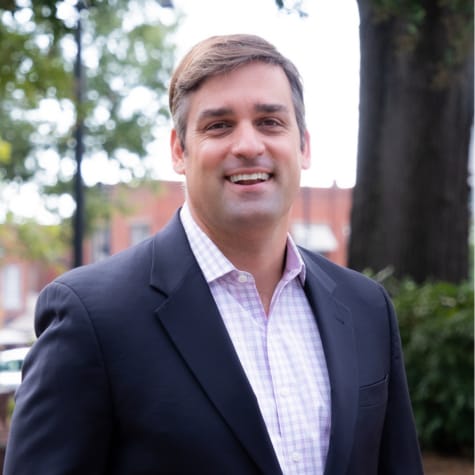
Dr. Grant Rivera
Since 2017, Dr. Rivera has overseen 12 schools and approximately 8,900 students as superintendent of Marietta City Schools. In Fall 2024, he led the charge to implement a policy in the district’s middle schools that restricts students from accessing phones and smartwatches during the school day. Dr. Rivera offers candid and two-fold insight—as both a leader and a dad—with two students of his own in the district.
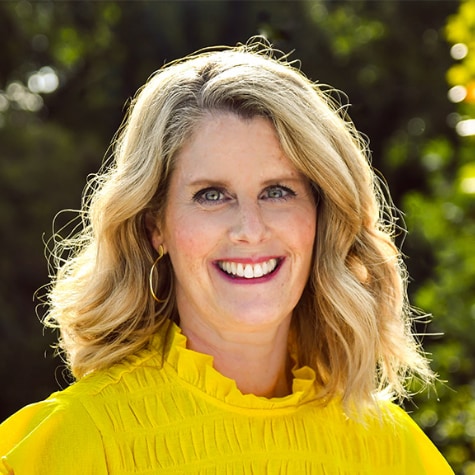
Erin Harlow-Parker, Manager, Child Advocacy Programs, Behavioral Mental Health, Children’s Healthcare of Atlanta
Erin is an advanced practice registered nurse and has worked in the field of child and adolescent psychiatry for more than 35 years. Together, with our Strong4Life behavioral and mental health teams, she’s teaming up with researchers at Emory University to study the impact of Marietta City Schools’ cellphone policy. Erin shares how they’re looking at the policy’s impact on kids’ academic performance, mental health and well-being.
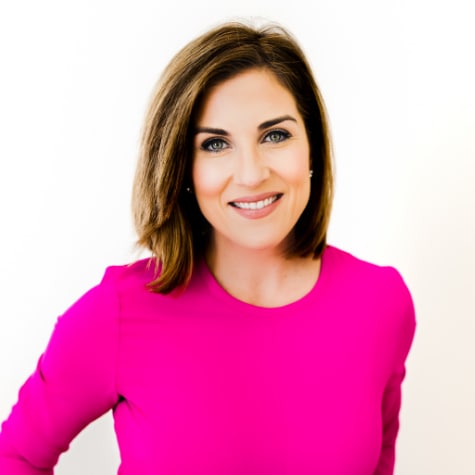
Lynn Smith
Lynn Smith is a veteran journalist, podcast host and mom of two boys. Her experience as the parent of a patient at Children’s inspired her to advocate for spreading awareness of childhood illnesses and injuries.