Season 2: Episode 9
Hope and Will: A Parenting Podcast from Children's Healthcare of Atlanta
Everything Parents—And Kids!—Want to Know About Our New Hospital
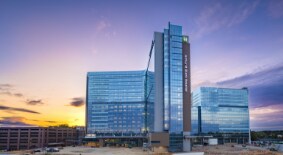
Arthur M. Blank Hospital will open Sunday, Sept. 29, 2024, at the site of our expanded North Druid Hills campus. If you’ve driven on I-85 or North Druid Hills Road in the past few years, you’ve likely caught a glimpse of its rise. This 19-story, 2 million-square-foot facility is generating lots of buzz with its fleet of robots, cutting-edge technology, more than 20 acres of greenspace, and a slew of fun—and practical—amenities for families.
If you’ve ever looked at a large-scale construction site and wondered what went into making such an undertaking possible, this conversation will shine a light on what it takes to take a sapling of an idea and translate it into something really, really big. Whether you’ve walked our halls as a patient family, you wear an employee badge or you’re a Georgia parent curious about how this new facility may support your family in the future, these are 45 minutes you don’t want to miss.
Listen to this episode on your preferred podcast platform: Apple Podcasts, Spotify or Amazon Music.




[VOICEOVER INTRO]
You're busy and you want the best for your kids. We're here to help. This is Hope and Will, a parenting podcast from Children's Healthcare of Atlanta.
[Host] Lynn Smith: Today we have a special guest. This is a special episode that's equal parts fascinating and exciting, especially for Georgia parents. Parents have relied on Children's Healthcare of Atlanta's specialized pediatric care for more than 100 years. If you've ever tried to find a parking spot at a Children's hospital campus or neighborhood location, it's no secret that need for our services has been growing at lightning speed. That's why we're embarking on our most significant endeavor yet to broaden our reach and create an even better experience for families who walk through our doors.
The new Arthur M. Blank hospital is slated to open Sept. 29, 2024, at the site of our expanded North Druid Hills campus. If you've driven on I-85 or North Druid Hills Road in the past few years, you've likely caught a glimpse of its construction—this 19-story, 2 million square foot facility. It's a giant leap forward to deliver cutting edge care and meet the needs of Georgia's growing pediatric population. We know you have questions about it, and that's exactly why we're doing this podcast. If you've ever looked at a large-scale construction site and wondered what went into making such an undertaking possible, this conversation will shine light on what it takes to take a sapling of an idea and translate it into something really big.
Chris Chelette, Senior Vice President, Facilities Services
Linda Cole, Chief Nursing Officer
Linda Matzigkeit, Chief Administrative Officer
It is my pleasure. to welcome Linda Cole, Linda Matzigkeit and Chris Chelette to the show. Our three guests, with help from some very talented teams of men and women throughout Children's, have spent much of the last decade helping to conceive, conceptualize, plan and execute the creation of this new facility.
Linda Cole is a 30-plus year veteran at Children's who started as a nurse and now serves as Chief Nursing Officer. Linda Matzigkeit has spent 21 years leading administrative teams at Children's. She's also a newly licensed EMT who occasionally picks up shifts as an ED Tech in Children's Emergency departments. Chris Chelette joined Children's in 2016 as Senior Vice President of Facilities Services. Chris is accountable for all things real estate, planning, design, and construction. Since joining Children's, Chris has been largely focused on the development of the North Druid Hills campus and the new Arthur M. Blank Hospital.
Together, these three have played key roles in not only bringing the campus to fruition, but also making sure that employees and patient families have had a strong voice in shaping planning and decision making from the get go. Thanks everyone for coming on the show. This is so exciting. I'm really excited to dig into this. And Linda, I want to start with you because I want to go back to the early days. I hear there were conversations about the potential need for a new hospital that started 10 years ago. So how did the idea to take on something this massive come about.
Linda Matzigkeit: It is exciting, and it did start a long time ago. In 2014, we were starting to see that we were full on a very regular basis. We started to look at what are our options and is there an opportunity to build on to our existing hospitals? At Egleston, part of the problem was there's no more land, and it's a very busy corridor. So that was pretty immediately ruled out. Then we looked at if we could build onto Scottish Rite, and again, we're pretty land constrained. We quickly came to the conclusion that we're going to have to build a new facility. So the decision was, “Do we build one big facility, or do we keep two hospitals?” And the decision was made to keep two hospitals.
The next decision was, “Where do we build the new hospital?” We're going to keep Scottish Rite, but where do we build the new Egleston? And so interestingly, and if the listeners have been around Atlanta for a while, they'll remember that the Braves vacated Turner Field, and that was one of the locations it was for sale. We looked at that. We looked at the old GM plant on I-285, and we also looked at a manufacturing facility up I-85. That was for sale. So, we looked at a lot of locations and ultimately landed that the best location was going to be the property we already owned at I-85 in North Druid Hills.
Lynn Smith: And the plan wasn't just for this site to become the location for the new hospital. You saw the opportunity to transform the acreage into an entire campus, the North Druid Hills campus, and that would also house a brand-new outpatient facility as well as a new workday home for employees who support Clinical Operations. The first building constructed at this campus was the Center for Advanced Pediatrics. That's often called CAP, and it opened in 2018. Tell me about it and how you decided where it would be located on campus.
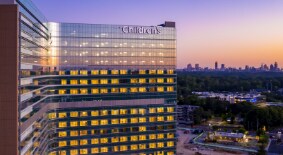
Linda Matzigkeit: The Center for Advanced Pediatrics is right on the corner of North Druid Hills and I-85. When we were really laying out the campus, we knew that was our first building. We weren't sure where everything else was going to go. We had some idea, but we felt that was a no regret move. And it sure was because it became a beacon for Children's Healthcare of Atlanta. The big Children's logo with our medallion, you can't miss it. It really became that shining light for all our patients and families and the gateway into the campus.
The Center for Advanced Pediatrics is a one-stop-shop for chronic and complex care. Think of it like a medical office building or doctor's offices where you go to have your clinic visits. What we were trying to create was a place where parents could go to see multiple physicians in the same day or multiple providers. And we wanted to make it convenient and easy for parents.
Lynn Smith: Once you had the plans in place, not just for the center but the hospital, you couldn't just break ground. You had so much of your administrative workforce working on the very site you needed to build. How exactly did you displace those employees to make room for the hospital while also making it possible for them to continue their day-to-day work, which is really vital?
Linda Matzigkeit: It's interesting because it was another decision point where we had to say, “Are we going to just rent space throughout Atlanta and disperse our support staff, or are we going to build a facility for all of them to come together?” We ultimately concluded that we want one location with all of our support staff on this campus so that they can help support the hospital and be close to the kids. At the end of the day, we all come to work here because we want to be close to the kids. We want to be part of something special and that's how we decided to also position our support center here on this campus.
Lynn Smith: Can you tell us a little bit more about the Support Center, how it fits into the greater campus?
Linda Matzigkeit: Yeah, we have close to 2,000 support staff in the Support Center building. We have Human Resources and Marketing and Finance and IT and Quality and all the general support positions that you would think of that would support a hospital. What we wanted to create was a place where they could come to work, but we also wanted to create a Support Center that would be available to our entire organization. For example, we have a Fitness Center here and we invite all of our employees from across all of our locations to come use the Fitness Center. We have a Care Clinic where we have a physician, and you can visit there and have a normal doctor's appointment. We have an Eatery for our employees to get breakfast and lunch.
Lynn Smith: So, with the construction of the Center for Advanced Pediatrics and the Support Center complete, it was time, I understand, to shift focus to building the new hospital, the one we now affectionately know as Arthur M. Blank Hospital. Of course, Arthur Blank is a well-known figure in the world of giving, especially in Atlanta. As a co-founder of the Home Depot, his iconic footprint of philanthropy will be felt for generations to come. How did the hospital come to be named in his honor?
Linda Matzigkeit: When we were thinking about fundraising and about building the hospital, we knew we wanted a major donor to name the hospital. We looked at who cares about kids, who is really focused on our community, and that was Arthur Blank. We asked him, and he of course said yes. I was part of the team that was able to present him with the initial designs of the hospital and how his name would look on the building. And I think when he saw that, and it became real. He knew that this was something that he had a commitment to and again, generously said yes.
Lynn Smith: Chris, I want to turn to you. Linda really walked us through how the need for this hospital came to be. The team knew where it would be and had a general idea of its necessary components, but the next big phase, of course, is the construction. You were hired in 2016 to oversee this project specifically. What do you remember about the early days when you accepted the job?
Chris Chelette: I think early on when you laid out the plan, it sounded like something just incredible. And then when you start to dig into it, it's a little bit of the dog caught the car syndrome. We actually had to go and okay, this amazing thing and this amazing thing that the system wants to go do, but how in the world are we going to go execute on this? It was a little daunting to say the least, but that's where we just broke it down into parts and pieces and you just don't race out and just go start construction.
We were fortunate to have the Center for Advanced Pediatrics that we needed to go build and have the Support Center that we needed to go build, which allowed us to take a little bit of time to go and methodically plan the hospital out the right way. We had to work through all of the zoning. We had to work through traffic. We had to work through just so many regulatory constraints as well as the just get it designed the right way and then go execute in construction.
Lynn Smith: And a lot of people don't think about that in the hospital system. They think about the actual outcome, the care, but they don't think about the construction. Tell me a little bit more about your team and how you can execute something this large.
Chris Chelette: What I would first say about the team is you have to be passionate about what you're going to go do. We have been so blessed to have the right people at the table on just our team, and it really across the entire System. We're really all pulling for the same thing. And that is just caring for kids on a daily basis. We do it through construction and shovels and excavators and all of that. And we're just this mini cog and this overall care wheel, right? The passion for what we do and just the commitment to the mission. That's where it's all connected. But specifically our team, we had our design and construction team members, but Linda Cole and really her work that she did early on and our clinical team involvement was absolutely critical.
Lynn Smith: And it's going to be a footprint in Atlanta for decades to come. And it's so hard to imagine the kind of decisions you had to make for a final decision in the design for the hospital. We, as parents, make tons of little decisions and big decisions every day, but what kind of factors came into play when you were whittling down the process?
Chris Chelette: I think what is so unique about what we've created is very Children's. It's very much specific and custom to us. We've engaged architects who have designed hospitals all across the country. Myself and our team has built hospitals all across the country. But at the end of the day, this is Arthur M. Blank Hospital. This is for Children's Healthcare of Atlanta, and that is something so different than anything else around the country. Decision making is first understanding, “What do we need. Where are we constrained? Where do we grow? What kind of patients do we serve? What does our staff need?” And it's very specific. It's very specific. You've got to work through all of that then to bring that then onto paper and then ultimately into bricks and mortar.
Lynn Smith: And you say it so perfectly. It's very Children's. Even when you watch the video, I can feel that even how you've incorporated children into the process. So walk us through, high level, the overall construction timeline, big steps that had to be put in motion to make this all very real.
Chris Chelette: As mentioned earlier, we started the Center for Advanced Pediatrics in late 2016. We opened in the summer of 2018. The Support Center where we had 16 buildings that were single story office space across the entire site. We had 1,500 employees here. We had to get everybody off the site so we could actually build it. Opening the Support Center in early 2020 was a huge milestone for us, and that allowed us then to kick off the demolition of those buildings, the blasting, the grading, and then ultimately the construction. We started February 2020. This is a 2-million square foot hospital, 19 stories, so we topped out May of 2022, and we're sitting here, almost four years into the making and our construction process is actually ramping down. It's been quite a journey over the last four years.
Lynn Smith: I bet. You say ramping down—what does that look like when it comes to the final product?
Chris Chelette: So, when I say, “ramping down” construction wise, I should say, “Ramping up on Children's,” actually getting into the building, just as you would do at your house. Construction is over. The contractors are buttoning up and finishing up. They hand you the keys, right? Then all of a sudden, oh, my gosh, you got to move. Right? So, the first step in our move process is getting all of our medical equipment into the building, get our furniture into the building, get our computers, all the systems up and operational. And you can imagine a hospital there are many systems that have to be working and tested and making sure that they all work, right? Everything has to be perfect when we receive our first patient.
All of that is happening now and then towards the summer is when we as a facilities group ceremonially hand over the keys to Linda Cole and her team because we've got to train everybody. The environment we've created is incredible, but it's new and it's totally different. Everything from how do you park onsite to where do you get a cup of coffee to where do I put my bag when I start my shift to where do I go and how do I transfer patients and how do I find equipment that I need. All of that work then will be this summer.
Lynn Smith: And I know Linda, you are going to head that up and we'll get to you in just a moment. But Chris first, what kind of manpower does it take to build something of this magnitude? From what I've heard, there were thousands of construction workers that lent their skills to this project.
Chris Chelette: Absolutely. We are so fortunate here in Atlanta to have just an incredible construction labor pool. I'm proud to say that over 20, 000 individual workers have passed through to do work here. We've got thousands of hours of time invested to build this and at peak, we were about 2,200 workers on site. We were almost like a mini-city operating and doing the things and staggering traffic or staggering work shifts to offset traffic and all of the things here.
Lynn Smith: And this is might be a loaded question to anyone who's in construction, but how did you keep on time? How did you meet deadlines?
Chris Chelette: That's a great question because it's not every day that you're building a 2-million square foot hospital, right? And by the way, you're going to throw a pandemic in there. You're going to throw a massive supply chain crisis in there. The labor shortage, again, I think it goes back to just everybody pulling for the same thing, right?
It's just amazing to walk through the halls. And even as early as when we had construction, just on the site, people stop us when we're in our Children's hard hats, and they stop us and they say, “Let me tell you my son or my daughter or my friend's son or daughter, or my grandchild. Let me tell you the story of what Children's did for them.” There's not another type of Construction project. There's not another type of mission that I know of right now that is anything like what we have. And again, I think it's just everybody knowing what we were doing for the kids out here. That's how we did it. It's truly something amazing.
Lynn Smith: Chris, you said it so well. I have my own story and what Children's has done for our family, having our own son that was in PICU there, how well he was taken care of. It's why I'm sitting in this podcast chair today. I'm incredibly passionate about what you do there in Children's.
And Linda, you were about to say something. What were you going to chime in with?
Linda Matzigkeit: Not only did Chris and his team keep this on track, but originally the hospital was not going to be done until 2025. So, they actually sped us up a year, which, if you follow the volumes, never happens! Never. We are so grateful for that because our volumes, especially with the viral diseases we're seeing this year, we are going to need that space desperately a year early. I'm so appreciative to all the people that came together to make that happen.
Lynn Smith: It's not just being ahead of schedule. It's the people that are going to be able to get in there and be cared for as a result of it. So, Linda C., I want to get to you. You've worked at the bedside for nearly four decades, and I imagine this was an incredibly special, but daunting task for you and the clinical team to help design your dream work environment. Tell me about Cardboard City and what it meant to the clinical staff.
Linda Cole: So Cardboard City was an incredible investment in that we rented a very large warehouse and we took and made a half of a floor. We made a section of the Emergency department. We made OR space out of cardboard, and we had people that were cardboard origamis. They actually made CT scanners out of cardboard. The staff were able to come in and really work in the space very realistically, like it was going to be the space when it was completed.
We had been planning for Cardboard City, as Chris talks about. They were working on Support and CAP. We had clinical teams coming together to say, “How big should the patient rooms be? Where should the med room be in relation to our equipment room, etc.” When we got into Cardboard City, we were able to test all those theoretical things that we thought were going to work. We made some phenomenal improvements to what would have been built. And we saved hundreds of thousands of dollars.
I can give you one small example. When a nurse was sitting right outside the room where their computer or documentation station was, they couldn't see the patient because we had built the frame of the window so high they couldn't see over. That would have been a major issue, but we were able to find that out through the simulation of Cardboard City and build it right. I could go through numerous examples of things that we found that we could just make better for our staff and for our patients through the simulation we did there over several months.
Lynn Smith: And you also had patient families involved in the process as well?
Linda Cole: Yes, that started from the very early stages, as well. Even before we had Cardboard City, we had mocked up some different configurations of patient rooms. We had families actually come into those cardboard simulations to say, “We don't have a place for our soap, our shampoo.” That changed the way we designed the room. “We need more luggage space when we come because oftentimes, we're here for longer periods of time.” The parents felt like they needed their own space. We designed this where there is a place for parents to have a computer area, a second, So, we took to heart what those families told us from the very beginning.
Linda Matzigkeit worked with Donna Hyland, our CEO, and Donna interviewed multiple patients and heard some things from them. We wanted a washer and dryer on every floor, so our parents don't have to leave to wash clothes. Some things we couldn't accommodate like a roller coaster in the lobby. We heard some really neat things from our patients, and we tried to incorporate those where possible. Chris couldn't figure out how to get that roller coaster in, but we really designed it all the way through with staff, physicians and patients. The architects were there to help guide us and organize us, but they really listened to what the staff, patients and families wanted.
Lynn Smith: And they executed it pretty well. Linda, I want to go to you because another piece of this is the interiors and it is not something insignificant because this is where many families spend days, weeks, months in it. You want to feel that warmth. You were in charge of the paint colors, the furniture, the fabrics, the floors. Tell us about what went into that planning process.
Linda Matzigkeit: We had a set of guiding principles. We wanted it to be kid friendly, but we didn't want it to be overwhelming. We wanted it to be peaceful and healing. So, what you'll see is a lot of very peaceful colors that we think will stand the test of time. You will see nature. throughout. And we've used Georgia and different parts of Georgia as our nature scenes. So, you'll see scenes on the wall, and we've also used those to help us with our wayfinding. We looked at what are some special touches that the kids would like from a design standpoint. You'll see trees inside and leaves and twinkly lights. Just giving some extra special to that soothing nature healing environment.
Lynn Smith: Peaceful is another word you used and you said peaceful colors. Describe that for me.
Linda Matzigkeit: You'll see light blues and light greens and lavenders. With a touch of light orange here and there, nothing loud and not a lot of primary colors.
Lynn Smith: Yep. And I can imagine that there were some really hard decisions to be made. What would you say is the hardest one and then the easiest one to make?
Linda Matzigkeit: The hardest one was that in a hospital you have to use vinyl fabrics because you have to be able to wipe it down. So, while they are doing wonderful things with vinyl fabrics these days, it was harder to pick out fabrics that would be pleasing to both kids and adults. I think the easiest thing was picking out the bed. As Linda Cole mentioned, the parents had a lot of requests and one of them was a comfortable bed. If you've ever spent a night in the hospital, you know that having a comfortable bed is really not typically something, but I'm here to tell you, we have a really comfortable double bed.
Lynn Smith: It's a double bed at that! I have spent the night on one of those beds. And it is comfortable. You want to be rested for your child when you're in there. And sometimes you're in there for days or weeks.
Linda Matzigkeit: Yeah, we tested out tons. It converts then into a sofa during the day, and it has a place for parents to work or have their computers. I think the other thing in the room is a separate area for the parents. T here's a little desk and chair for them so that they can work and their own separate TV. Some of those amenities and to be able to provide some things in the interior for parents was really nice and rewarding.
Lynn Smith: Yeah, I can imagine. And Chris, what are some of the unexpected challenges that you've encountered since breaking ground? I'm sure that you're like, how long do you have for that?
Chris Chelette: We broke out in February 2020. And then if you remember, everybody went home for quite some time in March of 2020. Now, let's think working through a pandemic working as I said it before a supply chain crisis. And that's really what it was as hard as it was for all of us just to get what we needed. If you can imagine that construction products where we thought at four, six, sometimes 10 weeks to get would take a year or 18 months to get making decisions early, sticking to those decisions. And then I'll give you a couple of extreme examples.
We bought every single piece of flooring that we needed—about 2 million square feet of flooring—and stored in a warehouse, just so we could get it because we were hearing at that time, “We may roll it this year. We may not roll it again for three years.” We bought proactively.
We talked about Cardboard City. We had another warehouse up in Brazelton where we brought every single piece of medical equipment to store and organize. Now we're in the process of moving it from that warehouse over and that is solely because of the fear of not being able to get it when we need it, and we want to open on time. We want to open early. And to do that, we had to eliminate the constraint, all of those things we've worked through as challenges.
I think the unexpected one though, this is one of the longest projects I've worked on in my career. We talked about 2014, 2016 is when I started. So, we're coming up on eight years and it's amazing how much life happens for people over a course of eight years. I can't tell you how many babies we've had born across the team members. We've got one of our architects, she's had two kids and is pregnant again. And it's just how life happens. And we had one of our team members pass away with cancer. Normally you're pretty isolated to that on a routine project, but on eight years, we're spending eight years together. You almost become a family. Call it a challenge, but it's also really an asset because we are acting as one.
Lynn Smith: And also, probably the excitement building over the last eight years, seeing it come to such close fruition, and anyone who's driven down North Druid Hills or I-85 in the past few years caught a glimpse likely of this rise, but tell us some of the things that you're most excited about within the facility.
Chris Chelette: I think I could describe about every inch of the facility. It's just, there's so much. Our lobbies today are a very active, fun, happy place. And Arthur M. Blank Hospital takes that to a whole new level. And you walk in, and there are so many amenities for our families. So many amenities for our staff.
Just to provide our staff an opportunity to grow. To have an opportunity to do what they're doing so incredibly well today and take it to the next level. We've got a rooftop terrace that's an area for our bone marrow transplant kids who today at Egleston really can't leave their room and certainly can't leave their unit. They're immune suppressed, and they just can't go. We created a rooftop terrace for them, so they can actually leave their room safely and go outside. And it's just an incredible environment. And there's just so many pockets of the building that just make it so special.
Lynn Smith: I thought it was really amazing that you have more than 20 acres of green space—that you have all of this room for patients to get out there, be in nature, which can be healing in and of itself.
There are also 446 patient beds. I know that's 116 more than Egleston. That was really a big part of this hospital is that you needed to be able to treat more kids because the community is growing. So it's really amazing what you all have done there. And Linda C, what do you find the most exciting features for current and also the future staff?
Linda Cole: I think first it’s space. If you've been in Egleston, you know we have utilized every inch to the max and to have enough space for the families, for the staff, for the patients. I think secondly, it's the technology that we're implementing that will save the nurses time so they can spend more time with the patients.
Some examples are we're putting in a tag on certain equipment. Rather than having to go to different floors to find a wheelchair or a wagon or an IV pump, you can go on the computer and find where one is, so they know where to go find it. Other things we're doing is we have robots that are going to be able to deliver supplies to the nurse rather than having to go get it. It can bring patient meals, it can bring medications up, so we save those steps again so we can spend more time with the kids.
Lynn Smith: Linda, what would you say you're most excited about when it comes to patient families experiencing all of these new things at the hospital?
Linda Matzigkeit: There's so many, but there's going to be a wonderful Family Resource Center where families can go. Parents can go work in a business center type setting. Siblings have a place to play and families can just get away. We'll also have a radio station. Kids and their parents can come down, and we have celebrities stop by. We have an area that's going to be more of an indoor-outdoor play area that will be large where kids can come and do arts and crafts. They can play games. There's so much for families.
Lynn Smith: And there's going to be so many more families there. Have you also accounted for just the influx and capacity and how you're going to be able to just for something as simple as how you're going to park there?
Linda Matzigkeit: Yes, parking is a big deal. Linda Cole and I often joke that we'd have to go on witness protection if we didn't provide enough parking. If you go to Egleston today, and many listeners probably do, we have a parking issue for our patient families, and we have a parking issue for our staff. A majority of our staff are parking here on our North Druid Hills campus and having to shuttle. You can imagine getting to work 20 minutes early just to get on a shuttle to go work a long 12-hour shift, and then go wait on a shuttle, and then take it 20 minutes back. And so that's not been ideal for us, but parking is one thing we're very proud of and making it easy because it's one thing to have parking, but it's connected to the building. It's very easy. It's got the red light green light system. So, you don't have to wander around wondering where the parking is. You can actually drive in and see the parking count. It's just those little things, just trying to make our staffs experience great, but really about our patient families, as soon as they enter on campus, they know we've got you.
Lynn Smith: And Chris, you have all of these incredible features and amenities and all of this, and you also were able to get the hospital on track to be LEED certified.
Chris Chelette: LEED is what we use in the design and construction world to basically gauge how sustainable and how efficient a building is. And for us, these are easy decisions. These are decisions about just doing the right thing from water. Water is a very precious resource for us.
If you remember years ago, when we were on the how many days left until Lake Lanier runs out of water, right? Those are real issues that we're not dealing with them today, but we will deal with that in the future. And so, making it easy and extremely efficient—20 to 25% less water usage at this facility expected than what we have today. Energy and power usage obviously is a big deal, but again, just the products and if we want to bring that feeling of nature into the environment.
Then we should be using products that are environmentally friendly and we're excited that we've done that and then through the process, we've diverted 85% of our construction waste away from a landfill, and recycled it. Those are just incredible numbers when you think of the sheer scale of this. So, LEED again is that measurement, that metric. Center for Advanced Pediatrics was LEED Gold. Support Center is LEED Silver. And then we're on track for LEED Silver here at the hospital, which is just exciting. We're so excited about it.
Lynn Smith: It must be your honorary construction managers doing their hard work. I love that you all did this. Tell us about them. They've been assisting you the whole way.
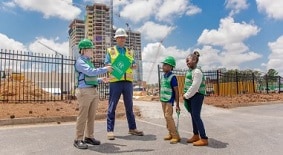
Chris Chelette: They have. In fact, the first video we did, we were really early in the site work. We're just stepping our toe into this and JoJo came out, and it was his birthday. It has been so fun. These are kids that received lifesaving care at Children's. These are not actors. You've got JoJo, Lex, Ariel-Faith. They're just kids and it has been so fun to watch them. I mean, you can imagine I've got my own kids, and you do, too. Four years is a really long time to watch a kid grow. It's just been so exciting to see them blossom, to see them obviously continue to thrive, but just the excitement of walking them in.
Lex, we did a shoot recently in the patient rooms and he was just, you could see the excitement on his face. I think it was a little jealous. He was like, “Man, mom, why couldn't we have a room like this?” That's what gives us the confidence to know that we're doing the right thing. When the kids are coming in, and they're wowed, and they're blown away by the environment and excited to talk about it and excited to tell their stories and talk about what it would be like if they were here, that's just truly amazing. All three of them are great kids.
Lynn Smith: And they're giving regular updates I understand to Mr. Blank, as well as behind-the-scene previews for our community. So, for anyone who has kids who are interested in construction, also just to watch these kids break down an interesting subject matter, you have got to check out these honorary construction manager videos.
Since before the groundbreaking JoJo, Ariella-Faith and Lex have served as Chris's honorary right hands. They help keep Arthur Blank and the community all up to date on the progress. We have watched, as Chris, you mentioned, these kids grow up. Four years is a long time in kid time. So these buildings have gone up, and they've got a big year ahead. They're going to prepare for the grand opening. So we're going to link to more about them and their videos on this episode webpage on Choa.org. So Chris, there's one last feature I want to ask you about. This is the way of the future and it's here. It's robots, and it is alive and well when it comes to Arthur M. Blank Hospital.
Chris Chelette: Yeah, Linda touched on it. We've got almost 90 robots that will be deployed throughout the building. So, think of this. There are two types, right? So, there are the big robots and patient families, and most of our staff will never see them. They're all behind the scenes. They're the robots. They're about the size of a big palette and they're moving clean supplies. They're moving clean linens into the building and up into the patient floors. Dropping them and then going back and in most cases, taking dirty linens out. So that's a big part of it. The other half of the robot fleet, you will see, and that's pretty exciting.
So, think of it as like an R2D2 unit, and they're about that size. They're roaming the halls, and they're collecting lab specimens and taking it around and bringing it to the lab. They're distributing pharmaceuticals throughout the hospital and then also food. Think about serving 446 patient rooms of food and every meal has a potential of being unique and special. Our food service staff loads the robots. And then the robots go and distribute the food and they take it to the room. There's still that personal touch of bringing it into the room, but it's pretty amazing.
Lynn Smith: And the kids probably love it. I mean, if a robot came up, my kids have seen one of those before and they're fascinated by it.
Chris Chelette: They really are. It's just a fascinating process. For us, it's probably a little foreign to think, “Oh my gosh, we're going to have these robots,” but you're right. I've talked to my kids about it and Lex and JoJo and Aurelia-Faith, and it's, “Oh man, this is exciting.” And it's like a no big deal thing, but the robots are great. They work 24/7. They simply know where to go charge themselves and come out. They don't hit the walls, which is great. It is a very sophisticated process because think about a hospital, there's hundreds of doors that they have to go through and they automatically tell the door to open. They go and call the elevator and automatically tell the elevator which floor to go on to. It's truly an amazing thing. And then in a fire alarm event or an emergency event, a code blue event, they get out of the way. They don't have to evacuate, they don't need to, but they get out of the way to let our staff do what they need to do. It's truly an amazing technology.
Lynn Smith: And the hospital of the future. This is what everything's going to look like. You're just on the forefront of it. And it's January now you have about eight months till the doors open. So what are some of the big milestones that you're preparing for with your team?
Chris Chelette: As we said, construction really is ramping down, which is an exciting part of this.
We've got over 30,000 pieces of new medical equipment coming into the building as we speak. We've got about the same amount of computers and monitors and all of the things that make a hospital run as well as all the furniture. So, moving into the house right now. And again, just the extensive amount of testing that has to happen, right? You don't just run one test to make sure something works. It's 234 times just to make it work. And all of that is in preparation of handing it over and letting our thousands of clinical teams and nursing staff and physicians and support staff come through and start to learn the building. So, there's a pretty methodical training process that will go in all ahead of Sept. 29. That's the big day.
Lynn Smith: Yeah, you try and wrap your head around the task that you have ahead of you and Linda C, I want to get your take on moving patients and staff from one hospital to another. It's mind boggling to think about the logistics. So, Sept. 29 is a Sunday. What's that going to look like? And how do you plan for something like this?
Linda Cole: First, Children's has been blessed with one of the best teams ever to look at every detail. I truly believe they've looked at every potential thing that could happen that day, and we have a plan we have a backup plan and in many cases we've got a backup to the backup if something happens, but we will close the Egleston Emergency department at 7 a.m. We will open the Emergency department at Arthur M. Blank at 7 a.m., and then we will start moving patients. We're anticipating being able to move 340 patients in a day. It will take 56 ambulances plus our ambulance fleet and our helicopter if weather permits. Some patient floors will move a patient every three minutes, some every five minutes.
We have plans for some of the more acute patients that are on ECMO, which is basically the long heart bypass. We would prefer not to have any of those patients. We prefer no one to ever need that technology, but if we do, we're prepared to move them. We think it will take us about 12 hours and that really depends on how many patients we have that day. We do have plans to try to decrease census, but kids get sick. sick and everything can't be planned. So, we'll be prepared for the hospital to be full.
Lynn Smith: When you're thinking about these logistics, there's so many different options, I'm sure you went through. Why not do a more gradual move with shifts?
Linda Cole: You think about the day, Sept. 29, we'll have to have full support staff at both hospitals. For example, we'll have two labs. We'll have two ORs ready for if a really sick patient or a patient on the floor needs an emergent surgery at Egleston or if a patient that walks into Arthur M. Blank needs asurgery we'll have radiology duplicated that day. There are just so many services that have to be duplicated as long as both hospitals are open, and we don't want the staff to have to do that for a patient.
In addition, we have literally hundreds of vendors and outside agencies that are helping us move that day. We have a company that as departments are vacated, there's a little bit, not a whole lot, but some equipment that will be reused. They're going to come get that equipment and move it over to Arthur M Blank. As we physically transport patients in the ambulances we have contracted two outside ambulance agencies to help us move. So, there is so much organization that it takes to do that over a long period of time. It's just not sustainable. We have also talked to several other hospitals that have done similar moves and it's typical to do it in one day because of the amount of resources it takes.
Lynn Smith: And Linda, and before we wrap up, I just want to get a quick touch on something that's really important for the Atlanta community. There are job opportunities here. There's a big opportunity, whether that's in patient care or somebody who supports them in that role. So, tell us about the opportunities, what they are and where people can learn more about them.
Linda Matzigkeit: Yes, we have a lot of hiring to do. We've already hired a lot of nurses over the last couple of years in preparation, and we're going to be making a big push in the next several months. So careers.choa.org, If you go there, all of our jobs are listed and we have job openings in nursing, respiratory, radiology, pharmacy, security officers, that's a big one in facilities, because we have this huge plant. So, we have different facilities positions open and many more, but it's all on our career site. And we'll be opening new positions each month. So, if a listener doesn't see what they're looking for right now, keep checking back because we've got a lot of positions that we will be hiring for.
Lynn Smith: That's wonderful to hear. Chris, I want you to just fast forward in your mind to Sept. 30, 2024. This is the day after the move in, the doors are open at Arthur M. Blank Hospital. What would you say that day is going to mean to you and so many of the people who worked tirelessly to make this happen?
Chris Chelette: I think and what I hope is that it's just another Monday. Sunday Sept. 29 is going to be an absolutely, call it crazy, call it orchestrated, call it tiring, call it amazing, probably very emotional for a lot of people day, but Monday we just have to get back to work. We're going to deliver the care that we deliver on Monday of next week. We got to deliver that same care Monday, Sept. 30. And I think that's really what success means for me is that it's not about the building. It's just about the care. It's just about the kids and the care they're getting. So that's a big deal. But I think from my perspective and our team's perspective, as things start to slow down, and again, we've been going 90 miles an hour for many years here, but as things slow down, I hope that everybody just takes a deep breath and really looks to see what they've been a part of.
When I say there's millions of kids that will be impacted by this facility. This is 100-plus year campus for us, and it's just mind boggling to think about the number of kids and the generations of kids that will come through here and. Just to be a part of it and just appreciate that they've had a big part of creating this. I think that's really critical.
Lynn Smith: And what about you, Linda C., anything else that you want to add?
Linda Cole: You've met three of the leaders that have worked tirelessly on this project, and each one of us represent literally hundreds of other people that have invested so much of their time and their knowledge and their expertise. Children's could not be more blessed to have such a phenomenal team that all rode together to make this possible.
Lynn Smith: And, I think that's what makes Children's—the uniqueness of it and the specialness. Chris, Linda C., Linda M., thank you so much for taking the time to be with us and congratulations on the incredible work.
In closing, I want to reiterate the timing of the transition that we just discussed on Sunday, Sept. 29, 2024. The Emergency department at Egleston Hospital will stop taking new patients at 7 a. m. At that time, the Emergency department at Arthur M. Blank Hospital will officially open by nightfall on Sept. 29. All Egleston patients will have been transferred to the Arthur M. Blank Hospital as of Monday, Sept. 30, 2024, and Egleston hospital will no longer be open for patient care. Throughout the transition, our Hughes Spalding and Scottish Rite hospitals will remain open. Of course, there's going to be lots of reminders and communications shared between now and then.
Now to learn more about what happens within the walls of all of our campuses, be sure to subscribe or follow Hope Will wherever you stream your podcasts. To see more updates about the campus, and learn more about our three honorary construction manager patients, visit choa.org/podcasts. We're going to link to some incredible videos and images that shows the ins and outs of the new campus. We'll also answer more of your frequently asked questions there.
I'm Lynn Smith and this has been Hope and Will, a parenting podcast from Children's Healthcare of Atlanta.
[VOICEOVER OUTRO]
This podcast is for general informational and educational purposes only. It is not to be considered medical advice for any particular patient. Clinicians must rely on their own informed clinical judgments when making recommendations for their patients. Patients in need of medical or behavioral advice should consult their family healthcare providers.
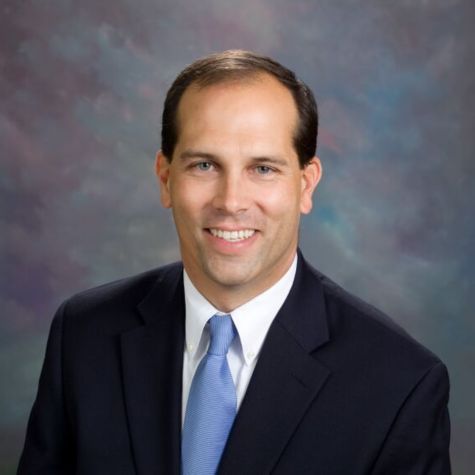
Chris Chelette, Senior Vice President, Facilities Services
Chris is responsible for all things facilities-related, including real estate, planning, design, and construction at existing and future facilities within the Children’s system, as well as facilities operations for the existing campuses which includes engineering, healthcare technology management, EVS, food service, security and emergency management. Since joining Children’s in mid-2016, Chris has been focused on the development of the North Druid Hills campus and Arthur M. Blank Hospital. At home, he’s the proud dad to two boys.
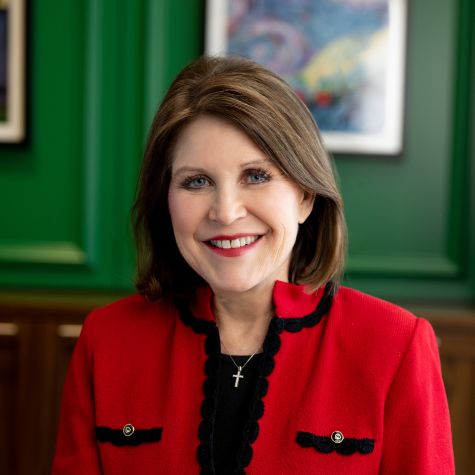
Linda Cole, Chief Nursing Officer
Linda Cole, MBA, BSN, RN, FACHE, NEA-BC, began her career at Children’s as a staff nurse more than 30 years ago. Since joining our team in 1985, she has worked at all three campuses, served in multiple leadership roles and led numerous high-profile projects, including Egleston hospital’s Level 1 Pediatric Trauma Center designation, the integration of the Hughes Spalding campus from concept through operations, the opening of Children’s at Forsyth and the path to Magnet recognition. At home, she’s a proud mom to four adult kids and five grandkids.
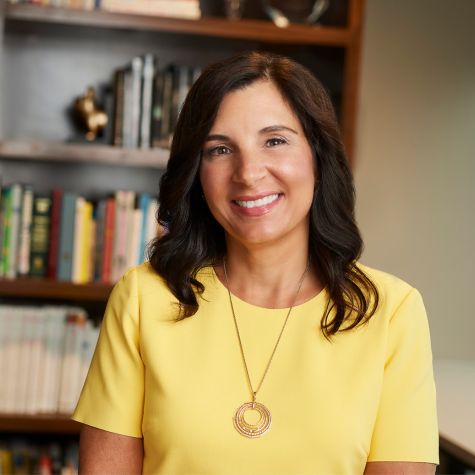
Linda Matzigkeit, Chief Administrative Officer
Linda Matzigkeit provides executive oversight, vision and support for the human resources, legal, compliance, marketing and communications, prevention and child wellness, strategic planning, and employee and physician wellness areas of Children’s. With a passion for health, she’s a frequent speaker on the topics of becoming an employer of choice, leadership, employee wellness and childhood obesity. At home, she’s the proud mom of a son who recently graduated from college.
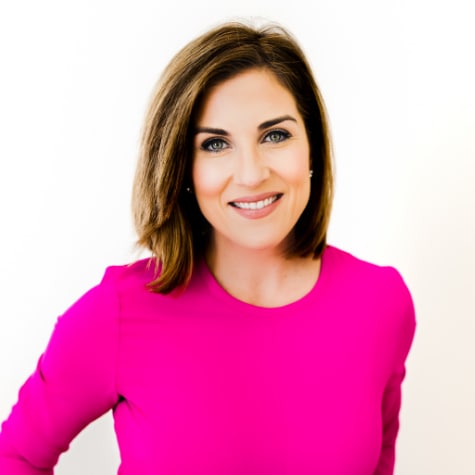
Lynn Smith
Lynn Smith is a veteran journalist, podcast host and mom of two boys. Her experience as the parent of a patient at Children’s inspired her to advocate for spreading awareness of childhood illnesses and injuries.