
A genetic disorder is a disease that is caused by an abnormality in the genome, or an organism’s complete set of DNA that includes all of its genes. Abnormalities can range from a small mutation in a single gene to the addition or subtraction of an entire chromosome or set of chromosomes.
Some genetic disorders are caused by mutations that are inherited from a child’s parents and are present at birth, such as sickle cell disease. Other disorders are caused by acquired gene mutations that cause an abnormal division of cells in the body, such as Down syndrome or Turner syndrome. Such mutations are not inherited from a parent but occur either randomly or due to some environmental exposure like ultraviolet radiation.
Children’s Healthcare of Atlanta specializes in diagnosing genetic disorders in children—in some cases, even before birth. Many genetic disorders can be treated or managed with the right care. We have expertise in a wide range of genetic disorders, including:
- Skeletal disorders
- Chromosomal abnormalities, such as Down syndrome, Trisomy 18 and 13, and Turner syndrome
- Craniofacial disorders
Fragile X syndrome (FXS) is caused by changes in a gene called FMR1, which is responsible for making a protein that is needed for normal brain development. People with FXS do not have any of this protein. Symptoms may include:
- Developmental delays (not sitting, walking or talking as early as other children)
- Learning disabilities (trouble learning new skills)
- Social and behavior problems (not making eye contact, anxiety, trouble paying attention, hand flapping, acting and speaking without thinking, and being very active)
Lipid storage diseases, or the lipidoses, are metabolic disorders inherited from one or both parents who carry a certain defective gene. This gene regulates a protein in a class of the body’s cells. These diseases cause harmful amounts of fatty materials (lipids) to gather in various cells and tissues in the body. Over time, this excessive storage of fats can cause permanent cellular and tissue damage, particularly in the brain, peripheral nervous system, liver, spleen and bone marrow.
Inherited metabolic disorders are genetic conditions resulting in problems with a child’s metabolism, the chemical reactions that convert food to energy and building blocks for protein and other substances. These disorders are usually caused by a defective gene that results in an enzyme deficiency. They can range from life-threatening diseases to conditions that can cause muscle damage and other less severe symptoms. Some examples of metabolic disorders include Tay-Sachs disease, phenylketonuria and glycogen storage diseases.
Multifactorial inheritance means that many factors contribute to an inherited health problem. The factors are usually genetic and environmental. A combination of genes from both parents, in addition to unknown environmental factors, can work together to cause certain conditions. Neural tube defects and hip dysplasia are two examples of multifactorial conditions.
Neurofibromatosis (NF) refers to genetic disorders that cause tumors to grow in the nervous system—on nerves and, less frequently, in the brain and spinal cord. NF can cause skin changes, bone deformities and other health issues. Although it can be inherited, up to half of new cases arise through defects in a person’s genes. Once this change has taken place, the gene can be passed on to future generations.
There are three forms of NF:
- NF1 is the most common type. Symptoms may be evident at birth and nearly always by the time the child is 10 years old. They can include light brown spots on the skin (cafe-au-lait spots), growths on the iris of the eye, a tumor on the optic nerve, a large head circumference, and abnormal development of the spine, a skull bone or the tibia (shinbone).
- NF2 is less common and characterized by slow-growing tumors on the eighth cranial nerve on the right and left side. The growths are called vestibular schwannomas or acoustic neuromas. The tumors press on and damage nearby nerves and reduce hearing.
- Schwannomatosis is the development of multiple schwannomas (tumors made up of certain cells) throughout the body except on the vestibular branch of the eighth cranial nerve. Pain develops as a schwannoma grows and compresses nerves or adjacent tissue. Other symptoms can include numbness, tingling or weakness in the fingers and toes.
Inheritance patterns that are not chromosomal, single gene or multifactorial are referred to as nontraditional inheritance patterns. Some examples of nontraditional inheritance patterns include Prader-Will syndrome, Angelman syndrome and Leber hereditary optic neuropathy.
Single gene defects are caused by mutations in one gene. They can be passed down or appear for the first time in the sperm or egg. Sickle cell disease is one example of a single gene disorder.
A teratogen is any agent, such as a drug or illness, which can interfere with the development of an embryo and lead to birth defects. One well-known teratogen is alcohol, which is why drinking alcohol during pregnancy is dangerous.
Tuberous sclerosis (TS or TSC) is caused by defects called mutations on one or both of two genes: TSC1 and TSC2. TS causes benign tumors to grow in the brain and on other vital organs, such as the kidneys, heart, eyes, lungs and skin. It usually affects the central nervous system. Symptoms can include seizures, developmental delay, behavioral problems, skin abnormalities and kidney disease. TS was once called epiloia or Bourneville’s disease.
Our pediatric geneticists offer testing for a full range of genetic disorders, from before birth to early adulthood. We can refer your child to other Children’s specialists to help make sure your child gets the care that meets all his needs and to help you and your family cope with any related challenges.
Tests for birth defects
One of our most vital and widely used services is testing for birth defects. We offer:
- Chromosome studies
- Karyotype
- Extended banding
- Fluorescence in situ hybridization (FISH)
- Chromosomal microarray analysis
- Studies for single gene defects
- Direct DNA studies
- Indirect DNA studies
- Biochemical genetic testing
Other services
We can help determine whether your child has or is at risk for a genetic disorder or disease through:
- Diagnostic testing: Diagnostic testing is used to identify or confirm the diagnosis of a disease or condition, in most cases providing a definite yes or no answer. It is sometimes helpful in determining the course of a disease and next steps.
- Predictive genetic testing: Predictive genetic testing determines the chances that a healthy person might develop a certain disease. Predictive testing is available for some diseases that may not show up until adulthood, such as some types of cancer, cardiovascular disease and some single gene disorders.
- Pre-symptomatic genetic testing: Pre-symptomatic genetic testing determines whether a person with no symptoms but with a family history of a disease has the genes associated with that disease.
- Carrier testing: Carrier testing can determine whether a person carries a copy of an altered gene for a particular disease. The disease may be autosomal recessive, which means a person has the disease only if two copies of the altered gene are inherited. Carrier testing for X chromosome-linked conditions is usually only done in females.
- Prenatal diagnosis: Prenatal diagnosis is used to identify a genetic disorder or condition before a baby is born. It can include maternal serum screening, an ultrasound (sonograms), amniocentesis, a chorionic villus sampling (CVS) and percutaneous umbilical blood sampling (PUBS).
- Pre-implantation studies: Pre-implantation studies are used after an in vitro fertilization to check for a genetic disorder or condition in an embryo before it’s implanted into the mother’s uterus.
- Newborn screening: Newborn screenings can detect certain genetic disorders so that treatment and management can begin as soon as possible.
Support groups and other resources can be helpful for children and families affected by a genetic disorder. Here are some excellent places to start:
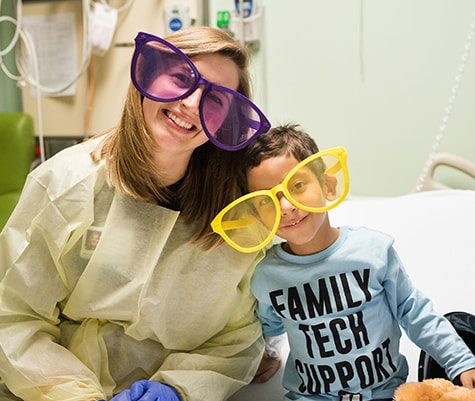
Physicians across many specialties care for pediatric patients with genetic diseases. As we learn more about these complex disorders, ophthalmologists, neurologists, endocrinologists, craniofacial surgeons, cardiologists and rheumatologists are becoming more knowledgeable about genetic disorders and considering their possibility more often. These doctors refer patients to our Children’s genetics team for diagnosis and other services.
Your child will most likely be seen first in one of our general genetics clinics. If diagnosed with a specific disorder, he may then be referred to a multidisciplinary clinic focusing on that disorder. For example, we have clinics for metabolic disorders, neurofibromatosis, Down syndrome, fragile X syndrome and lysosomal storage disease.
Physicians
- Michael J. Gambello, MD, PhD
- Hong Li, MD, PhD
- Rossana Sanchez Russo, MD
- Stephanie Burns Wechsler, MD
- William R. Wilcox, MD
Advanced practice provider
Center for Advanced Pediatrics
2174 North Druid Hills Road NE
Atlanta, GA 30329
Contact Us 404-785-KIDS (5437)