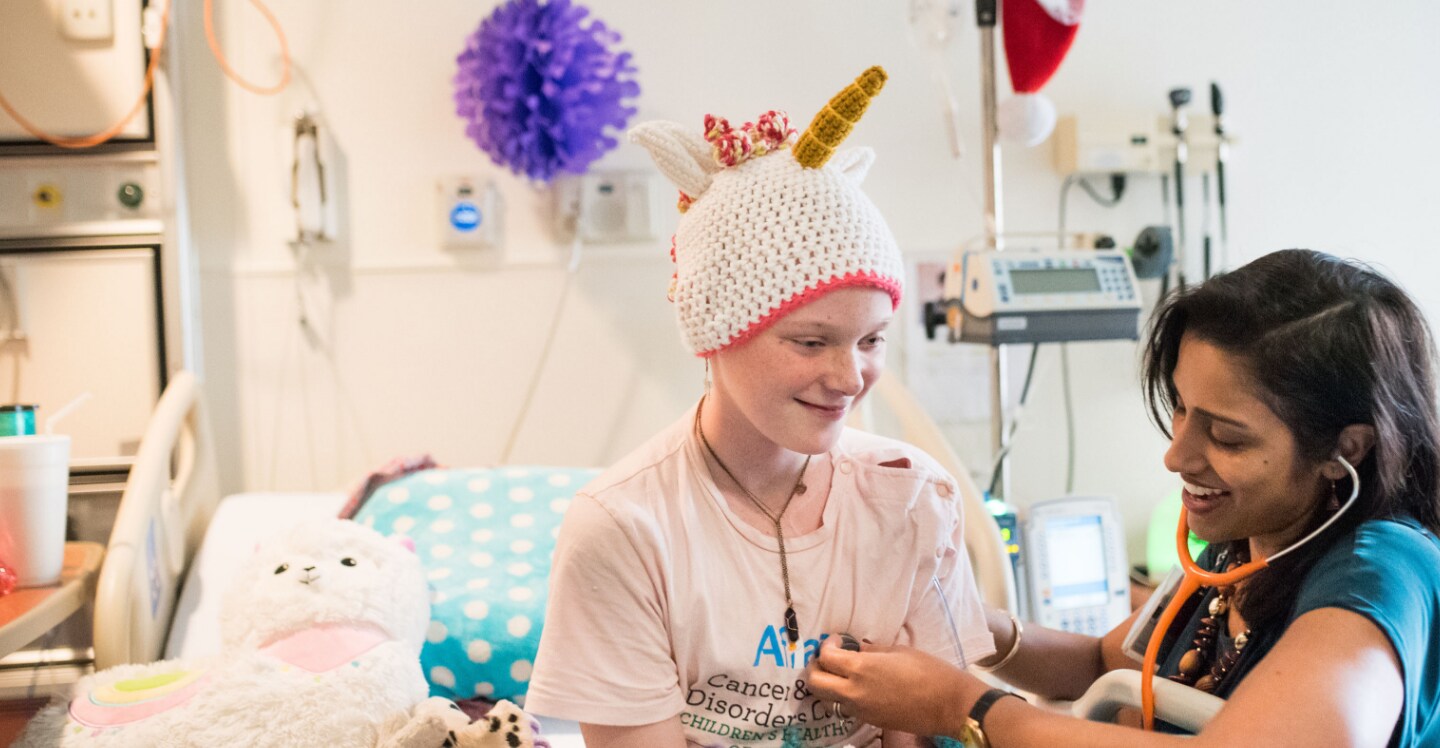
High-Risk Leukemia and Lymphoma Program
Leukemia and lymphoma make up more than a third of all childhood cancers. Leukemia is a cancer of the blood cells and bone marrow, while lymphoma is a cancer affecting the lymph nodes. Some children do not respond to treatment as well as others. These patients are considered to have high-risk leukemia or lymphoma.
Pediatric cancer may be considered high-risk if:
- It doesn’t respond well to early treatment (refractory).
- It returns after going into remission (relapse).
- It has certain genetic features or aggressive behavior.
- The child is very young, older than expected or has other risk factors.
Being considered high-risk means a child may need more specialized care, closer monitoring and access to treatments designed for complex cases.
The Aflac Cancer and Blood Disorders Center of Children’s Healthcare of Atlanta developed the High-Risk Leukemia and Lymphoma Program to streamline and coordinate treatment and care for pediatric patients with high-risk leukemia and lymphoma. Our program focuses on high-risk children, and our team creates personalized plans to give them the best possible chance.
Led by Himalee Sabnis, MD, MSc, the High-Rish Leukemia and Lymphoma Program at Children’s is one of only a handful of highly collaborative programs in the country. We bring together expertise in leukemia, lymphoma, blood and marrow transplant (BMT), CAR-T, developmental therapeutics and precision medicine to create individualized treatment plans for the most complex pediatric cases.
“This program provides better access to care, regardless of any social or economic barriers to treatment,” Dr. Sabnis explains. “We take away those outside factors and focus on getting the right care for the patient, enhancing access, providing resources and continuing research through clinical trials. The main goal of our program is making sure we’ve exhausted all avenues as we strive to get this disease under control.”
At the Aflac Cancer and Blood Disorders Center, our team works closely with patients and families, helping them understand their child’s diagnosis, explore treatment options and make informed decisions with confidence.
To determine whether leukemia or lymphoma is high risk, doctors look at how the cancer behaves. The clinical team may use:
- Blood tests and bone marrow biopsies
- Genetic and molecular testing
- Imaging and scans
These results help us understand if cancer is more complex, and whether a different approach is needed. We’ll walk you through each step, explain what the results mean and answer your questions.
Every child’s treatment plan is different. Our team designs care around your child’s exact diagnosis and how their cancer responds over time.
Your child’s care may include:
- Chemotherapy, in carefully tailored doses.
- Blood and marrow or stem cell transplant.
- Targeted therapies or immune-based therapies, such as CAR-T cell therapy.
- Access to clinical trials for new or advanced treatments.
Your child’s care team meets regularly to adjust the plan and support your entire family. We also offer emotional, educational and logistical support because we know treatment affects more than just the body.
No two children are the same and neither are their treatment journeys.
When your child needs care for high-risk leukemia or lymphoma, we are with you every step of the way.
Our team of experts at the Aflac Cancer and Blood Disorders Center educate patients and their families about their treatment options and empower them to make informed choices in their care. We work with you, as we review your child’s care together make adjustments based on your child’s needs.
Leukemia
- Sharon Castellino, MD, MSc
- Melinda Pauly, MD
- Sunil Raikar, MD
- Himalee Sabnis, MD, MSc
- Ryan Summers, MD
- Lois Chukoian, CPNP
- Stacy Senn, APRN, CPNP, CPHON
BMT
- Kirsten Williams, MD
- Muna Qayed, MD, MSCR
- Michelle Schoettler, MD
- Alan Bidgoli, DO
- Elyse Bryson, PA-C
Precision Medicine
- Christopher Porter, MD
- Bojana Pencheva, MMSc, CGC
If you have questions or want to refer a patient to our program, please contact our nurse coordinator at highriskleukemialymphoma@choa.org.



Our multidisciplinary program brings together knowledge and expertise from physicians in several fields.
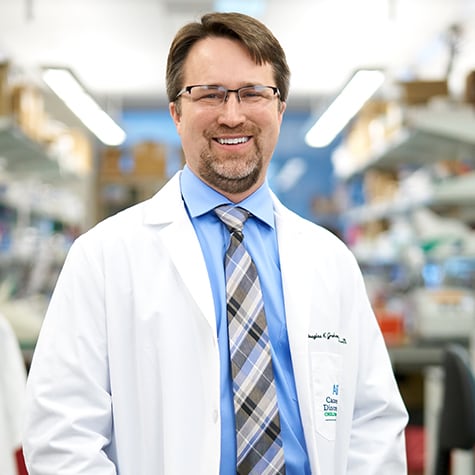
In pursuit of innovative treatments for children with cancer and blood disorders
As Georgia’s top pediatric cancer research center, we are committed to excellence and innovation in pediatric cancer and blood disorders research.
Read MoreContact Us 404-785-1200