Working Together for Better Care: Reaching Rural Communities through Telemedicine

Quickly accessing specialized medical care can be difficult in the rural areas in which 21 percent of the U.S population lives—where the nearest facility can be more than 50 miles away*. A new virtual mode of practicing medicine, telemedicine, is emerging as a viable option providing faster, more specialized evaluations for many patient groups.

This technology uses live video to connect Children’s Healthcare of Atlanta with providers and patients in communities with limited access to pediatric specialists.

This can lead to improved diagnosis and treatment times and provides families and patients an alternative to lengthy and stressful road trips.

Every year, for example, thousands of children in Georgia who are sexually or physically abused need specialized medical evaluation. Yet this service is typically available only in urban centers. Much of Georgia–like much of the country as a whole–is rural, so many children are either unable to obtain needed care or they must travel great distances to reach a specialty clinic.

Recognizing a need, the Children’s Child Protection Center started using telemedicine in January 2009. With two outpatient clinics in metro Atlanta to provide forensic interviews and medical evaluations to children and adolescents who are suspected victims of abuse or neglect, the Child Protection Center collaborated with the Georgia Partnership for Telehealth and several child advocacy centers throughout the state to create the ability to provide children in rural communities access to child abuse physicians. Child advocacy centers provide prevention, intervention and treatment services to victims of abuse and are ideal partners for bringing telemedicine evaluations to local children.

The Process

In the case of suspected abuse, the police contact a local child advocacy center associated with the telemedicine network. They immediately call the Children’s Telemedicine Program to schedule a consultation.

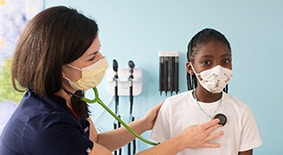
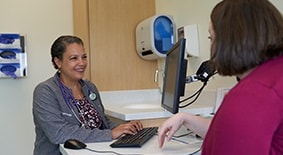
At the appointed time, the child and parent come to the local child advocacy center where they are greeted by a social worker and a medical provider, usually a nurse. They enter an exam room equipped for teleconferencing. The nurse explains the procedure and introduces the specialist to the family. From a desk in Atlanta, the specialist greets and engages the family in conversation to help them relax. The interaction takes place through high-resolution screens that allow the patient, family and doctors to communicate in real time.

Together, the nurse and specialist obtain information about the abuse event and the child’s general health. The nurse performs a head-to-toe physical exam on the child with the specialist guiding the process. During the genital exam, the nurse uses a video colposcope—a device that connects to the telemedicine equipment and enables both the nurse and specialist to obtain magnified, high-resolution views of the area so injuries can be detected. The specialist is in constant communication with the onsite provider throughout the exam to ensure that a comprehensive evaluation is obtained. The specialist also talks with the patient to explain what is happening and to monitor her comfort level.

Before the family leaves, the nurse and specialist are available to answer their questions and tell the parent how to reach them with questions or concerns. Next, the specialist briefs the police officer and discusses the investigation. The specialist also writes a formal consultation report regarding the results of the medical evaluation.

Benefits of Telemedicine

According to Jordan Greenbaum, M.D., Medical Director of the Child Protection Center, telemedicine has several tangible benefits. “An evaluation utilizing telemedicine reduces parental anxiety and stress by providing prompt access to expert care and support. It also saves time and resources for authorities, who can lose a workday driving to and from Atlanta. And for rural medical providers, telemedicine relieves some of the burden of accurately identifying abuse and interpreting physical findings.”

Dr. Greenbaum thinks that pediatrics is just beginning to tap telemedicine’s potential. She comments, “Whether or not telemedicine is available in your community, we encourage pediatricians and family practitioners to use the Child Protection Center as a resource to help improve the lives of children and adolescents.”

Treating Developmental Disabilities Using Telemedicine

Through telemedicine is not widely used in the United States to diagnose and treat developmental disorders, Marcus Autism Center, an affiliate of Children’s Healthcare of Atlanta, has experienced successful results using this technology. In April 2009, the Marcus Autism Center started a telemedicine program that now sees patients and families at 50 rural sites. Using teleconferencing, specialists diagnose and treat a variety of developmental and psychiatric disorders. Additionally, Marcus Autism Center uses telemedicine to educate clinicians about developmental disabilities so that children can be identified and receive treatment at younger ages. Earlier intervention leads to the child making more progress and ultimately having a better quality of life.

The Georgia Partnership for Telehealth facilitated the transition to telemedicine by offering their expertise on common barriers to telemedicine such as the lack of mental health coverage for telemedicine cases.

The program has many benefits for patients. It is extremely useful for patients who can’t otherwise be safely transported to specialty clinics due to problematic behaviors. It also benefits families who would not otherwise have access to a child and adolescent psychiatrist. Before telemedicine, many children with developmental disabilities who lived in rural areas went undiagnosed and subsequently untreated. Now, telemedicine can be used to diagnose developmental disabilities, adjust medications, implement behavioral treatments and provide emotional support.

As a Child and Adolescent Psychiatrist at the Pediatric Neurodevelopmental Center in the Marcus Autism center, Felissa Goldstein, M.D., reports several major improvements after implementing telemedicine.

“As a result of telemedicine, our program has seen improved patient behaviors, greater patient potential and families who are less stressed. Patients’ lives are more normal; they can go places with their families and are performing better in school. For these children, technology is a boon that can change lives.”

Telemedicine in Full Swing

Telemedicine has wider applications for many pediatric subspecialties. Recently the Children’s Telemedicine Program expanded to provide telemedicine specialist office visits to rural communities throughout Georgia. In one afternoon, a specialist in Atlanta could see children from all corners of the state.

In addition to providing scheduled office visits, Children’s tele-emergency program will link community emergency departments with Children’s pediatric emergency medicine physicians to improve access to and quality of emergency services. With Children’s specialists acting as consultants to other hospitals, some patients do not require transport to larger facilities.

Michael McConnell, M.D., a pediatric cardiologist and co-director of the Adult Congenital Heart Program at the Children’s Sibley Heart Center, believes that these early efforts are just the beginning. “While telemedicine may not be appropriate for all patients, physicians and patients should keep an open mind. After all, this is only the first wave of an initiative that will play an integral role in the way physicians provide care.”

* U.S Census Bureau, Census 2000 Summary File 2

Jordan Greenbaum, M.D., is Medical Director of the Children’s Healthcare of Atlanta Child Protection Center and a board-certified pathologist. She is Principal Investigator of a USDA Rural Development Grant for a Statewide Telemedicine Program for Child Abuse Evaluations.

Felissa Goldstein, M.D., is a Child and Adolescent Psychiatrist at the Pediatric Neurodevelopmental Center in the Marcus Autism Center. She serves as a Clinical Assistant Professor at Emory University.

Amy Hauser, R.N., is Director of Transplant Services at Children’s Healthcare of Atlanta and Project Leader of Children’s Telemedicine Task Force.

Michael McConnell, M.D., is a pediatric cardiologist and Co-director of the Adult Congenital Heart Program at Children’s Sibley Heart Center. Dr. McConnell teaches at Emory University as an Associate Professor of Pediatrics and an Assistant Professor of Medicine.